The Trio3-CAP 3-in-1 solution ensures a stable power supply even during grid disruptions: Critical loads are reliably protected, the controlled shutdown of industrial PCs is ensured, and costly system downtimes are avoided.
In industry, time is money. Production downtime caused by grid interruptions or complete power outages can lead to delays, lost system uptime, high restart costs, increased scrap rates, and even system repairs. This makes a reliable power supply essential for maintaining stable system operation.
Grid interruptions are not the only challenge. Voltage fluctuations, voltage spikes, peak loads, and frequency deviations can occur unexpectedly, either from the supply network or from processes within the system. Especially in highly automated environments, even short interruptions can have a significant economic impact.
Accurate time is something most of us take for granted. With PLCnext Technology, however, precise time synchronization plays an important role in keeping connected industrial devices and applications aligned. A smartphone displays the correct time without requiring the user to configure or regularly correct it. In connected industrial systems, maintaining this level of accuracy across multiple devices is far more complex.
Every device contains an oscillator, usually quartz, that provides its internal clock. Even after that clock has been set, small inaccuracies cause it to drift away from a reference source such as International Atomic Time. Without an appropriate synchronization protocol, affordable device oscillators cannot maintain accurate time over extended periods.
For industrial applications, that difference matters.
PTP, used by Time-Sensitive Networking, extends high-precision time synchronization to a wide range of PLCnext Technology applications.Continue reading →
Modern data centers are expected to deliver uninterrupted IT services that support enterprise applications, cloud computing platforms, AI-driven workloads, and other mission-critical operations. As these environments become increasingly complex and performance-sensitive, the reliability of the power infrastructure has become a fundamental design priority.
Even brief electrical disturbances lasting only milliseconds can disrupt server operations, corrupt data, and destabilize virtual environments. Therefore, data centers require resilient electrical architectures incorporating multi-layer redundancy, fault-tolerant distribution, advanced UPS systems, synchronized backup generators, and continuous monitoring.
Why Power Reliability Is Critical in Data Centers
Data centers operate continuously and cannot tolerate interruptions. A stable power supply ensures consistent operation of IT equipment, cooling and thermal management systems, and monitoring and control platforms.
Reliable power contributes directly to reduced downtime, continuous business operations, compliance with SLAs, and the protection of sensitive equipment. Without dependable power infrastructure, maintaining service continuity becomes extremely challenging.
Unplanned outages can result in service disruption, application downtime, data loss or corruption, physical equipment damage, and cooling-system shutdown. Data centers must therefore be protected from voltage sags and swells, electrical surges, transient spikes, harmonic distortion, frequency variations, brownouts, and complete power outages.
Extreme weather events increase the need for continuous environmental monitoring and early detection of critical changes. However, installing measurement technology in remote or hard-to-reach locations presents a fundamental challenge: How can sensors collect and transmit data reliably when there is no connection to the power grid?
The POS Pico off-grid system addresses this challenge with a photovoltaic panel, outdoor housing, battery storage, and flexible mounting components. Together, they create an energy-self-sufficient monitoring system for remote field applications.
Figure 1: Reliable data acquisition in any weather with an energy-self-sufficient measurement system.Continue reading →
Compact machines, decentralized units, and shorter commissioning times are increasing the pressure on industrial connection technology. Manufacturers need to use less installation space and fewer cables without compromising operational safety. Standardized hybrid connectors provide an effective answer by combining power, signals, and data within a single interface.
Hybrid one-cable solutions in machine and system cabling: standardized interfaces replace proprietary approaches and save installation space.
Why standardized hybrid connectors matter
Traditional machine wiring often requires separate cables for power and for signals or data. That architecture occupies valuable space, uses more material, and extends installation time. Hybrid one-cable solutions reduce these requirements. However, many existing solutions are proprietary, limiting compatibility between manufacturers.
Standardization addresses this challenge. International standard IEC 61076-2-117 defines requirements for shielded hybrid circular connectors in sizes from M12 to M40. These requirements include the mechanical interface, electrical characteristics, EMC performance, standard and fast locking, and degrees of protection up to IP67.
As a result, standard-based components can reduce dependence on individual vendors and simplify global procurement. Clearly defined interfaces also support long-term machine availability, spare-part planning, and future device development.
Carbon neutrality and decarbonization are reshaping industrial energy strategy. The All Electric Society vision describes a future in which renewable electrical energy is available in sufficient quantities and at affordable prices. Reaching that goal requires sector coupling, intelligent energy management, and more efficient power distribution. DC grids in industry offer a practical route forward.
Why move toward a DC Factory?
A factory DC grid can improve energy efficiency by recovering braking energy and reducing conversion losses. It can also integrate photovoltaic systems, battery storage, and EV charging stations directly. In suitable applications, recuperation can balance peak loads substantially, while fewer cables can reduce copper consumption.
The economic case is therefore compelling. However, a successful DC factory needs more than efficient components. It requires a coordinated concept covering objectives, topology, converters, protection, arc analysis, and energy management.
Modern switching devices must deliver more than operational safety and availability. They must also support resource conservation, occupational safety, and efficient operation throughout the system life cycle. As power electronics become more integrated into the grid, the frequency spectrum used to assess grid conditions expands, while conventional converters increasingly reach limits caused by nonlinear characteristics and saturation effects. Low-power instrument transformers, or LPITs, provide an alternative. Their compact design supports space-saving switchgear concepts for modern medium- and high-voltage systems. However, LPITs also change measurement and protection architectures. Instead of power-carrying secondary circuits, they provide low-level sensor signals. Consequently, periodic protection testing requires a new approach.
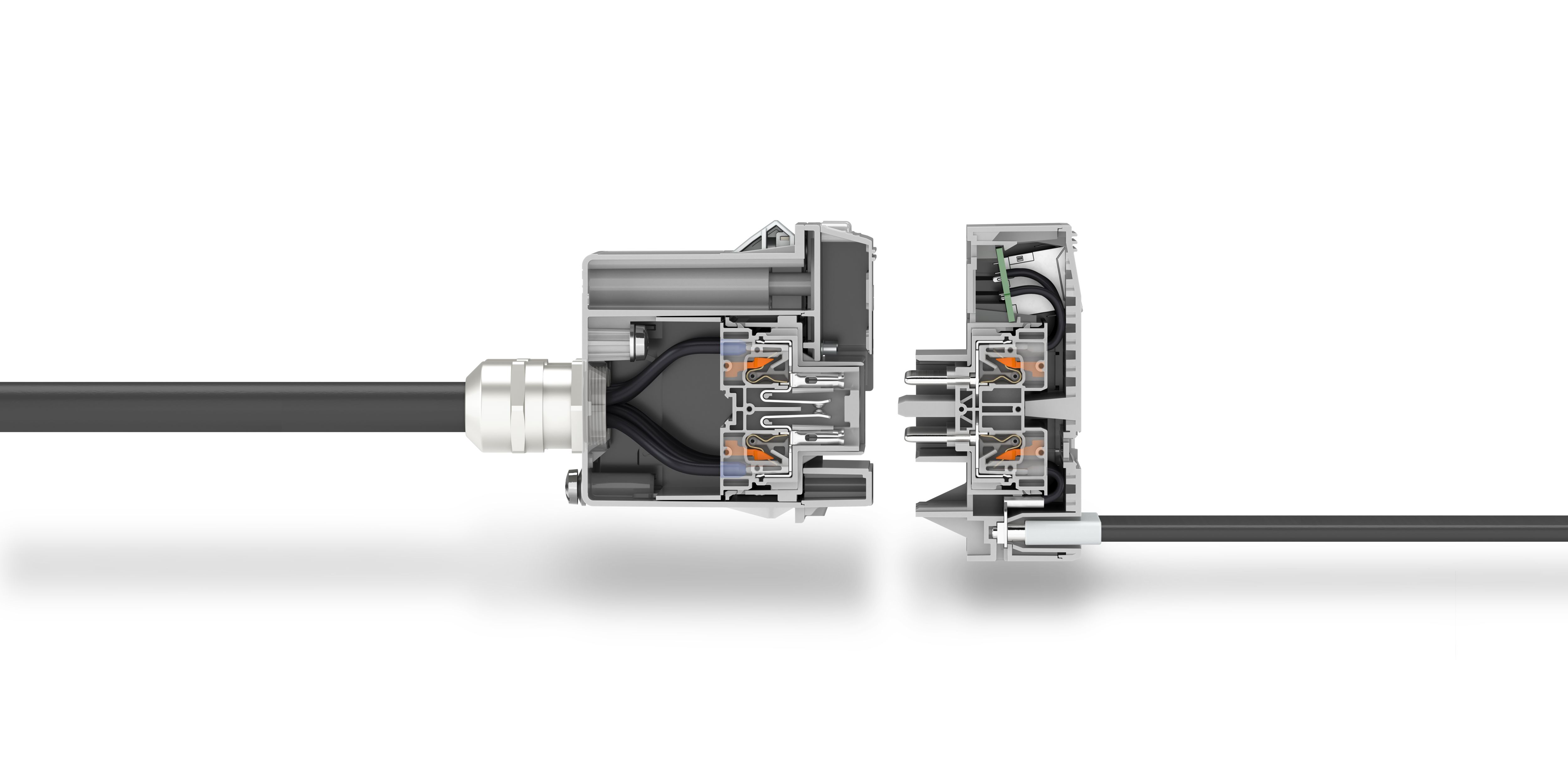
Cross-sectional view of Fame LPIT for standardized protection testing while the system is energized.
Why traditional testing methods fall short
Traditional testing methods are only partly suitable for LPIT-based switching devices. Manual wiring, serial switching, and changes to measurement circuits take time and introduce potential errors. They can also affect occupational safety, system availability, and operational processes. Operators therefore need a testing concept that provides reliable signal transmission and enables protection tests without disturbing existing wiring.
LPIT signals are more sensitive than conventional converter secondary circuits to electromagnetic interference, contact transitions, and inadequate shielding. For that reason, robust, continuous shielding is a fundamental system requirement.
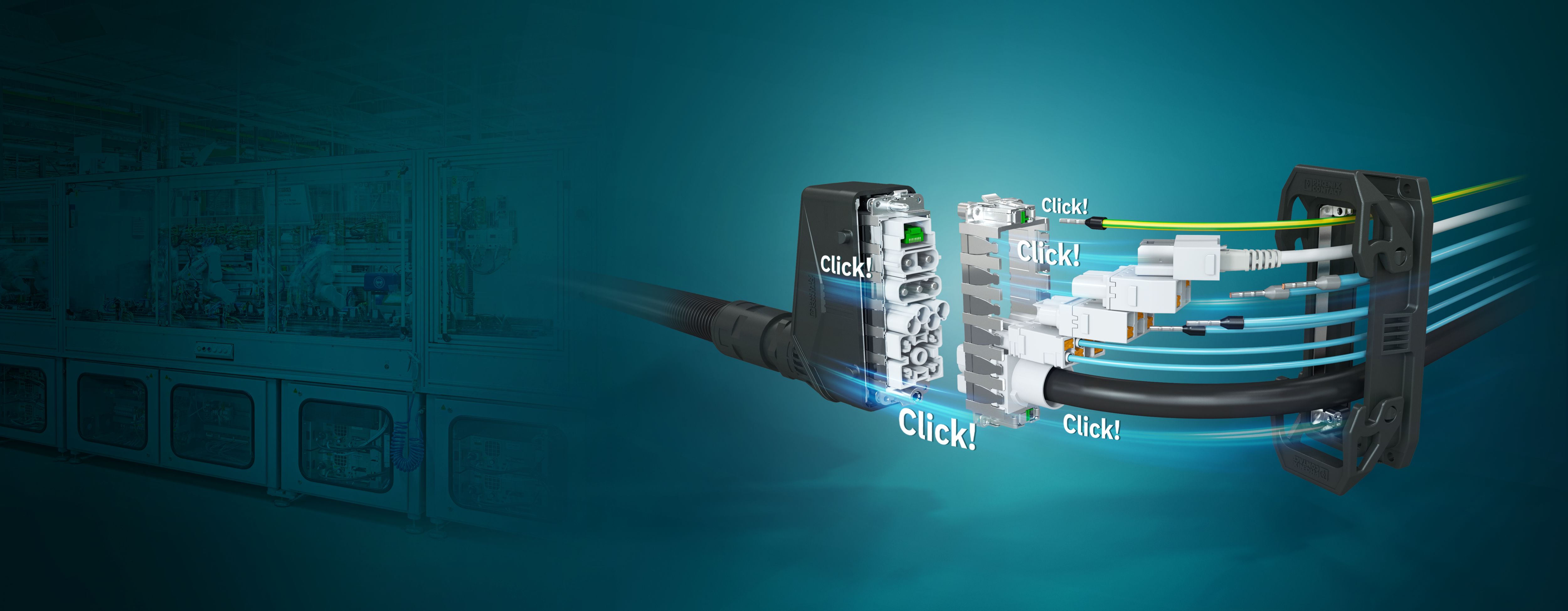
What challenges does the machine building and systems manufacturing industry face, and how can innovative connectors help address them? Simple, standardized connection processes that can be automated as much as possible are becoming a key driver of efficiency and system availability.
New contact inserts and module carrier frames for completely tool-free mounting
The machine building and systems manufacturing industry is facing profound challenges that are placing increasing pressure on established production processes. In many industrialized nations, experienced professionals are retiring from the workforce, while there is a shortage of qualified young talent. Technical professions that involve hands-on work and experience, such as mechanical engineering, systems manufacturing, and control cabinet building, are being hit especially hard.
Companies must therefore carry out complex electrical engineering tasks with fewer staff. The demands for flexibility, modularity, and cost-effectiveness are increasing, while times-to-market for new machines and systems are shrinking. Industrial companies expect customized solutions, short lead times, and rapid commissioning.
Lightning strikes and switching operations in the power grid can create surge voltages capable of disabling sensitive electronic systems. Routers, heat pumps, controllers, servers, photovoltaic inverters, and even complete production facilities may be affected. Although damaged hardware can be replaced, production downtime and data loss often create greater disruption and expense. The SPP surge protection system from Phoenix Contact provides a coordinated approach to protecting critical electrical and electronic infrastructure from lightning strikes and surge voltages. As modern buildings, industrial facilities, and photovoltaic systems become increasingly dependent on sensitive electronics, a single surge event can result in equipment damage, costly downtime, and data loss. The SPP family is designed to help ensure high system availability through end-to-end protection.
Two Coordinated Product Lines
The SPP family consists of two complementary product lines. FLT-SPP provides type 1+2+3 combined lightning current and surge protection, while VAL-SPP covers type 2 AC applications and type 1 or type 2 protection for photovoltaic systems. Their consistent design and safety concept simplify planning and help coordinate protection from the main distribution system through to sub-distribution.
The energy sector is undergoing a profound transformation. Increasing demands on sustainability, security of supply, and efficiency make smart solutions indispensable. Modern products and services for the energy management of the future combine technological innovations with a clear goal: using energy more intelligently, conserving resources, and improving cost-effectiveness. An energy management system must also be easy to implement. Coordinated sensor and measurement technology reduce the effort involved in energy data acquisition, while communication solutions and digital services help integrate, manage, and process measurement data. Companies are increasingly turning to intelligent hardware that provides transparency regarding energy flows and actively manages them.
Smart products, measurement technology, and digital services work together to provide transparency regarding energy flows and support intelligent energy management.
Measurement Technology as the Basis of Energy Management
In industrial and building structures, energy measurement technology forms the foundation for efficiency, cost transparency, sustainability, and electrical safety. In industry and production, measuring systems enable transparent monitoring of system operation, load management, predictive maintenance, and high system availability. Data centers use measurement technology to optimize power usage effectiveness (PUE) and improve failsafe performance through residual current monitoring.
Smart buildings rely on real-time data to network heating, ventilation, and lighting systems while supporting ISO 50001 energy management requirements. Measurement technology is also essential for charging infrastructure and renewable energy applications, where accurate measurements ensure both reliable billing and stable grid operation. Without measurement data, achieving decarbonization targets and identifying potential energy savings would not be possible.
Figure 1: Topological representation of an energy monitoring solution.