
Monthly Archives: October 2026

Power Reliability in Data Centers: Building Resilient Infrastructure

From |

Power Reliability in Data Centers

Modern data centers are expected to deliver uninterrupted IT services that support enterprise applications, cloud computing platforms, AI-driven workloads, and other mission-critical operations. As these environments become increasingly complex and performance-sensitive, the reliability of the power infrastructure has become a fundamental design priority.

Even brief electrical disturbances lasting only milliseconds can disrupt server operations, corrupt data, and destabilize virtual environments. Therefore, data centers require resilient electrical architectures incorporating multi-layer redundancy, fault-tolerant distribution, advanced UPS systems, synchronized backup generators, and continuous monitoring.

Why Power Reliability Is Critical in Data Centers

Data centers operate continuously and cannot tolerate interruptions. A stable power supply ensures consistent operation of IT equipment, cooling and thermal management systems, and monitoring and control platforms.

Reliable power contributes directly to reduced downtime, continuous business operations, compliance with SLAs, and the protection of sensitive equipment. Without dependable power infrastructure, maintaining service continuity becomes extremely challenging.

Unplanned outages can result in service disruption, application downtime, data loss or corruption, physical equipment damage, and cooling-system shutdown. Data centers must therefore be protected from voltage sags and swells, electrical surges, transient spikes, harmonic distortion, frequency variations, brownouts, and complete power outages.

Resilient architecture and redundancy

Reliable data center designs typically include dual utility feeds from independent substations, redundant transformers, high-voltage power intake, and advanced protection through HT/LT switchgear.

Uninterruptible Power Supply systems play a critical role in maintaining continuous power during disruptions. Online double conversion is the most preferred UPS topology for data centers because it provides instant backup power with no transfer delay, power conditioning, voltage stabilization, and battery monitoring.

Redundancy models such as N, N+1, and 2N further strengthen the electrical architecture. Higher-tier facilities are designed to provide greater availability and fault tolerance.

Protecting critical low-voltage loads

High- and medium-voltage systems are essential, but low-voltage systems are equally critical to data center reliability. Automatic Transfer Switches, control circuits, and monitoring systems support Building Management Systems, cooling and HVAC control, and communication networks.

Even minor instability can affect environmental control or communication. Consequently, a dedicated DC Power Supply, or DCPS, solution is required to deliver continuous power to essential low-voltage loads.

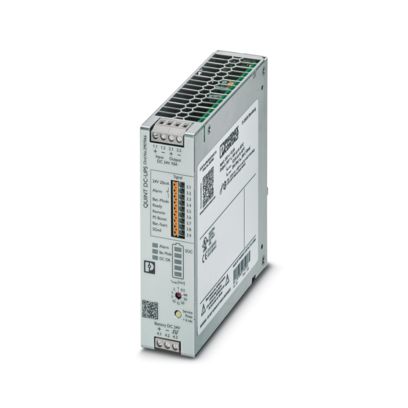
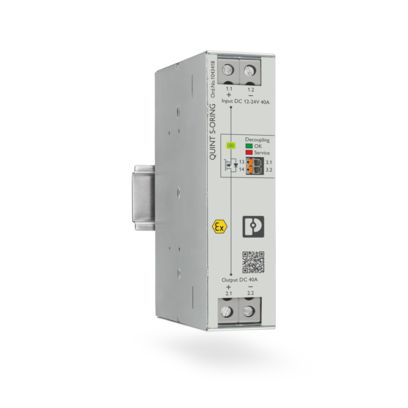
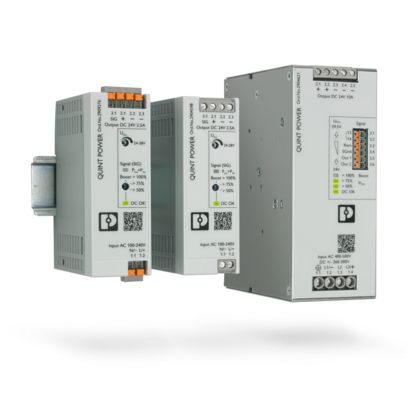
The DCPS configuration combines Surge Protection Devices, QUINT4 power supplies, DC UPS modules, energy-storage batteries, redundancy modules, and terminal distribution systems. Together, these components ensure a continuous 24 VDC supply and enhance system reliability.

Surge protection devices
Quint4 Power supply
DC UPS module
Energy Storage Battery
Redundancy module ORING
Terminal Distribution System

Coordinated protection and intelligent monitoring

The PLT-SEC Type 3 Surge Protection Device protects end equipment against residual surges. Installed upstream of the power supply, it works with the QUINT4 Power Supply to create a coordinated protection system.

QUINT4 provides continuous voltage and current monitoring, preventive diagnostics, remote signaling through relay contacts, and static boost capability of up to 125%. These features support early fault detection and proactive maintenance.

The QUINT4 DC UPS adds automatic battery detection, State of Charge monitoring, State of Health analysis, and optimized charging algorithms. It also supports PROFINET, EtherNet/IP, EtherCAT, and other industrial communication protocols for system monitoring.

Increasing reliability through parallel redundancy

The DCPS operates in parallel redundancy. If one unit fails, the remaining units continue supplying power without interruption. QUINT ORING uses ACB technology for equal load distribution, while its MOSFET-based design reduces heat generation and thermal stress.

Combined with Type 1, Type 2, data, and control SPDs, electronic circuit breakers, multifunction meters, current transformers, and voltage and current transducers, the system can prevent localized faults from affecting the entire installation.

Power reliability is critical for modern data centers. Infrastructure incorporating redundancy, UPS systems, surge protection, monitoring, and DCPS solutions helps ensure continuous operation, improved system stability, and support for future expansion.

Reliable data center operation depends on more than backup utility power. A coordinated architecture combining redundancy, UPS systems, surge protection, active monitoring, intelligent battery management, and reliable 24 VDC distribution helps protect critical systems and maintain operational continuity.

Explore power, protection, connection, and automation solutions from Phoenix Contact: Solution concepts to prevent downtimes | Phoenix Contact

Our products in the application

Explore our interactive data center map and discover technologies for power reliability, automation, connection technology, and control cabinet building, helping make your infrastructure smarter, more efficient, and reliable.

Reliable Environmental Monitoring with the POS Pico Off-Grid System

From |

Extreme weather events increase the need for continuous environmental monitoring and early detection of critical changes. However, installing measurement technology in remote or hard-to-reach locations presents a fundamental challenge: How can sensors collect and transmit data reliably when there is no connection to the power grid?

The POS Pico off-grid system addresses this challenge with a photovoltaic panel, outdoor housing, battery storage, and flexible mounting components. Together, they create an energy-self-sufficient monitoring system for remote field applications.

Solar-powered environmental monitoring station installed on a pole beside agricultural fields.
Figure 1: Reliable data acquisition in any weather with an energy-self-sufficient measurement system.
Continue reading →

Standardized Connectivity: Hybrid Technology in a Compact M17 Format

From |

Compact machines, decentralized units, and shorter commissioning times are increasing the pressure on industrial connection technology. Manufacturers need to use less installation space and fewer cables without compromising operational safety. Standardized hybrid connectors provide an effective answer by combining power, signals, and data within a single interface.

Hybrid one-cable solution combining industrial connections in a compact machine installation.
Hybrid one-cable solutions in machine and system cabling: standardized interfaces replace proprietary approaches and save installation space.

Why standardized hybrid connectors matter

Traditional machine wiring often requires separate cables for power and for signals or data. That architecture occupies valuable space, uses more material, and extends installation time. Hybrid one-cable solutions reduce these requirements. However, many existing solutions are proprietary, limiting compatibility between manufacturers.

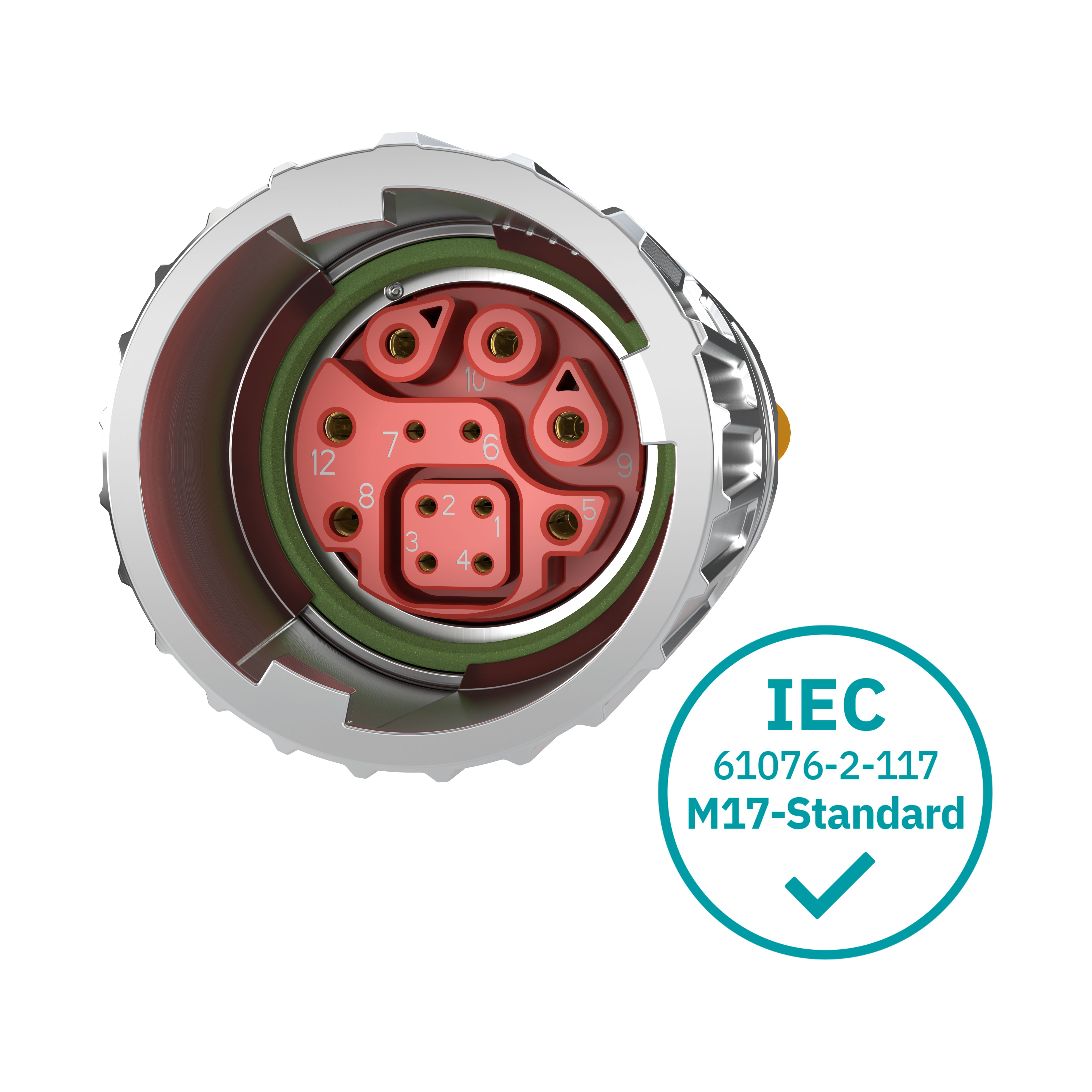
Standardization addresses this challenge. International standard IEC 61076-2-117 defines requirements for shielded hybrid circular connectors in sizes from M12 to M40. These requirements include the mechanical interface, electrical characteristics, EMC performance, standard and fast locking, and degrees of protection up to IP67.

As a result, standard-based components can reduce dependence on individual vendors and simplify global procurement. Clearly defined interfaces also support long-term machine availability, spare-part planning, and future device development.

Three functions in one compact interface

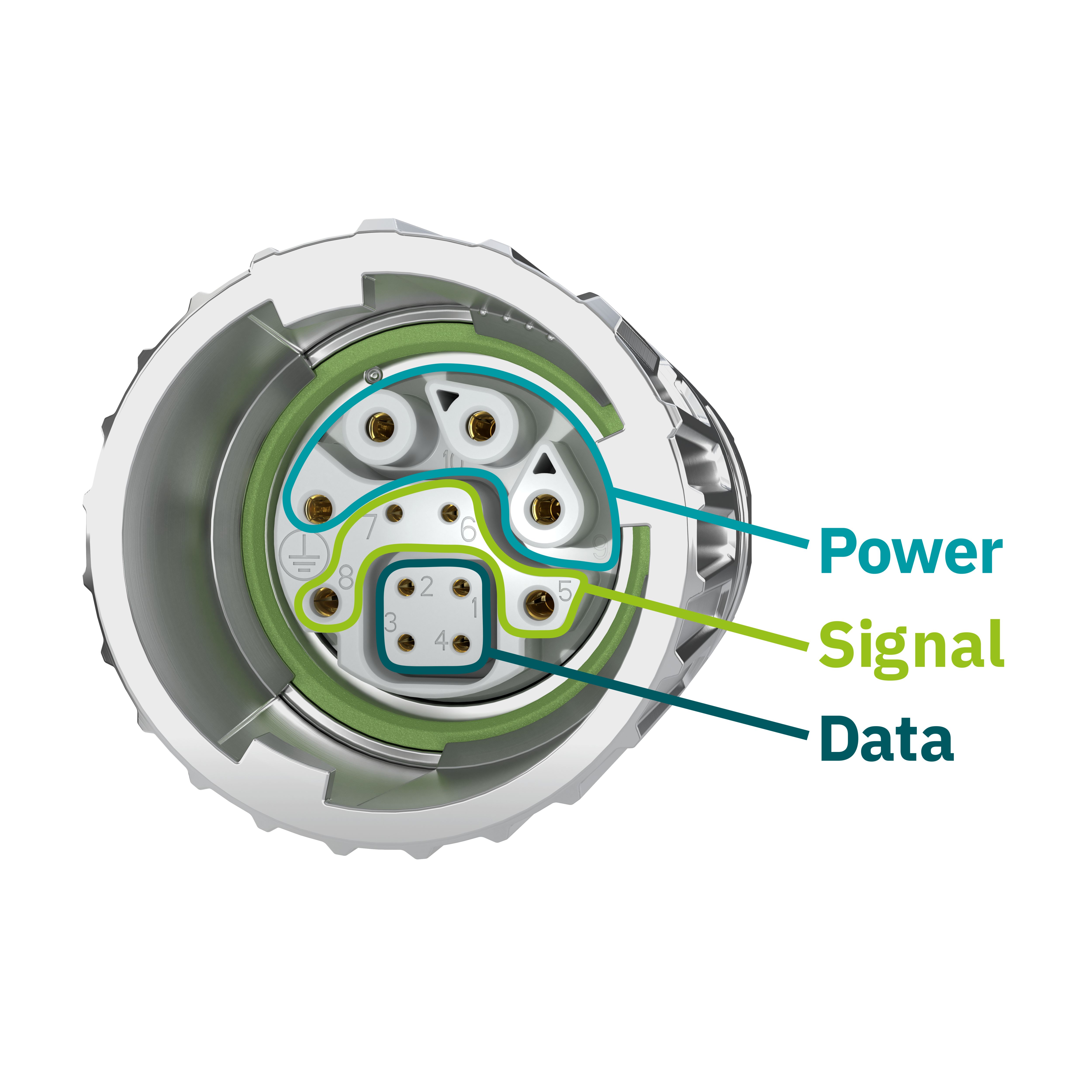
The M17 PRO HYBRID is the first product in the M17 format designed in accordance with IEC 61076-2-117. It transmits power, signals, and data through one compact circular connector. Device developers can therefore use fewer interfaces, simplify system layouts, and reduce assembly and material requirements without sacrificing functionality.

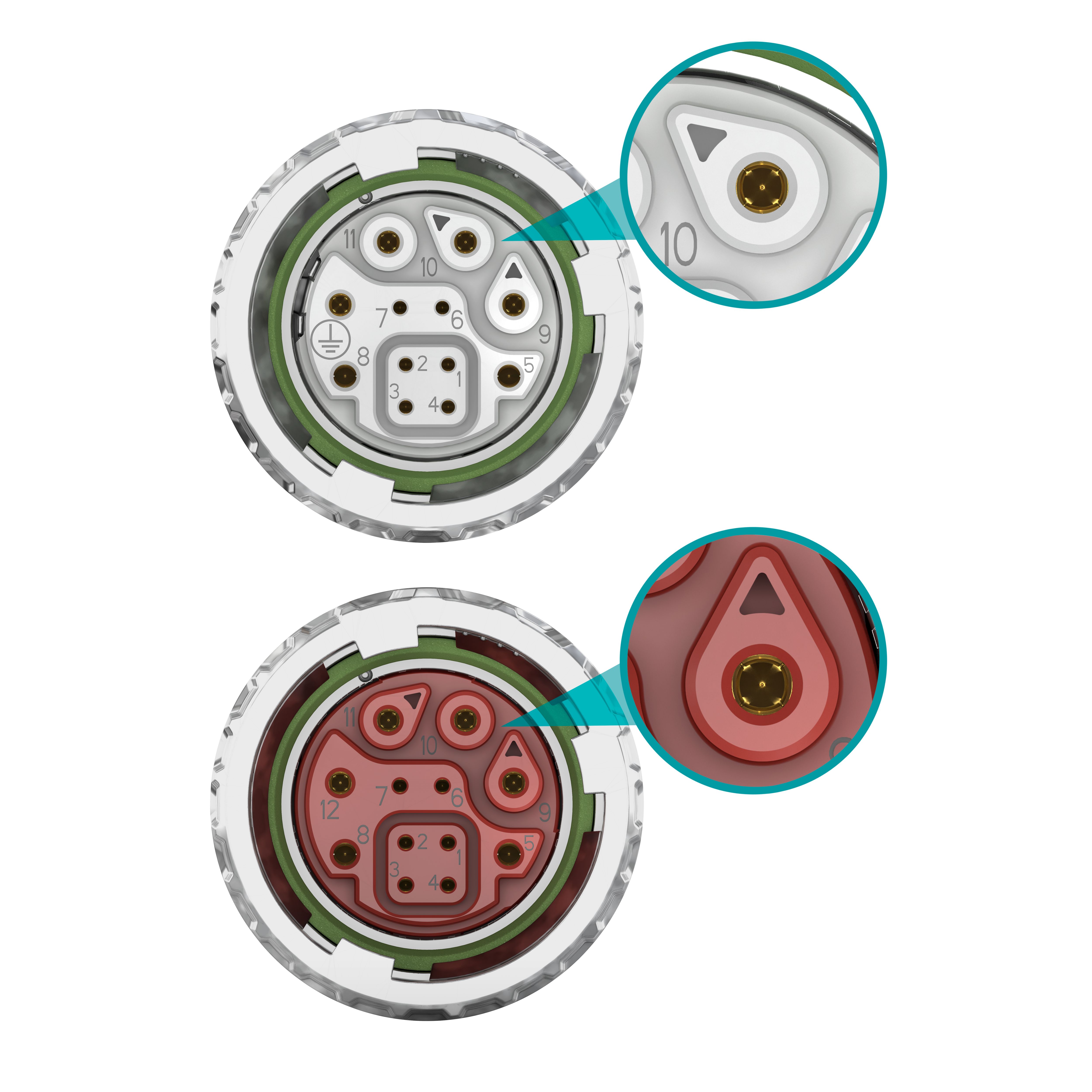
Standard-based pin assignment for the M17 PRO HYBRID connector.

The standard covers both the pin connector pattern and the connection thread. This establishes compatibility on the device and pin connector pattern sides while still allowing manufacturers some flexibility in the field-side realization of fast-locking systems.

Faster and safer installation

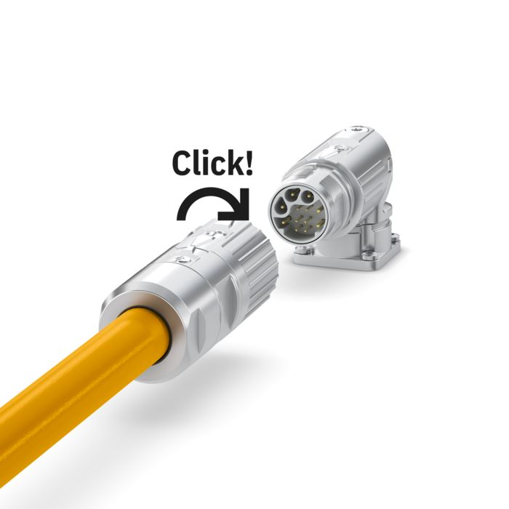
Compact wiring: M17 PRO HYBRID with ONECLICK fast-locking system for quick mounting

Phoenix Contact uses that flexibility in its patented ONECLICK fast-locking system. One click indicates that the connector has reached the correct locking position. Tactile and visual feedback provide additional confirmation. Depending on the application, this design can reduce connection time by up to 70% compared with traditional metric screw locking mechanisms.

Integrated touch protection on the power contacts enables the safe use of connector and socket inserts on device and field connectors. It also simplifies series connections in a daisy chain, reducing the need for complex parallel wiring.

Mechanical and color coding help prevent incorrect connections. They distinguish the 50 V Type 2B version from the 630 V Type 2 version defined by IEC 61076-2-117. This clear assignment supports safer installation, maintenance, and replacement.

Mechanical and color coding used to distinguish hybrid connector versions.

Compact dimensions without sacrificing performance

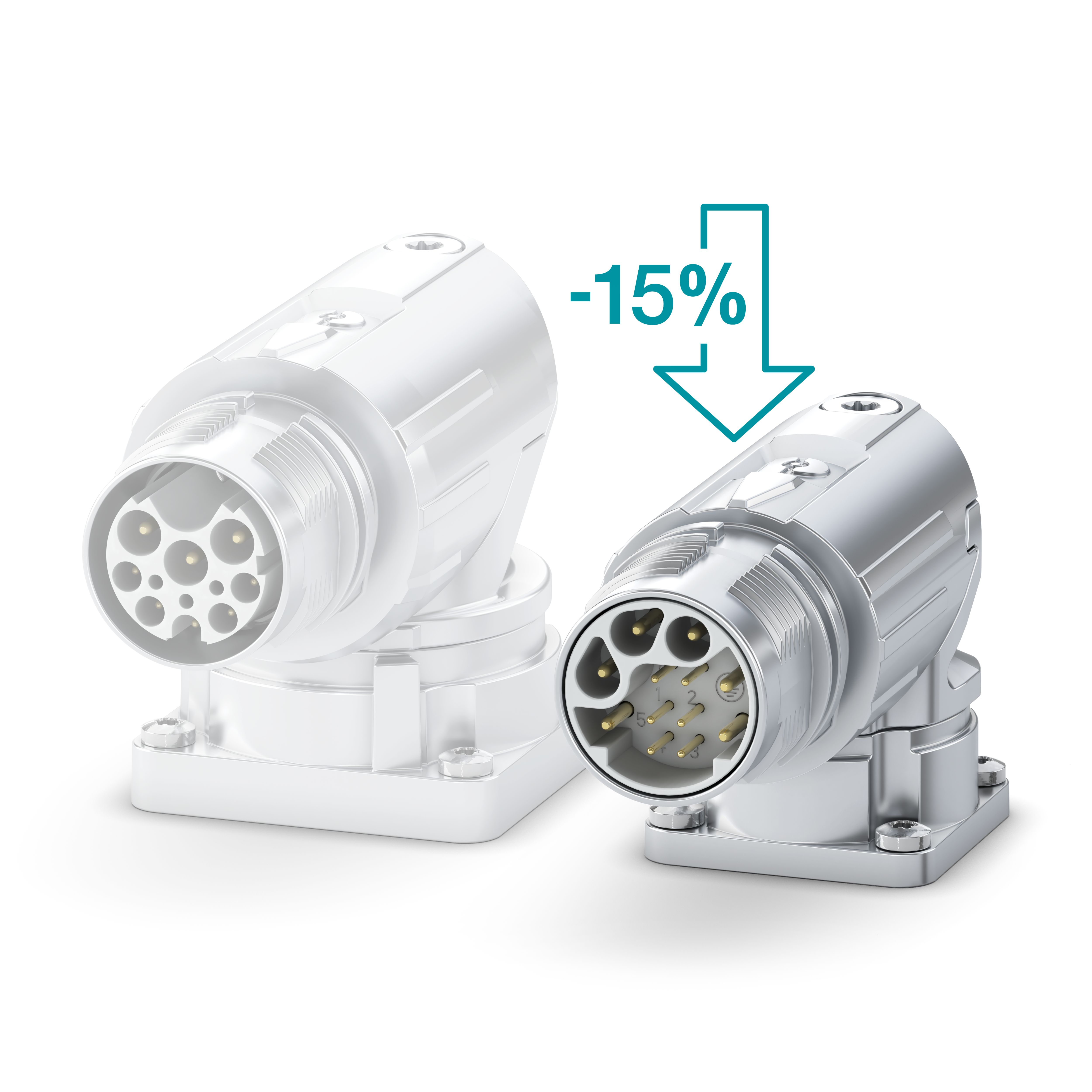
Angled device plugs reduce the installed height by approximately 15% compared with standard M17 device plugs, bringing it to around 30 mm. A 21.6 × 21.6 mm flange option is available for straight and angled rotatable device plugs.

Saves space inside the device: reduced installed height compared to the standard M17
Compact hybrid connection carrying power, signals, and data through one interface.

Despite its compact construction, the connector’s power contacts support conductor cross-sections up to 1.5 mm² and currents of up to 16 A per contact. Additional signal and data pins can integrate sensors, feedback signals, or communication into the same interface.

Built for demanding industrial applications

The M17 PRO HYBRID is designed to withstand vibration, shock, and temperature in industrial environments. Potential applications include industrial automation, robotics, mobile machinery, ventilation and building systems, automated guided vehicle wheel drives, collaborative robots, compact control units, and decentralized low-voltage drives.

For modular systems, standardized hybrid connectors offer a practical combination of compatibility, compact design, and faster mounting. By bringing power, signals, and data together, they can improve planning reliability while helping manufacturers build scalable machine concepts around predictable interfaces.

The M17 PRO HYBRID combines power, signals, and data in one compact connector designed in accordance with IEC 61076-2-117. Standardization, ONECLICK fast locking, clear coding, compact dimensions, and support for demanding industrial environments make it suitable for modular and decentralized machine concepts.

Explore the M17 hybrid connector portfolio and learn how standardized one-cable connectivity can support compact machine designs: www.phoenixcontact.com/M17hybrid