

Extreme weather events increase the need for continuous environmental monitoring and early detection of critical changes. However, installing measurement technology in remote or hard-to-reach locations presents a fundamental challenge: How can sensors collect and transmit data reliably when there is no connection to the power grid?
The POS Pico off-grid system addresses this challenge with a photovoltaic panel, outdoor housing, battery storage, and flexible mounting components. Together, they create an energy-self-sufficient monitoring system for remote field applications.
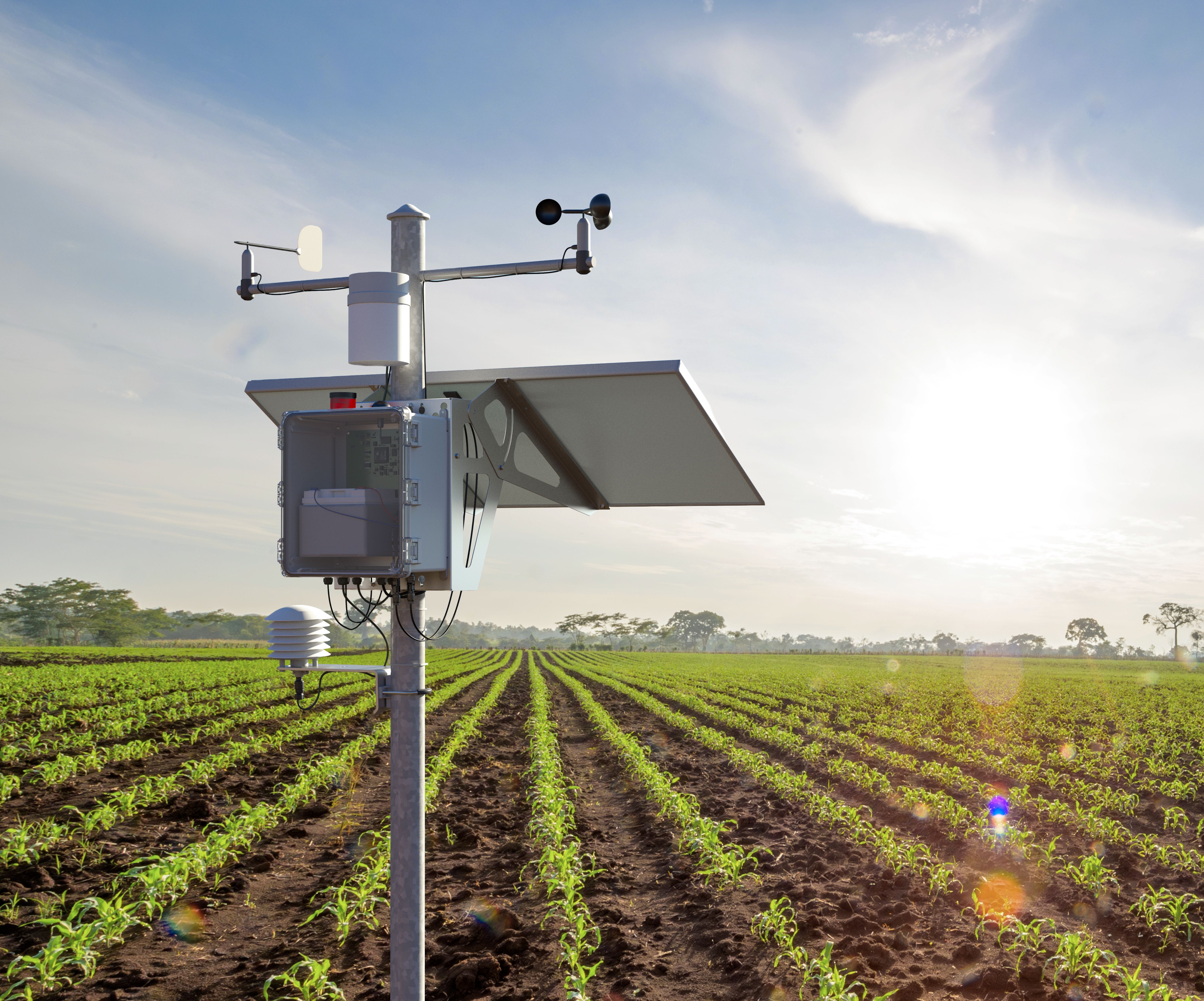
Independent data acquisition in remote locations
Self-contained measurement systems allow monitoring stations to operate without an external power supply. This supports applications such as flood protection, environmental monitoring, traffic monitoring, and critical infrastructure monitoring.
By supplying connected devices with solar energy, these systems can provide the reliable data required for early-warning processes and informed decision-making. This is particularly valuable in areas with limited infrastructure or difficult access.
Built for harsh operating conditions
Reliable field operation requires more than an independent power source. The housing must also protect sensors, power supplies, communication equipment, and batteries against environmental and mechanical stress.

The OCS large-volume outdoor housings form the foundation of the POS Pico solution. They are designed for decentralized, energy-self-sufficient applications and support operation from -40°C to +80°C, with temperatures of up to +120°C permitted for short periods. UV-stabilized polycarbonate helps protect the integrated electronics and support a long service life.
Protection ratings of IP66/68/69 and enclosure ratings including NEMA 4X, 12, 13, and 6P provide protection against dust, water, and cleaning processes. International UL and EN certifications support worldwide use. Lockable and sealable housing options also help protect the installed technology against tampering in public spaces.
Modular integration of power and electronics
The POS HP housing includes mounting brackets and integrated feed-throughs for connecting the photovoltaic panels. Solar energy is stored in batteries that can be mounted securely inside the housing with the OCS BAT PANEL SET.
A designated battery mount leaves additional space for sensor, data, communication, and connection technology. Electronics can also be installed on multiple levels, enabling an application-specific design without making the system unnecessarily complex.
The housing is attached to the POS POLEFIX pole bracket and secured with screws. Adjustable mounting arms accommodate photovoltaic panels with different power ratings and inclination angles, allowing the panel to be aligned with the sun.

Faster configuration and installation
The complete system combines the housing, photovoltaic panel, pole bracket, mounting panel, and battery mounting components. Users can configure the system online by selecting the solar panel and housing size, then adding the appropriate bracket for the required pole diameter and panel orientation.

The compact design is intended for straightforward field installation. According to the technical source, one person can install the system in a few minutes using only a small number of tools.
Reliable monitoring where it matters most
From air-quality monitoring in cities to soil, vegetation, and water-level measurement, energy-self-sufficient outdoor systems enable continuous data acquisition and transmission. Their weather resistance, configurable design, and independent power supply make them suitable for long-term operation in remote and demanding environments.
By identifying environmental changes earlier, these systems can support timely action and strengthen environmental protection and disaster preparedness.
The POS Pico system combines solar power, battery storage, durable outdoor housings, and modular mounting components to support reliable monitoring in locations without grid power. Its configurable architecture helps protect measurement and communication equipment while enabling continuous data acquisition in demanding environments.
Explore the available field housing solutions and discover how to configure an energy-self-sufficient monitoring system: Learn more about field housings
