Category Archives: Uncategorized

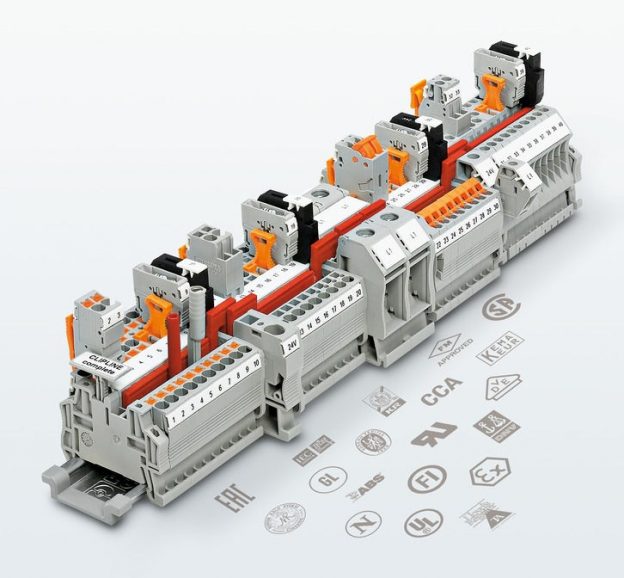
Terminal Blocks – Aren’t they all the same?

From |

When I visit Myanmar, customers would often ask me, “Why is it that Phoenix Contact’s Terminal Blocks considered a premium product?”

They will look at me, waiting for an answer, hoping that they did not say anything to offend.

“Aren’t all Terminal Blocks the same?”, after a brief moment of silence.

Well, the answer to this questions is definitely, no. They are not one and the same.

And that was how I sparked their curiosity. “Tell me more”, they said.

Look of disbelieve

The same look my Myanmar customers gave when they ask me about OUR terminal blocks

A Market Leader since 1923

I would go on and explained that the reason why Phoenix Contact has been the leader in such a simple yet sophisticated product, that today, it is trusted around the world.

So trusted, that projects in Southeast Asia, even big government projects, are using them.

If I have interest you, just like my Myanmar customers, then read on.

click here to read on about why our Terminal Blocks are that famous

Withstanding Demanding Environments: How a power supply & terminal block went against the elements

From |
floating production storage and offloading

Onboard a floating production storage and offloading unit

Summary

  • The client, a Japanese international conglomerate specializing in electrical engineering and software systems, needed a compatible power supply that would complement their new I/O system.
  • The I/O system would be built specially for Maersk Oil, for their Culzean project – a gas field located in the UK Central North Sea.
  • Given the scale of the project and the cost incurred, the client needed a solution that is reliable – to withstand even the toughest of environments.
  • The power supply that the client requires would be used for a Floating Storage and Offloading (FSO) tanker hence it must be able to meet specific requirements, without spending too much on cost and installation.

Project Profile

Maersk Oil is an international oil and gas company owned by the A.P. Moller-Maersk Group, based in Denmark.

On 31 August, 2015, the UK Oil And Gas Authority approved a consortium headed by Maersk Oil going ahead with production at the Culzean oil and gas field about 150 miles southeast of AberdeenScotland in the North Sea.

The high-pressure, high-temperature field held the equivalent of about 300 million barrels of oil and, when it reached peak production in 2020 or 2021, was expected to produce enough gas to meet 5% of the UK’s needs.

Challenge: Building an I/O system that could endure demanding environments

The Culzean Project, upon its completion, would meet 5% of the total gas demands in the UK.

Because of the potential high expectations, the project is estimated to be costing 3 billion pounds.

With the project’s valued cost, it was challenging to identify suitable hardware that could meet the client’s cost requirements.

The client wanted a reliable power supply, which could sustain harsh environments, and to install those power supplies with dependable accessories – all of which is to support the I/O system.

Finding a robust power supply is key because a shutdown of the I/O system would restrict operations. In a project such as Culzean, mistakes could spell disaster.

Industrial power supplies which meet such demands are uncommon in the market.

Moreover, in order to reduce cost, the power supply would also have to be packaged together with its set of complementary accessories which must also adapt to physically demanding environments.

Read more on how we solved the issues faced in the Culzean Project and the feedback received

Phoenix Contact’s PLC: Water Pump Control for Junction Square, Myanmar

From |
Junction Square, Yangon

Junction Square, Yangon

Do you know that Phoenix Contact has an office incorporated in the heart of Yangon?

If you were not aware, where were you!

Not only have we worked with clients all throughout Myanmar but we’ve also successfully sold our controllers (ILC 131 ETH) for a water pump application use in Myanmar’s Junction Square.

Read more on how we’ve helped Junction Square, Yangon

The NEW Universal Electronics Housing: Embedded System Smart Packaged

From |
The new UCS Housing

The Universal Case System, by Phoenix Contact

Specific solutions often require very specific housing designs.

The concept for the new universal electronics housing (UCS) from Phoenix Contact makes it easy for equipment manufacturers to source for suitable packaging for their embedded system.

Trends such as industry 4.0, Internet of Things, LTE (Long Term Evolution – 4th generation mobile communications) and Smart Home are increasingly utilizing the networking of electronics.

The devices used are based on embedded systems.

New application fields create a large number of electronic assemblies. Because of this, it is often difficult to find a suitable housing.

With its flexible PCB mounting system, the new UCS by Phoenix Contact helps device manufacturers to implement the application quickly and hassle free.

Find out why you should consider our latest UCS in your embedded projects

The Open World of Automation

From |
Designed for Future Ready

PLCnext Technology: open control platform for future-proof automation

In recent years, automation technology has undergone rapid changes.

Examples of this include the Internet of Things (IoT), Industry 4.0 or the constantly growing threat posed by unauthorized access attempts and malware.

What does all this mean for manufacturers and users?

And what opportunities could arise from such technological developments?

The new PLCnext Technology for the up-and-coming controllers from Phoenix Contact provides practical answers.

Like its customers, Phoenix Contact as a traditional manufacturer and a driving force for innovation in automation technology is constantly trying to determine which future trends are really relevant and which solutions the current and future market will expect.

It is important to identify the individual aspects of new technological trends and to then determine their impact on the daily work of developers and the needs of users.

In order to identify the key characteristics of a modern control architecture, the specialists at Phoenix Contact have examined the requirements of both long-term users and sales partners.

Phoenix Contact Relationships

Continuous partnership means forging trust and reinforcing value.

Read more on Phoenix Contact’s PLCnext Technology

Cost Savings Through Optimising Space Usage

From |

Trying to save cost by using less cabinets or smaller junction boxes in order to better optimize your plant in terms of space as well as maximized the energy and cabling installation cost for signal conditioning?

Phoenix Contact MACX Phoenix Contact Mini Analog Pro

Phoenix Contact’s MACX / MINI Analog is your solution.

Phoenix Contact has an Innovative way to maximized space, wiring installation and energy cost for better return of your plant investments.

First and foremost, Phoenix Contact has…

Slimmest worldwide with width of 12.5 mm
User Benefit: Space saving in the cabinet up to 30% space

MACX Space saving

Lower power consumption using Low loss Technology (Patented)

User Benefit: Longer operational lifetime of the devices and less ventilation of the cabinet required resulting in savings in energy cost.

Mini Analog Pro Heat Signature

Mini Analog Pro Heat Signature

Power bridging from “bottom”

User Benefit: Reduced wiring for power distribution, fast installation, hot-swap replacement, expansion-options by bridging and saves time and money!

Conventional Daisy Chain Power Distribution

Conventional Daisy Chain

Conventional Daisy Chain

Power Bridging using T-BUS connector and Supply Module

T-BUS on DIN RAIL        MACX T-BUS

MACX Supply and Error Message

From highly compact 12.5 mm signal conditioners and functionally safe signal conditioners to signal isolators for intrinsically safe circuits in hazardous areas, Phoenix Contact signal conditioner range offers a solution for all applications in Analog signal conditioning.

User Advantages:

  • Space savings in the cabinet up to 30% space.
  • Longer operational lifetime of the devices and less ventilation of the cabinet required resulting in savings in energy cost.
  • Reduced wiring for power distribution, fast installation, hot-swap replacement, expansion-options by bridging and saves time and money!

 If you would like to know more about this product, please feel free to send us an enquiry at marketing@phoenixcontact.com.sg and a road show can be arranged to discuss in more detail with your team.

What is Industrial Automation: How IIOT & Automation are related(Part 1)

From |

What is Industrial Automation: Part 1

Industrial Automation Phoenix Contact

Increasing competitiveness in the market over demands for high quality and consistent products remains a challenge for many organizations in the near future.

With protectionism and directives to ensure sustainable employment rates in countries such as the U.S, competitive pricing would also be the factor that is contributing to the industrial woes.

To address this challenge, a number of industries have considered alternative manufacturing techniques such as the usage of automated devices or IIOT (Industrial Internet of Things).

In Part 1 we shall explore what automation is all about, providing a reference for readers who are intending to switch over to the future.

Key Drivers for Automation:

  1. Demands for High Quality
  2. Consistent Products
  3. Affordable Pricing on Goods

Lessons from History

Consider the historical shift of the Industrial Revolution. Industrial 1.0 was all about water and steam powering companies to succeed against their competition.

Industrial 1.0 was all about water and steam powering companies to succeed against their competition.

In Industrial 2.0, Henry Ford’s Mass Production principles allowed Ford to produce affordable automobile at the fraction of the time and cost through assembly lines.

For Industrial 3.0, it focusses on robotics, enterprise resource planning, and lean production. Each and every process is accounted for to reduce wastage and unnecessary man-hours.

Industry 4.0

The four phases in industrial revolution

In today’s digital age, automation and big data would be the key aspect in determining business continuity for the foreseeable future. We call this age the Industrial 4.0 or the Fourth Industrial Revolution.

Key Pointers for the Growth of Industry 4.0:

  1. Historically, as economic issues arise, there will be creative ways to manage the issue.
  2. Industrialization has shifted to the next phase with every new technology introduced.
  3. While it has always been about speed and consistency, with automation, cost will be the major determining factor.

Birth of Industrial Automation

Industrial automation facilitates the increase in product quality, reliability, and production rate while reducing production and design cost by adopting new, innovative and integrated technologies and services.

What is Industrial Automation?

We are all familiar with mechanization – using machinery to aid human operators when performing a certain task.

Examples would be tools such as the modern excavator, tractors or forklift, to ease the workload and complete a task much faster.

The problem with mechanization is that it is highly depended on the human decision-making process to operate.

For automation, everything would be done via logical programming commands and sophisticated machinery, eliminating human error and achieving consistency.

An example of automation using Phoenix Contact products

An example of an automated laser marking system controlled by the robotic arm but programmed by Humans via PC/PLC

In brief, industrial automation can be defined as “the use of technologies and automatic control devices that result in the automatic operation and control of industrial processes without significant human intervention, achieving superior performance than manual control”.

These automation devices include PLCs, PCs, PACs, etc. and technologies include various industrial communication systems.

Power Plant Automation

With the usage of automation, Big Data and also interconnectivity (IIOT), power plants can see significant results. (Credits: Siemens)

The above is an example of automation carried out in a power plant. It provides total integrated automation (TIA) by automating every section of the power plant with efficient control devices, field sensors and actuating devices.

In this example, PLCs are used as control devices while using Phoenix Contact’s PC Worx software to provide the graphical programming.

Stay tuned next week for Part 2 as we explore the hierarchy and levels of an automation system.

Otherwise, subscribe to our newsletter where you’ll get the latest and exclusive updates on our newest products for automation & IIOT.

Feel free to contact us at marketing@phoenixcontact.com.sg to find out more!

Lose the Antennas – Communicate with ease, at a fraction of the cost

From |

Losing the ugly antenna for good

Ever since we started communicating via vast distances, we have always relied on antennas.

Antennas started to lose popularity as we became more advances and soon, latest technologies have seen antennas disappear altogether.

Antenna, as we all know, is essential for us to transmit and receive data. Most of the time, antennas are troublesome to handle (not to mention stiff).

Gone were the days where our mobile phone has to come with an “ugly” protruding antenna.

Antenna Phones a thing of the past

Goodbye old friend. You won’t be hurting us in the back pocket no more.

Smart Technology to meet Tomorrow’s Demands

Moving our attention with respect to Industrie 4.0 environment for factory automation, Phoenix Contact’s WLAN 1100 has adopted the innovative approach in integrating antennas and the wireless module in one device.

This has enabled tremendous ease and inexpensive access to a stable WLAN network on the machine.

Space saving design, with less the cost

Presenting the new WLAN 1100. This tiny creature can save you tons of dollars and space.

The increasing digitalization in the industry and other current trends in machine building and logistics, calls for a need for solutions in the field of intelligent communication between humans, objects, and systems.

Some of these trends require a wireless communication solution in order to achieve this. The key requirements are:

  1. Simplicity in setting up (With new technology, who says it has to be complicated?)
  2. Robustness against the demanding environment (Most of the communication systems in the market cannot guaranty against the physically straining situations)
  3. Reliability in the communication network

How do we address the above requirements?

  1. Integration of antennas and wireless modules in a single device to make installation hassle free and eliminate the need to purchase expensive external antennas.
  2. With the extremely robust housing (impact-resistant to IK08) WLAN 1100 is virtually indestructible (you heard that right).
  3. With it small form factor design, it makes it easy to implement onto existing machine.
WLAN 1100 cost saving

Less than half the cost. No more separate antennas and modules. We combine both technologies into 1 system.

WLAN 110 easy installation

Easy Installation. Fits current & existing cabinets.

In conclusion, the WLAN 1100 wireless module makes it super-duper easy to install fast and stable WLAN network onto your current machines.

So, in short, we’re giving you all this, at the fraction of the cost!

Compare our WLAN solutions versus what you’ll be paying for huge, complicated and delicate systems that cost a bomb.

Don’t believe it? Then request for a free demo from our representatives today!

Contact us at marketing@phoenixcontact.com.sg to find out more!

Industry 4.0: Turning Ideas into Revolution

From |

In the previous post, we discussed a little on the origins of IIOT (Industrial Internet of Things) and case studies of how IIOT have helped various industries.

A point to note, is that IIOT was not an initiative that sparked a revolution today. In fact, IIOT is part of a concept which derived from the German idea of “Industrie 4.0”, or rather, the Fouth Industrial Revolution.

Advent of Industry 4.0

The “Industry 4.0” initiative was constructed as a strategic plan by Germany back in 2006 to promote computerization in manufacturing.

In July 2010, the German’s government cabinet decided to accelerate the strategy by introducing the High-Tech Strategy 2020, which aims to focus the country’s research and innovative policy on inspiring projects related to scientific and technological developments over a span of ten to fifteen years.1

Source: https://www.hightech-strategie.de/de/The-new-High-Tech-Strategy-390.php

Factory in Germany

Germany has certainly come a long way.

The High-Tech strategy can be summarized as moving Germany forward, to become a worldwide innovation leader. By strengthening Germany’s position as a leading industrial and exporting nation, Germany believes that innovative solutions are factors that drive prosperity and increases their quality of life.

Hence, by leveraging on the idea of Industry 4.0, Germany could achieve their long-term goal of High-Tech Strategy 2020.

Back to Industry 4.0

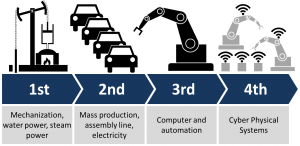
Industry 4.0 is a vision of integrated industry implemented by leveraging computing, software, and Internet technologies. The 4.0 refers to the idea of a fourth industrial revolution:

  • First: production mechanization using water and steam power
  • Second: mass production (Henry Ford often cited as the innovator)
  • Third: digital revolution (e.g., machine tool numerical control, programmable logic controllers, direct digital control, and enterprise resource planning)
  • Fourth: Industry 4.0 leveraging cyber-physical systems, embedded computing, Internet of Things technologies.

The German strategy highlights cooperation between industry and science to promote closer links between knowledge and skills. In the final report for Industrie 4.0 entitled “Recommendations for Implementing the Strategic Initiative INDUSTRIE 4.0”, it describes using Internet of Things technologies, communications, and web services in manufacturing.

It makes it possible to create networks incorporating the entire manufacturing processes, converting factories into smart environments for tomorrow.

Vision for Industry 4.0
Industry 4.0

Industry 4.0 – The future of industrialization, empowered by technology and the internet

The vision of Industry 4.0 is to achieve higher productivity, efficiency, and self-managing production processes where people, machines, equipment, logistics systems, and work-in-process components communicate and cooperate with each other directly.

The main goal is to produce low-cost mass production to achieve make-to-order manufacturing of quantity by leveraging embedded processing and communications. Production and logistics processes are integrated intelligently, creating a real-time lean manufacturing ecosystem that boasts efficiency and flexibility.

This will help facilitate smart value-creation chains that include all of the life-cycle phases of the product – from the initial product idea, development, production and usage, to maintenance and recycling. This allows the business to constantly make improvements, based on informed decisions.
Automation and Big Data

Industrialization towards 21st century and beyond.

Data derived from the supply chains make it possible to optimize production steps and the entire value chain. For example, comprehensive real-time information enables companies to react during production such as anticipating the availability of certain raw materials based on price, quality, and other factors for optimal efficiency.

Data extrapolated could also be shared across company boundaries, to save resources and energy.

The digitization of industry is forecasted to foster new business models and present great opportunities for small- and medium-size enterprises. Currently, majority of the companies are already adopting this idea.

Benefits of utilizing Industry 4.0

Asynchronous Manufacturing

Gone are the days of factory lines.

  • Asynchronous manufacturing

Traditional assembly manufacturing lines are synchronous, with predefined workflows based on production work orders running in enterprise business systems. Production steps are centrally communicated to each manufacturing station synchronized by the assembly line.

In Industry 4.0 however, is based on asynchronous manufacturing, with components in the production flow using auto identification technology to inform each machine and operator what needs to be done to produce the customized end product at each step of the production process.

Flexible Machines, Adaptive to change

Just like Humans, Machines have to be flexible.

  • Highly Flexible Machines

The usage of highly adaptable and flexible machines is another aspect of Industry 4.0. This achieves a highly flexible, lean, and agile production process enabling a variety of different products to be produced in the same production facility.

Profitable mass customization allows the production of small lots (even as small as single unique items) due to the ability to rapidly configure machines to adapt to customer-supplied specifications and additive manufacturing.

Data is King

Manual Data Entry, a thing of the past. Slower data processing = less productive

  • Analytics

Other than relying on flexible and adaptable machines, Industry 4.0 systems capture a wide range of data that can be used to improve performance and productivity through analytics.

Analytics are used in a number of ways, including real-time predictive maintenance, which helps manufacturing companies avoid interruption in production by machine failures—directly improving asset utilization. With analytics, businesses can make informed decisions on production operations, improving productivity and energy efficiency.

Technology and civilization

Technology, empowering the future and beyond

  • Technology

The application of the Industry 4.0 vision is turning into a reality with technological advances driven by the Internet of Things which includes open software platforms, open communications, and powerful embedded processors.

Industry 4.0 uses the term cyber-physical systems (CPS) to describe the interaction of physical and computing, including embedded intelligence at all levels, including machines, sensors, actuators, production parts, subassemblies, and products being produced.

CPS is composed of physical entities, such as mechanisms controlled or monitored by computer-based algorithms. A current example of the application of CPS is mechatronic drive systems that use processors and communications embedded in motor drives to accomplish coordinated operations in a packaging machine without physical gearing. This saves significant cost, providing greater flexibility and improved reliability.

Proliferation of Industry 4.0

The fundamental reason behind shifting towards Industry 4.0 is the realization that pursuing low labor costs is no longer a strategy. Staying competitive and flexible can only be accomplished by adopting the latest technology – in this case, banking on automation.

Historically, if we were to refer to the Second Industrial Revolution, Henry Ford pioneered the assembly line method of producing automobiles.

Automobiles were only available to the affluent back in the days but by manufacturing an affordable car by means of simplifying the process from 12 hours to a mere 93 minutes, Ford, with its Model T, commanded a 48 percent share of the automobile market.

Competitors knew that they had to implement such technology of assembly lines or be at risk of bankruptcy if they could not compete.

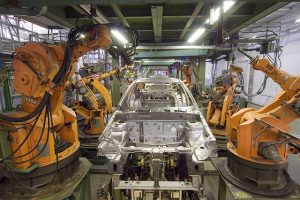
With Ford’s revolutionary strategy in 1914, the U.S continued to contribute to 48 percent of the world’s automobile throughout the 60’s. By 1997 however, Japan took over, producing 21 percent of automobiles. The success of the Japanese automotive manufacturers was attributed to advanced manufacturing methods, aggressive automation and widely use of robotics (Currently, Japan has 323 robots per 10,000 people).2

Source: https://ifr.org/worldrobotics
Robots in Japan

Robots are solving the issue of manpower in Japan

At that time, U.S automakers had access to similar technologies and methods but did not pursue them until compelled by economic factors.

In 2014, Japan had 13 percent share, just below Germany at number 1 at 23 percent. U.S remains at 9%, a shadow of its former self, considering the 48 percent in 1960.3

Source: Harvard Atlas of Economic Complexity

Because of this example, manufacturers around the world are accrediting the success of automation as factors in producing products with precision and consistent quality.

In 2014, China was the single largest market for industrial robot sales. Based on the present rate of robot adoption, within two years, it would be predicted that there will be more industrial robots in Chinese factories working hand in hand with manual workforce than in the European Union or the U.S.

Conclusion

Based on historical data and countless of analytics on the web, as a business, there’s no escaping Industry 4.0 and the Industrial Internet of Things. Businesses must be prepared to usher this new technology and adopt it, if not soon. Competition is high especially with globalization and the need to produce low-cost products at high quality.

In Germany, such initiatives are being supported by the government. Japan, India, and China are following closely behind.

The question is, can Southeast Asia keep up and from it emerge companies who will pioneer new technological innovations?

Interested to find out more? Get in touch with us at marketing@phoenixcontact.com.sg!

Phoenix Contact Has Industrial PCs (IPC) Too!

From |

Phoenix Contact has come a long way with our IPC.  Yes! Industrial PCs. We have always been known for our terminal blocks and other passive components such as relays and PCB connectors. However, Phoenix Contact is not a name one would link to IPCs.

Hydroelectric Power Station

Source: Ontario Power Station

Embarking on a drive to introduce active components during the 1970’s, the ‘Second Industrial Revolution’, success was achieved in the European Automotive market since it was a period of rapid growth. With the mass production of cars fueling industrial progress, our INTERBUS range of automation products soon elevated Phoenix Contact to become a household name in the European Automotive Industry.

Unfortunately, the same success could not be replicated in Asia.  With Japan being the only player in the past 5 decades and in recent times China, Thailand and Malaysia, the Phoenix Contact name did not really catch on in Southeast Asia for Automation products such as the Programmable Logic Controllers (PLC). Nevertheless, in the last two decades, Phoenix Contact continued to develope a wide range of automation products targeted at other industries.

One such industry is the Power Industry.

More Than Just Terminal Blocks

In one of our recent roadshows, we found out that a hydroelectric dam managed by the local utilities authority was expanding with two new plants. Our customer was in need of our components such as digital display, measuring instrument, relays, terminal blocks etc…and we provided them with samples to test.

During the engagement with the project team, we realised that they were in need of an Industrial PC to use with their software to drive the Power Management System.  We proposed our product but the team was skeptical if our IPC would be compatible with their software. They have had no prior experiences with our IPCs.

Consequently, we loaned them a sample for testing. Reformatting our IPC to install a fresh copy of their software, our hardware was connected and tested with their system. The team concluded that our IPC was 100% compatible with their software.

Why Phoenix Contact’s IPC?

Phoenix Contact’s IPC was chosen not just because it was 100% compatible with our customer’s software but because of our teams dedication to ensuring that our customers would be successful integrating our products into their system.

Throughout the testing, our team provided close support and technical assistance to help streamline their engineering and design process.

What Products Do We Recommend?

EMPro Energy Meter

EMPro Energy Meter

Measuring instrument – EEM-MA600 – 2901366 : For measurement and indication of electrical parameters (voltage, current, frequency, etc) in which voltage and frequency are converted to analog outputs to feedback to Power distribution system for generator control.

Digital Display

Digital Display

Digital display – FA MCR-D-TUI-UI-2REL-UP – 2907064: For the measurement and indication of generator bearing and winding temperature via RTDs. Relay outputs from digital display triggered upon reaching temperature threshold.

Industrial PC (IPC)

Industrial PC

Industrial PC – BL PPC 7000 – 2701398 – For the running and operation of the Power distribution software.

Relay module

Relay Module

Relay Module – PR2-RSC3-LDP-24DC/2X21 – 2834643: Used as interposing relay which requires at least 10A.

Our team is dedicated to helping you to find the products that best fit your requirements.  If you are successful, we are successful.  Contact us at marketing@phoenixcontact.com.sg and we will gladly visit you to let you know more about our products and services.