
Category Archives: Industrial Components

Product identification – Can you survive without any?

From |

The need for product identification is not new. Since the early days of civilization, due to a lack of technological advancements, products traded and sold were identified in different ways. Clay jars, crates and sacks were distinguished through the shape of the vessels or unique markings made on them for identification purposes.

Dating back to 6000 BC, barter trading was the main system for the exchange of goods and services; this was before the invention of money.

By F.S. Church, published in Harper’s Weekly, January 17, 1874, p. 61. [Public domain]

The Need for Product Identification

Over time, the situation then transitioned into exchanging money for goods. With the evolution of business into mass production, previous methods of identification were not sustainable as  products now needed to be identified through category, name and description.

Similar to the evolution of street names, housing numbers, or even zip/postal codes, the invention of such identification allowed people to easily identify where they were going. Consequently, with ever-increasing inventories of parts and products, manufacturers and stores required new control mechanisms to track their status. Product identification became important in business in terms of logistics and data analysis.

After knowing the brief history for production identifications, we have seen these requirements for marking and identification evolve tremendously and can be found in almost every aspect of our modern day life or business.

What is tagging and marking like these days?

Today, our tagging & marking typically need to serve 5 key purposes

  • Product Identity
    The most basic and important purpose of labels is that it has to convey information on its identity mainly for tracking and tracing purposes. This can be in the form of descriptions, revisions, serial numbers or lot numbers. Another key identification purpose, especially in the Food & Beverage Industry, is to state the Manufacturing Start/Expiry date. Some labels would also need to include specific types of information as required by government legislation.
  • Security Risks
    Labels play a crucial role to reduce security risks due to the proper identification written on it. When there is a need to prevent any unauthorized opening of the packaging, there can also be tamper resistance labels to avoid such happenings.Labels could also have authentication seals such as serial number, barcodes, RFID, to reduce the risk of forgery or tampering.
    Product Identification - Tamperproof EMLS Label
  • Marketing
    The use of labels can also be for persuasion to encourage potential buyers to purchase a product. This is usually done with the use of graphic designs, attractive words and titles to entice the buyers. Most commonly, designed to reflect the brand’s message and speciality.
    Product identification - Stainless Steel self-adhesive label
  • User-Convenience
    Labels can contain information that could help the user/buyer by conveying instructions on handling, usage, display or sale.
  • Quantity Information
    Quantity is another important piece of information that would typically be required on labels. It tells the buyer or user the number of item in a covered packaging without the need to open up the package.

An ideal label concept would allow a product to be able traceable from the hands of an end user all the way backwards through delivery, manufacturing, raw material processes and to the point where supplies of raw material are identified.

With these said, if you require such a labeling system, Phoenix Contact has the perfect solution to provide you such printing mechanics. Our range of printers can provide the optimal labels that you require. “Clip Project Marking”, our labeling software, allows you to create your own product identifications by adding letters, numbers, barcodes, symbols, logos and pictures!

From there, you can print with the range of printers and over 3000 different materials catered for different uses and surfaces! Leave us your contact details at marketing@phoenixcontact.com.sg to learn more about Phoenix Contact Printing system.

Phoenix Contact – Your Partner in Safety and Reliability for Railway Industry

From |

RailwayPhoenix Contact has been serving the railway industry for decades, especially for rolling stock and signalling. Safety and reliability has always been our number one concern when developing products for railway applications.

Safety on Board

The basic requirement for safety and reliability is standard compliance. Phoenix Contact has been certified by the International Railway Industry Standard (IRIS) since April 2008 and this standard is based on the quality management standard DIN EN ISO 9001, which has been extended with international railway-specific requirements. The ongoing tests during the development and production cycle of the products are essential to guarantee the product quality.

On top of that, all rail-specific products from Phoenix Contact fulfill the standards of DIN EN 50155, an international standard covering rolling stock; DIN EN 50121 electromagnetic compatibility; and EN 45545, fire protection on rail vehicle. Besides, shock and vibration test, material test and other fire protection is also critical for the railway application.

Safety should not be limited to the big ticket items and should even be extended to the passive component level. For example, the cable markings like shrink sleeve should be halogen-free and fulfill DIN 5510-2 with an oxygen index of 34.9%. besides being halogen-free, the cable ducts should enable individual bars to be broken without using any tools or resulting in any burr through defined breaking points according to EN 45545-2 (R22/R23:HL3). Behaviour in fire is another key concern and the plastic used for Phoenix Contact’s terminal blocks is halogen-free polyamide PA 6.6; which meets the highest safety requirement of UL 94 V0.

Push-in Terminal Blocks and Marking

Push-in Terminal Blocks and Marking

Cable Management

Cable Management

Network on Board

Nowadays, commuters demand for “Internet on board” has made the information and infotainment systems essential in trains. The M12 network connectors with a mechanically robust design, in compliance with IEC 61076-2-101, together with high quality cables meeting the requirement of EN 45545-2 will ensure reliable communications. The heavy-duty connector, compliant with IEC 61373, with modular contact inserts form a flexible and safe transmission of signal and power circuit on rolling stock carriage connection and simultaneously ensures comprehensive protection in the event of electromagnetic interference fields.

Halogen-free Polyamide PA 6.6

Halogen-free Polyamide PA 6.6

M12 Network Connector

M12 Network Connector

Surge Protection

Surge voltages and lightning strikes are common issues in signalling, hence the surge protective device (SPD) become significantly important to maintain reliable signal transmission. Phoenix Contact’s SPD has been tested according to IEC 61643-21 and the plug can be disconnected for test and maintenance by using the portable test laboratory. According to IEC 62305-3, the SPD must be tested regularly and the test values should be documented and traceable. Additional features like multi-stage monitoring (green – operating, red – fail and yellow – reach performance limit) for predictive maintenance and remote signalling for early detection of overloaded SPD can help to further enhance reliability.

HEAVYCON HPR

HEAVYCON HPR

HEAVYCON Modular Inserts

HEAVYCON Modular Inserts

Signal SPD with multi-stage monitoring (PT-IQ)

Signal SPD with multi-stage monitoring (PT-IQ)

Signal SPD with remote signalling (TTC)

Signal SPD with remote signalling (TTC)

Power Supply

The power supply unit (PSU) is used to convert main AC to low-voltage regulated DC power and it should at least be compliant with EMC Directive 2014/30/EU, IEC 60950-1, DIN EN 61558-2-16 and UL 508. To ensure smooth operation and maximum uptime, the redundancy setup of the power supply cannot be overlooked.

A redundant system can made up of two power supplies and a diode or Phoenix Contact’s O-RING to prevent back flow of current. An ORING being a more advanced and modern redundancy module compared to the diode, comes with auto-current balancing (ACB) technology which ensures the power supplies work equally hard. This enables the power supplies to have a longer and more consistent lifespan.

The redundancy status as well as the status of the ORING can be monitored, whereas this cannot be done with a DIODE. The PSU becomes more reliable and dependable when it is capable of sending analogue signals to control system on measurement values such as real time current, voltage and power for early detection of operational fault as well as critical information to the user.

QUINT 4 Power Supply With Diode

QUINT 4 Power Supply With Diode

QUINT ORING with ACB

QUINT ORING with ACB

Transporting You into the Future

Phoenix Contact will continue to develop the products or solutions that suit railway application and safety and reliability will always be the top concern on top of ease of installation, operation and maintenance.

To find out more about the solutions that Phoenix Contact has for the railway industry, check out our website or leave us your contact at marketing@phoenixcontact.com.sg and I will get in touch with you as soon as I can.

Cut, Strip and Crimp – Tools to Ease Your Cabling Pains

From |

Today, we enjoy the fruit of technology as we turn on our television, air-conditioner, lights or our smart devices. Have we thought about what are the nitty-gritty details that have led to our enjoyment in this day and age?

What is common amongst all this technology is the need for electricity, and more importantly, what carries electricity around are wires.  Wires and cables are the root that carries electricity all round; it allows current to flow from one point to another. What is often missed out is the hard work spent by the electricians who, behind the scenes, manages this labyrinth of wires.

Messy cables

Photo by: Derek (https://www.flickr.com/photos/dcmorton/2446443103)

Cutting, Stripping and Crimping are steps that are very familiar to our electricians. However, they are not just merely steps; but in fact, they are techniques that we need to offer much respect to the electricians who handle them. Providing the right tools for the job makes it even more crucial to ensure they put their techniques into the right place.

Cutting, Stripping and Crimping of wires sound easy and effortless. However, using it on a daily basis requires the tool to be designed more than just a normal tool. Phoenix Contact takes ergonomics, usability into consideration and provides the optimal tools for its end users.

Tools to Cut, Strip & Crimp

Cut – CUTFOX 18

Phoenix Contact Tools - CUTFOX 18
  1. Safety Lock
    Safety is a true concern in a workplace, and every effort to keep the workplace safe is extremely important. Slip guards are attached in our cutter which keeps the blades closed.
  2. Less Fatigue
    Spring-loaded pliers opens up automatically, which means users spend lesser energy. With the pivot near the cutting edge, it provides optimum power transfer.
  3. Cutting Quality
    Cut your wires perfectly with the special curved metal giving your wires a nice and squeeze-free cut.
  4. Reliable Material
    The steel material of the cutter has gone through heat and surface treatment ensuring your tool to be long lasting and corrosion resistant.
  5. Comfort
    Consisting of both soft and hard parts, meant for the best comfort for any hands. The curved designed of the handles and the angled head for the ultimate ergonomics.

Strip – WIREFOX 10

Phoenix Contact Tools - WIREFOX 10
  1. Easy Adjustment
    Depth of the blades can be easily adjusted as required. Length of the stripped length can also be easily adjusted with the small measurement ruler and the stopper in place.
  2. Flexibility
    Interchangeable knife cassette gives you the option for all different wire sizes as required. One casing for all wire sizes!
  3. Stopper
    A wire stopper equipped in the knife cassette helps you to position your wire at the stripping length you need.
  4. Convenient Cutter
    Equipped with a cutter at the side, it gives you the convenience to cut your wires any time.
  5. Comfort
    Consisting of both soft and hard parts, meant for the best comfort for any hands. The curved designed of the handles and the angled head meant for the best stripping experience.

Crimp – CRIMPFOX CENTRUS 6S

Phoenix Contact Tools - CRIMPFOX CENTRUS 6S
  1. Multi Range Die
    Self-adjusting principals of the die covers a large cross section (0,14 – 6mm²), so you can use one tool for most of your needs.
  2. Good and Complete Crimp
    Built in ratchet mechanism is the key for a good crimp as it doesn’t allow the pliers to open until the process is complete. In this way, it ensures a proper and complete crimp.
  3. No need for recalibration
    Due to the special die closing process and its ball bearings, it reduces wearing out. Thus, eliminating the time and effort you need for re-calibration.
  4. Less effort
    Equipped with a rotating crimp mechanism, together with the tool size, ensures an optimum power transmission. In other words, you use less energy!
  5. Comfort
    Consisting of both soft and hard parts, meant for the best comfort for any hands. Its small size of 18cm tall, 6.5cm wide, and weighing at 380g serves as a compact and handy tool. The optimal positioning of the pivots gives the smallest opening handle angle in the market. Not forgetting the soft non-slip pressure pad supports your force transmission, so you can, for example, have it sit against a table surface!

After introducing the key features and ergonomically designs of our Phoenix Contact tools, would you like to experience it first hand on its comfort and ease of usage?

Cut, Strip & Crimp Toolkit Promotion

Get a “Cut, Strip & Crimp” Toolset kit today with our current promotion in Phoenix Contact!  For more information on the promotion, just leave us your contact details at marketing@phoenixcontact.com.sg and we will get back to you soon.

QPD in Conveyor Systems

From |

QPD is a product that was launched few years back. While this “forgotten child” is hiding somewhere in the dark recess of Catalogue 2, I feel that the QPD deserves some credit and limelight.

When we present QPD, we always talk about the concept of it and how it benefits the customers in time & cost saving. QPD was never meant to be in the “cheap” category and I think all of us know that good & fast things aren’t cheap!

I would like to share my recent experience with a customer who was deals in warehouse management system. Generally, this system is actually automated conveyors ‘pick & place’ goods and deliver to a designated area.

Conveyor System

A typical conveyor system consists of 2 zones. Firstly, there is the Safe Area (controls) and then the field area (site). The Safe area usually houses the main PLC, whereas the field area is the sensors, motors, e-stops, etc. There will be multiple stations at the field area which usually stations the motors, isolators, e-stops, etc. The number of stations is very dependent on the size of the system itself. These stations are quite a distance apart from each other and power cables are necessary to be laid across the conveyor system to power up the motors, electrical components, etc.

Conventionally, power distribution boxes are used in each station to split the main power to the respective individual stations. This power distribution box has one main requirement; at least IP65 rated. This is where QPD comes into the picture where it fulfills the IP requirement and while offering even more compared to the conventional junction boxes.

Conventional way
 Din Rail

+

 PT Terminal Block

+

 Junction Box

+

 Cable glands
Din rail Terminal Block Box Glands

QPD – The Phoenix Contact way!!

QPD H Distributor QPD T Distributor

This solution require either the QPD H- or T- distributor only! No special tools needed!! No cable stripping & crimping process. This saves you up to 80% of installation time.

https://www.youtube.com/watch?v=4HPZ1P-1NVU

In conclusion, yes you might need to pay a premium for QPD but I am very confident that the gains you get outweighs what you paid.

Check out our website for more information or leave us your contact and we will get in touch with you.

Make-before-break – Terminal Blocks for CT Test

From |

Make-Before-Break

Make-Before-Break (MBB) is a term “Denoting a switch or other device in which a new electrical connection is made before the existing one is broken”. In short, it simply means, shorting the circuit before disconnecting it.

You may know about MBB when purchasing a relay. But do you know there are terminal blocks designed with MBB in mind too? These MBB terminal blocks can usually be found in power industry applications.

For those who are familiar, you may have come across this term (MBB) during a Current Transformer (CT) testing on a protection relay. However, do you know the importance of ensuring MBB when conducting a CT test with your Terminal? Or what the consequences will be of not having a terminal blocks that comes with a MBB feature during the test?

Protection Relay

A CT will certainly be at risk of being destroyed or even worse (Explosion!) if the secondary is left open circuit while the primary current is present. This is due to the insulation failing from the “higher than rated” voltage that occurs. Therefore it is extremely important to ensure MBB before conducting a live testing. A good terminal block with MBB feature will definitely help you provide the extra mile in ensuring safety.

How does the MBB terminal blocks function and what does it look like?  Here are some good examples of a good MBB terminal block.

  1. A good MBB terminal block must have the feature where shorting is always present first before you are able to break the circuit. It would be best if the terminal blocks are able to automatically perform the short circuit for you whenever it is being disconnected during the CT test.
    Short Circuit function closed Short circuit function open
  2. Clear indication of Short Circuit and disconnection must be visible and this allows your engineers to have an ease of mind during testing.
    PTME
  3. Good MBB terminal blocks should have safe and easy to operate features. Having said that, these features can help to cut short the time while testing (shorten the risk) and ensuring the safety of the person that is conducting the CT test.
    PTME Terminal Blocks for CT Test

So where can you find good MBB terminal blocks for your applications? Phoenix Contact, of course!

With 94 years of experience manufacturing and designing terminal blocks for the Power Industry. Phoenix Contact has never stopped developing new innovative testing terminal blocks that will suits your application, at the same time ensuring safety and quality.

For more info, check out this video of our PTME terminal blocks or visit our website!

If you have more inquiries, feel free to contact us at marketing@phoenixcontact.com.sg and we will get back to you as soon as possible.

IIOT Connectivity Made Easy – PICs

From |

As industries advance towards future technology, businesses have to constantly keep themselves up to date. Failure to comply may result in two major repercussions:

  1. Slow adopters will see themselves lagging behind competitors
  2. Late adopters may see a rise in the prices to install these new technologies

IIOT, or the Industrial Internet of Things, is not a new term. Regrettably, many companies are still not developing sound approaches to adopt them.

Take for example refineries. Traditional data analytics such as spreadsheets are still being used to analyze processes and trends; using historic data to make operational decisions.

Interior of process plant

Refineries store millions of databases and at times it becomes challenging for engineers to extract information from a cesspool of data. To make matters worse, varying branches of the organization may utilize foreign systems which proved difficult when systems needs integration.
As a result, refineries are considered to be data rich but in hindsight, information poor.

I’ve got 99 problems

In a traditional data-analytic methodology, it is acceptable for engineers to find themselves stranded with missing data. The solution? Most rely on “Experience” or so-called intuition to solve their engineering woes and make “informed” decisions. Guilty as it might seem, ask any engineer who have worked in refineries and they might just confess to using this ‘archaic’ technique.

Refineries of the future (or refineries who will sustain in the future) will need to change a different tack towards how they organize their data. Engineers can employ advance data analytics to analyze and make comparisons to several vital parameters (such as temperature, pressure reading and flow data) that makes use of varying systems that have diverse data formats, all in real time.

Smart factory

Advance data analytics can run audits and identify data correlation among the different results and in any case if a deviation in the results of the data were to emerge, engineers will be notified immediately, in real time.

For example, it is common for an instrument’s pressure reading to fluctuate. Instrument’s pressure reading could also irregularly plunge due to ordinary situations such as a spike in production. However, leakages along the pipeline could also cause pressure readings to drop.
With advance data analytics, engineers are able to determine if such major shifts are justified.

Easier Said than Done?

Adopting new technology always come with anxieties. It is always easier said than done. Although the idea of running advanced data analytics may seem ideal, it is not without its challenges.

In order for all the varying hardware to get connected, it has to comply with a single universal format that allows data to be unified. This might be expensive if you need to hook up current legacy hardware to new technologies that may not have the compatible specifications to begin with.

IIOT Connectivity Made Easy

IIOT structure

Now, who says out with the old and in with the new? With Phoenix Contact’s revolutionary IIOT Connectivity (PICs) Box, we can assist clients by saving the hassle to consolidate hardware from different manufacturers and get them connected to new technology, within seconds. Our PICs combines new technology such as Controllers and Sensors and affix them with your legacy equipment so that data could be read by our software, how you want it, the way you want it.

Who says connecting to IIOT needs to be expensive and complicated?
With our PICs box, you’ll convert your backward refineries into Smart Refineries of tomorrow. Don’t believe us? Request a free trial of our PICs box by leaving us an email at marketing@phoenixcontact.com.sg and experience IIOT connectivity made easy for you today!

Shunt Reactor Controller

From |

Shunt reactor controller

Shunt reactor

What is a shunt reactor controller? I recall having the same question running through my head when a customer told us about what he was trying to do. Well, before knowing what a shunt reactor controller does, let us look at what exactly is a shunt reactor?

Some of you might wonder “Why does it look like a transformer?”. Yes, you are right, to a certain extent, because a shunt reactor does have similarities with a transformer in terms of its construction. However, they are both very different in terms of their functionality.

While a transformer is used to efficiently transfer power from one voltage system to another to cater for the application required, a shunt reactor absorbs reactive power generated from the source i.e. motors, generators etc.

Active and Reactive Power

What is reactive power and why do we bother to absorb? That might be the next question to ask. Before going into that, we need to understand that in an AC circuit, there are both active power (or real power) as well as reactive power, in which the active power is used to power up a system. To understand this from another perspective, think of it as a pint of beer where the beer is your active power and the reactive power is the foam.

The Beer Analogy of Active and Reactive Power

Reactive Power Analogy with Beer

Image from Electronics Tutorials (http://www.electronics-tutorials.ws)

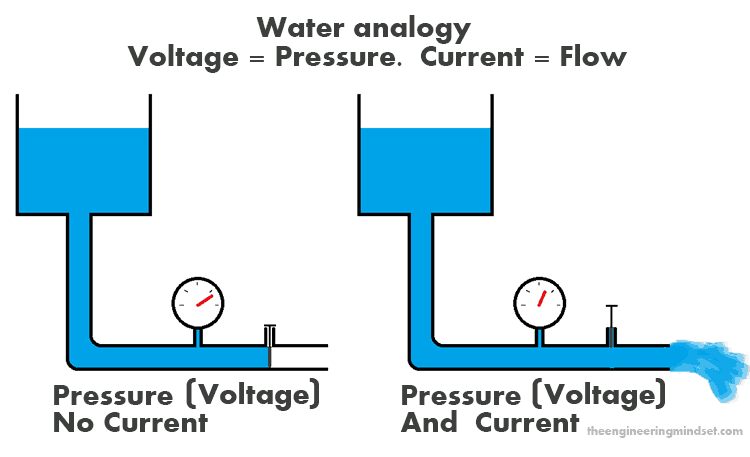
Let’s put water piping system as an analogy to electric circuit, and voltage is the ‘water pressure’. A certain level of water pressure is required in order for the water to travel across the piping system to the designated location to perform certain task, such as flushing your toilet bowl. Similarly, voltage plays the same role in an electric circuit to ensure that active power can be supplied to run any equipment or device. In this case, reactive power is the key element to maintain the voltage level in a circuitry.

The Water Analogy of Electricity

Water Analagy of Electricity

Image by: Paul Evans (http://theengineeringmindset.com)

Hence, instead of using the word ‘absorbing reactive power’, shunt reactor is rather used to stabilize or compensate the level of reactive power in an electric system.

From Component to Solution

Rewinding back a little on how this shunt reactor controller came about. It started with a normal enquiry sent in, asking for a voltage transducer. We followed up with a visit to the customer to understand further.

He showed us the solution that he was going to implement for his end user who runs a palm oil refinery. This was an existing solution in another plant where it was used to control the output of power that being transferred back to the grid from the bio-gas generation using the effluent of palm oil.

  • During the day, when most of the equipment in the plant is running, the whole electric system is highly loaded and more reactive power is consumed. Thus the causing the voltage to drop.
  • However, whenever there is less equipment running, less reactive power is consumed and hence the voltage increase.
  • This is the time when a shunt reactor has to be switched on to compensate the reactive power in order to maintain the voltage level at a particular rating.
  • Each shunt reactor has a fixed rating. Hence, putting several shunt reactors together and adding controls to it can achieve different reactive power compensation at one time, depending on the system load.
  • This whole solution is the basic working concept behind a variable shunt reactor, however cost is always a concern when it comes to such solution.

His idea was to duplicate the same solution in his project. Looking at the pictures he showed us, we believed that it was possible to be implemented with the range of products that Phoenix Contact has to offer. Hence we came up with the solution concept diagram with a brief program flow.

Customized solution from Phoenix Contact

We finally secured the project after a few rounds of discussion and modification to suit best to his application. The list of products that are put into this solution includes:

  1. ILC 171 controller – The processing unit to control the shunt reactor via relay and contactor.
  2. MCR voltage transducer – The main component to take in voltage from the system and convert it to readable value for the controller.
  3. UNO power supply – Main power source to the controller and other peripherals.
  4. TP 3150 Touch Panel – Serve as a HMI for the user to control the shunt reactor controller and display of current value of the system.
Shunt reactor operation concept

Basic operation concept of shunt reactor controller

Shunt reactor display panel

Shunt reactor controller

Shunt reactor

From a simple transducer enquiry to a shunt reactor controller project, we believe that with the available resources and wide range of product that we have, Phoenix Contact is able to customize the solution that is fit for your application.

Want to know more about how we can help in your next solution to your customer?

Feel free to drop us a feedback or send us an enquiry at marketing@phoenixcontact.com.sg. Who knows, your simple component enquiry for your project could be our next solution to you!

Let there be Light

From |

Let there be light: Phoenix Contact Components for Reliable Power Grids

On 7 July 2017, Phoenix Contact Singapore Team organised a’ Dining in the Dark’ event as part of Corporate Social Responsibility.  In the short 2 hours without our sight, we experienced a range of emotions such as fear and helplessness. This event also allowed us to understand the challenges that persons with visual impairment faced daily. It is truly a meaningful event that we are thankful to be able to experience with the friends we made from work.

Phoenix Contact's 'Dining in the Dark' CSR Event

Phoenix Contact’s ‘Dining in the Dark’ CSR Event

In today’s world, it might not be an exaggeration to say that we will feel the fear and helplessness if we do not have access to electricity. For a start, life-sustaining equipment in hospitals will not be in operation. Many of life’s conveniences such as lights, entertainment, air-conditioning etc. will be stripped from us. For this, electrical grids are always considered critical infrastructure all around the world and efforts are made to ensure the grid is always operating. Phoenix Contact contributes to this reliability with our products. Below are some examples:

    1. Terminal blocks (Clipline Complete)Clipline terminal blocks
      Our terminal blocks are widely used in power industry. For quick installation in Marshalling/Pilot panel, our customers prefer the use of

      • Push-in connectionThis connection method is fast, do not require special tools, safe, ensure consistent and good connection for every insertion and ideal for areas with high vibration. Most importantly, unlike screw connection, over time, push-in connection does not loosen.
      • QTC connectionThere is no need to strip the wire using QTC connection, making it the fastest way for wire installations. Moreover, Phoenix Contact QTC terminal blocks do not require special tools!
    2. Protection terminal blocksURTK-6 Test Disconnect Terminal Block

      Especially for CT testing, where you have to make the testing circuit before breaking the transformer circuit, it is important to ensure that the “make-before-break” is done properly! Failure to do so results not just in power outage, but often death.

      Our solution is our range of test disconnect terminal blocks, clearly labelled to ensure operators know exactly what is being done. There are also ample spaces for accessories for you to do the necessary bridging and testing.

      Offering inspiring innovations, Phoenix Contact has come out with a test disconnect system. Instead of manually doing the switching, why not let our system take care of it for you with Fast And Modular Energy system (FAME).

    1. DC/DC Converter and Power SupplyQUINT DC/DC converter and Power Supplies

      Usually in substations, there will be 110VDC power supply. However, most electronics components (remote IO, network switch, RTU) requires 24VDC/48VDC power input.  For this purpose, many substations around the world choose Phoenix Contact Quint IV Power Supply.

      Your advantages

      • SFB Technology selectively trips standard circuit breakers, loads connected in parallel continue working
      • Preventive function monitoring indicates critical operating states before errors occur
      • signalling thresholds and characteristic curves that can be adjusted via NFC maximize system availability
      • Easy system extension thanks to static boost; starting of difficult loads thanks to dynamic boost
      • High noise immunity, thanks  to integrated gas-filled surge arrester and more than 20 ms mains failure buffer time. Moreover, Phoenix Contact Quint IV Power Supply comes IEC61850-3 certified. This means that the unit can be used even for IEC61850 applications!
    1. Interposing relays
      With a wide range of relays, Phoenix Contact has the right solution for all standard relay applications, such as interposing relays.

      Your advantages

      • Easy handling, thanks to modern wiring and potential distribution concept
      • Easy extension to a timer relay, thanks to plug-in special function module
      • Complete product range covering all standard relay applications
      • Reliable system for high machine and system availability
      • Available as a complete module or modular system
Easy Wire Termination  Easy Power Distribution  Complete Product Range

Test Disconnect Push-in Connection

Our relays with push-in termination technology provide fast and easy tool-free wiring. Simply push the wire into the terminal , using very little force. Remove the wire by pushing done on the release button, using a screwdriver or ballpoint pen.

Test Diconnect Terminal Block Jumper

Reduce your wiring time up to 70 percent by using our modular terminal block plug-in bridges. These time-saving bridges ensure a reliable connection and reduces the possibility of wiring errors.

RIFLINE Complete

Switch currents up to 16 A. From coupling relays to a replacement for small power contactors; the product range offers the right relay for every application. Benefit from a uniform and consistent system

  1. Heavycon (Heavy-Duty Connector)
    Substations have high EMC and electrostatic interferences. They are also generally not places that people like to hang around in! Heavycon can help to reduce installation/maintenance time and at the same time, ensure reliable power/data/signal transmission. With a modular system, you can combine Fibre, Ethernet, Serial, signals, power all in 1 connector!

HEAVYCON Modular Connector

For example,

  1. the Local control cabinet can be connected quickly to the bay cabinet
  2. The Circuit breaker compartment can be easily disconnected/connected to the switchgear

The Revolutionary Test Plug Redux – FAME , FAME 2 and now FAME 3!

From |

Phoenix Contact's FAME 3

It was 2 years ago when I have first blogged about our revolutionary panel testing system – FAME systems that helped many of our customers worldwide in simplifying their protection relay panel testing procedure and at the same time ensuring the safety of the person who is conducting the test.

Do check out my previous blog “FAME 2- Enter, Push, Twist and Remove”, I did explain why Phoenix Contact FAME system is such a revolutionary testing system.  If you are dealing issues with your protection relay testing or any needs of installing a panel testing component, make sure you stay with us in this blog as I will review some updates and features that might be beneficial  to you.  No worries if you have missed out the previous blog, you can still read it here. Continue reading

Marking @ Phoenix Contact

From |

Phoenix Contact Printers

Some call it marking, others call it printing. At the end of the day, we require objects in our lives to be labelled, just like how every of us have a name or identification number. Before I joined Phoenix Contact 2 years ago, never did I know that Phoenix Contact offers such a wide range of marking possibilities!

At Phoenix Contact, we have 3 different technologies involved in our marking systems:

  • Thermal Transfer
  • LED-UV
  • Laser

Thermal Transfer Printers

Our range of Thermal Transfer printers include Thermomark Roll, Thermomark Card, Thermomark Prime, and Thermofox.

Thermal transfer

Phoenix Contact’s Thermomark Roll, Thermomark Card, Thermomark Prime, and Thermofox utilise thermal transfer technology

This printing technology allows affording cost of printing, but yet allows text, graphics, batch numbers, and bar codes to be printed. Being economical and flexible, our Thermal Transfer printers allow users to do either batch printings, as well as continuous printings without wastage of materials!

LED-UV Printers

BLUEMARK CLED UV Printer

BLUEMARK CLED UV Printer

LED-UV: A revolutionary technology which is used in our Bluemark CLED printers. Not only does this marking system prints on plastic, it prints to aluminium too! The UV light will cure the ink and bond it to the material to ensure high resistance levels in various environments. The current markers allow marking of conductors, cables, and systems, covering the entire field of device and system marking!

Laser Printers

TOPMARK Laser Printer

TOPMARK Laser Printer

Laser: Another groundbreaking marking system which uses a top class ytterbium fibre laser to mark on more than 400 different markers, ranging from stainless steel to aluminium to plastic. No ink or toner will be required due to the fact that the laser marks directly onto the marker material. Therefore, the resistance level of the markings are able to withstand the harshest environments and conditions, as long as the base material lasts!

CLIP PROJECT Software

CLIPPROECT Software

CLIPPROECT Software

Just a single, free, software is required to design and send print jobs to Phoenix Contact’s range of printers. CLIP PROJECT has more functions that you can imagine, it even allows data to be automatically imported from Databases straight to prints. CLIP PROJECT and Eplan have been partners for quite some time, and this means that users can seamlessly allow direct printing in CLIP PROJECT straight from Eplan schematic. The CLIP PROJECT planning and marking software is all you need, and you may find more information of this software here.

Yes, it is free to download and free to use: No need to worry about having dongles for every computer, or annually paid subscriptions!