Everyone has tangible or intangible possessions that are close to our heart.
We will purchase insurance for our loved ones or get a mobile phone cover to protect our latest mobile equipment against impact. When the world was hit by COVID, we protect ourselves with masks and so on.
How do we protect our three-phase asynchronous motor from overloading and on and off switching procedures? Failure to protect these motors would result in downtime, production delays etc.
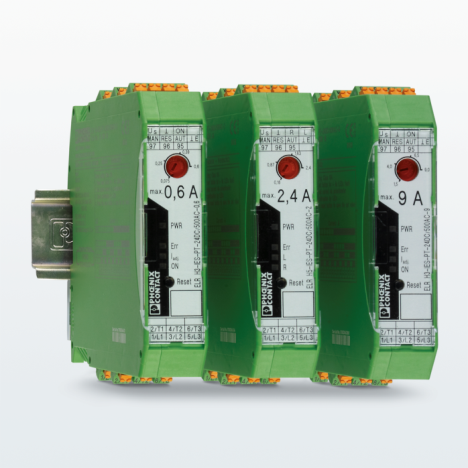
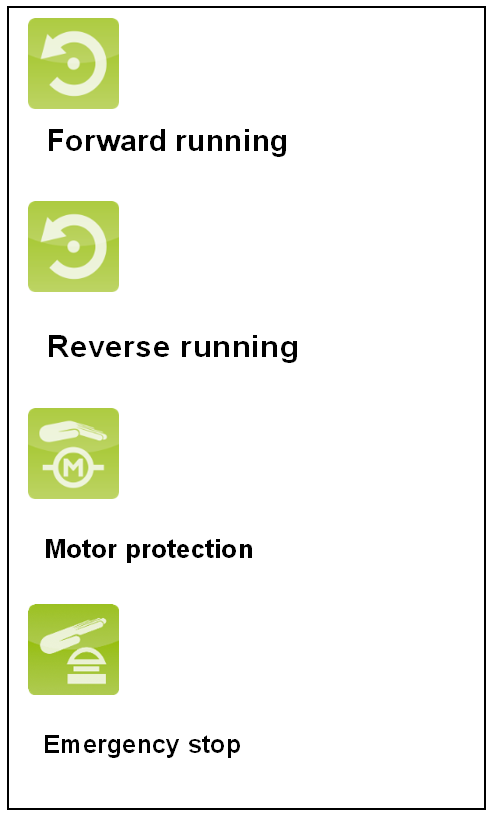
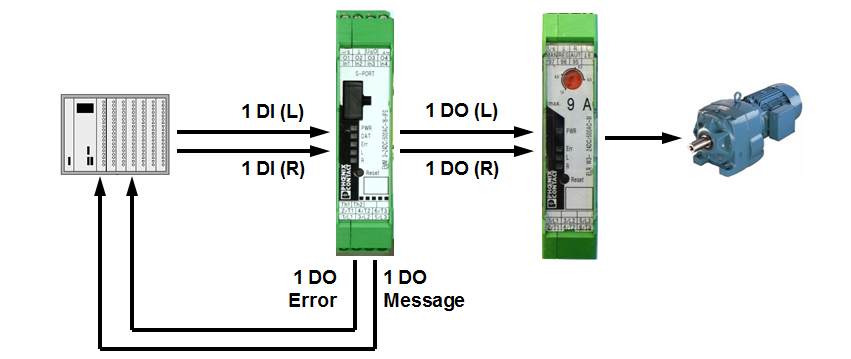
Phoenix Contact offers various CONTACTRON hybrid motor starters that combine up to four functions in one device:
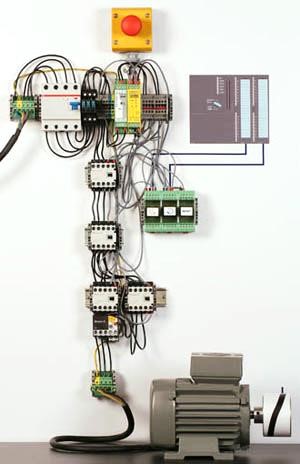
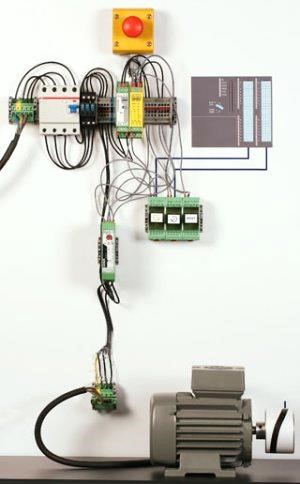
CONTRACTRON also eliminates the usual way of wiring by integrating all the important functions into your safety chain.
Less wiring = Less mistakes
We have various specifications to suit your motors’ needs.
Get in touch with us and we will provide the best protection for your motor needs.
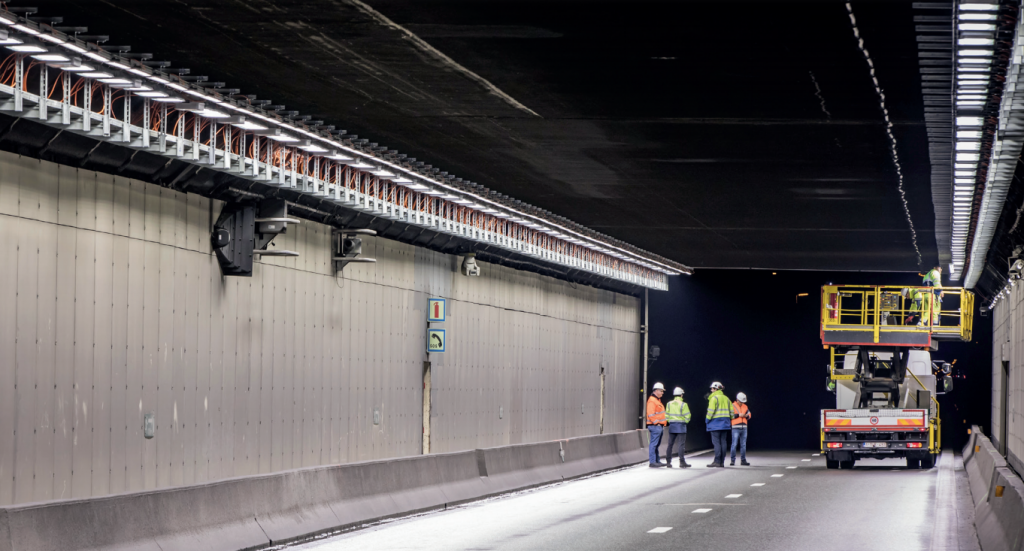
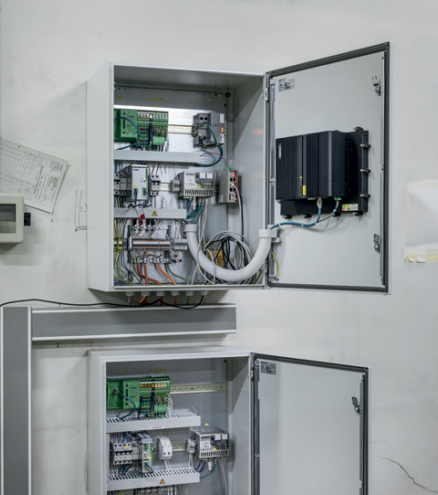
Vierarmen Tunnel – Belgium, is a 540 metres long tunnel which underwent a massive relighting project of more than 1,400 light modules. Advanced Automation was also implemented to enable remote operation and monitoring of the new LED tunnel lighting.
By replacing the old fluorescent and sodium lights with LEDs, the primary objective is to achieve energy savings. The longer service life of LED lights also means less maintenance is required, which translates to less holdups for road users.
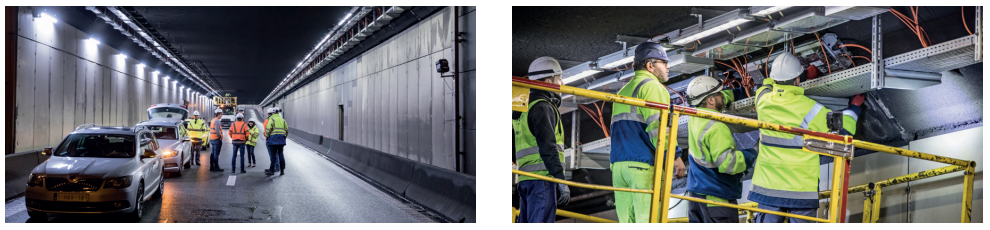
Every effort was made to minimise inconvenience caused by the lighting replacement. The replacement work was completed in 45 nights per tunnel shaft, all thanks to the advance preparation and the simplicity of the plug-and-play system.
Good Collaboration
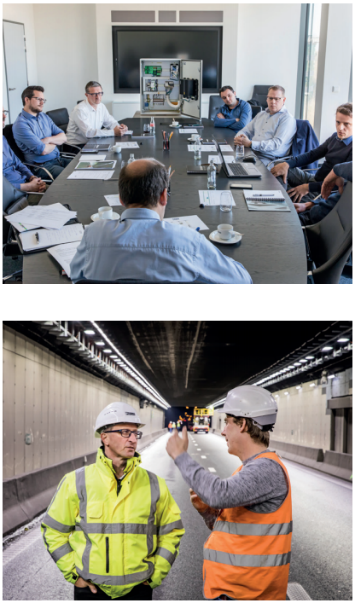
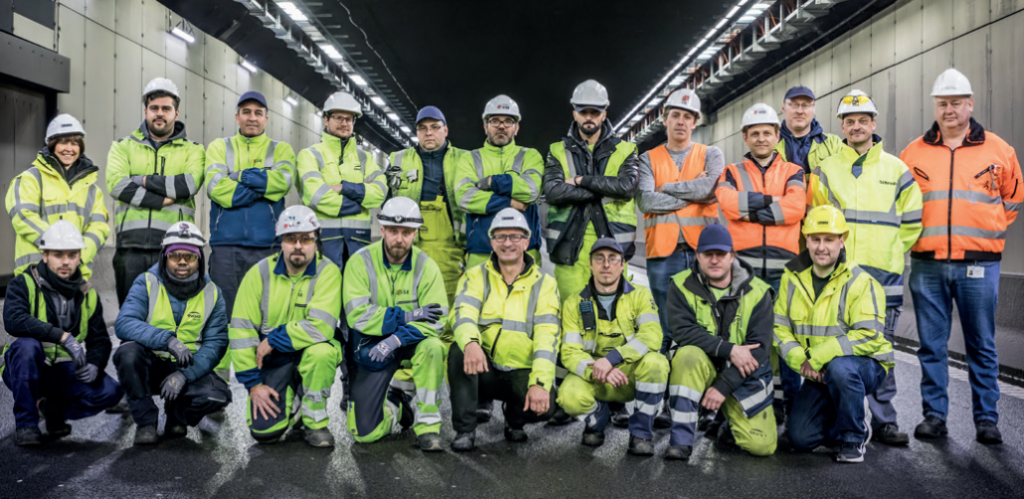
The replacement of the lighting in the Vierarmen Tunnel was carried out by the VSE – ENGIE Fabricom joint venture. Lighting systems from the Belgian manufacturer Schréder were selected.
Phoenix Contact supplied the Tunnel Control System and dealt with the implementation of the plug & play concept. Lastly, Tein Technology was the supplier of the central operating and monitoring system of the Flemish tunnels in the control room.
Every aspect of the installation was optimally coordinated to finally arrive at a reliable solution and to permit the installation of the system to occur smoothly and efficiently.
Minimum Energy and Maintenance
At the entrance to the tunnel, 300 candela per square metre is required. This entrance luminance is achieved by means of TAG lighting equipment.
Steven Hulpiau: “Because the light fittings can only be positioned on the side wall of the tunnel in this case, we are using special lenses that scatter the light beams to the side. In this way we can guarantee the required brightness everywhere in the tunnel with a minimum of energy. An additional saving arises from the fact that the lights can be dimmed.”
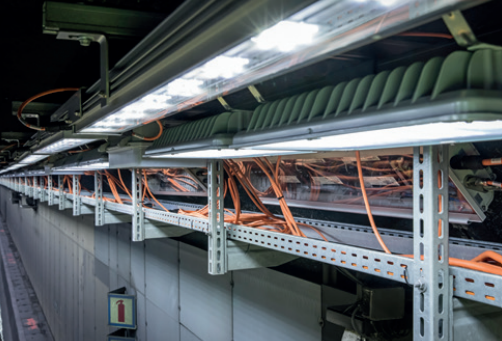
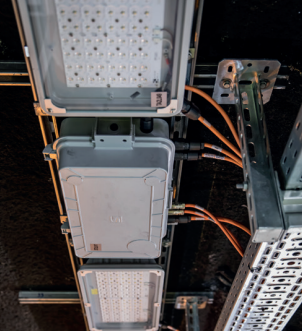
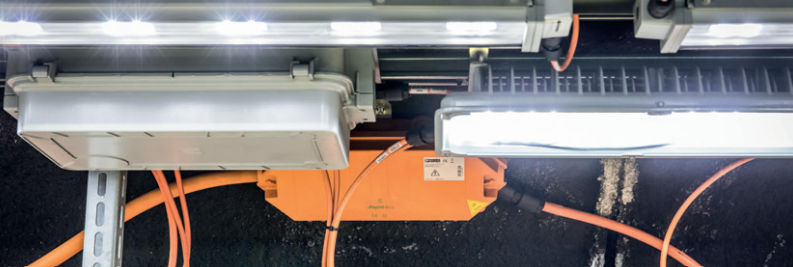
The electronics that control the lighting and that are normally located in the light fittings were in separate “driver boxes” installed right next to the light fittings. The advantage of this is that the light fittings do not have to be opened if maintenance needs to be performed on the electronics later.
Tunnel Control System
Tunnel Control System from Phoenix Contact is the beating heart, which consists of a controller, I/Os and communication modules that are used worldwide in tunnel projects.
The electronic control of the lighting makes a whole range of options and scenarios possible. To start with, there is the difference between daytime and night-time mode with lights that can be dimmed or switched off at night. The brightness control considers the sensors for measuring the luminance at both entrances to the tunnel. The aim is to guarantee sufficiently bright lighting with as little energy consumption as possible.
Plug & Play
For the new lighting installation to be carried out smoothly, various parties on the project collaborated on a plug & play concept.
Phoenix Contact’s QPD connectors were selected for the data network and the supply to the driver boxes and light fittings. Every cable in the tunnel project was custom prefabricated in advance, equipped with the required connectors and labelled.
The aim of this is not only to save time but also to increase the success rate during installation, which is, at its core, once more a matter of saving time. Compared with the traditional connection method, the use of the QPD connectors achieved a time saving of 75% during installation, and up to 15% of the total installation time in the tunnel.
Thanks to the seamless cooperation between the various parties and the consistent application of plug & play principles, the relighting project for the Vierarmen Tunnel was completed in a smooth and efficient manner. A sustainable, technologically high-quality solution was implemented with minimal inconvenience. Good lighting in tunnels is an essential aspect in guaranteeing the convenience and safety of road users.
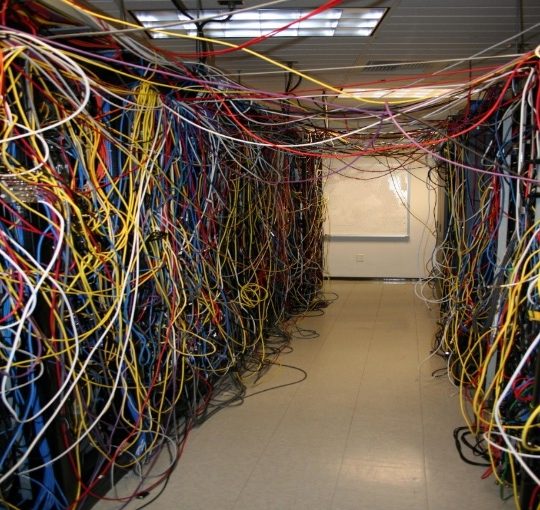
If you were to connect one or more wires, you may simply think of connecting them from one point to another. Well, you can do that technically. However, things could get messier than expected.
YES, without any prior planning on how wires are to be connected and a proper design of control cabinet layout, you may face the cable jungle, just like what you see in the photo. If you have to perform maintenance or troubleshooting on the control cabinets, this will possibly be one of your worst nightmares! It’s not only about complexity of your job but also your safety.
Not to worry, we are here to help!
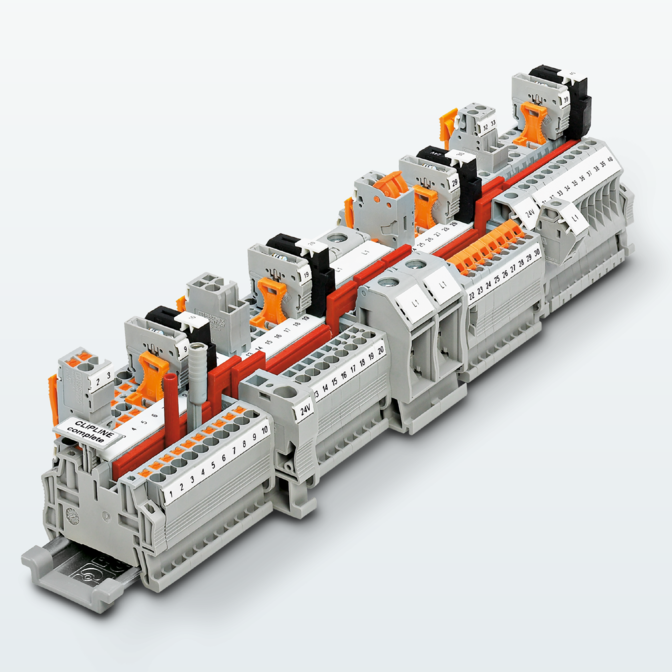
Firstly, terminal blocks could be positioned in your control cabinet layout design. Terminal blocks, as a central termination point between the field wiring, provide you an easy and convenient method to group and/or distribute the wirings. This means terminal blocks could provide you with a neater control cabinet with cables.
The wide product range of terminal blocks can be found in Phoenix Contact and you can choose based on your requirements and standards.
Once terminal blocks are in your control cabinets, you can finally escape from the cable jungle. Troubleshooting should be much easier for you to manage now than ever before.
Do you still think that your control cabinet is messy?
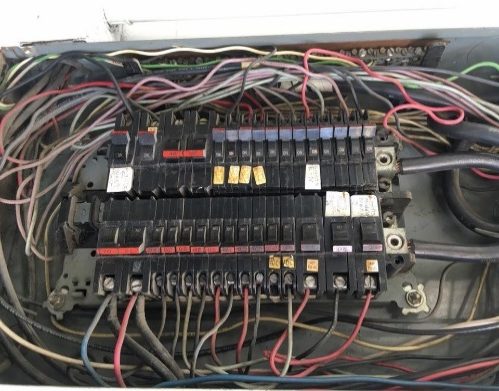
You may see the disorganised cables running around the area unmanaged. It might even look dangerous.
If this is what you see, it’s time to use cable ducts.
Even for cable ducts, Phoenix Contact provides many different types according to different situations and environments. The wide range of cable ducts enable flexible and optimum use of available space in your control cabinets.
Your working space will be significantly less cluttered with the use of terminal blocks and cable ducts now. All you need to do for maintenance and troubleshooting will then be straightforward and trouble-free.
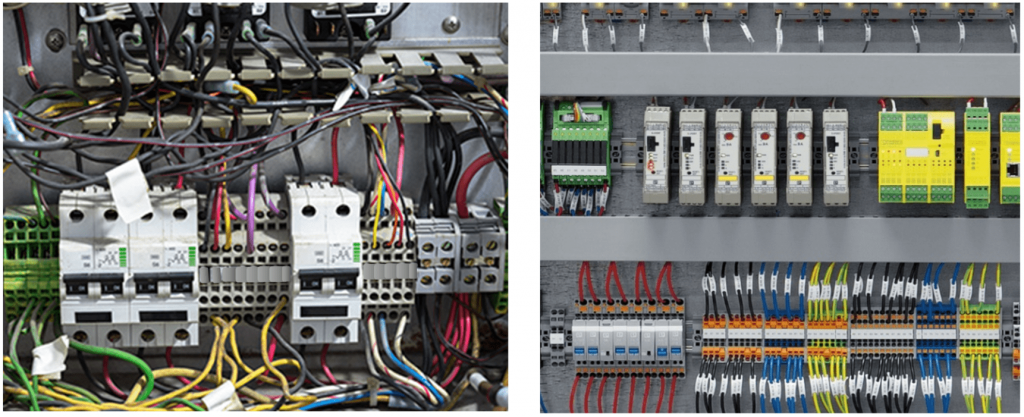
Wait! Don’t bounce off yet! We have one more suggestion for easier maintenance, easier troubleshooting with Phoenix Contact. Let’s do a ‘Spot the Difference’ exercise! Can you find the difference between the two photos below?
Apart from messier layouts, the main difference is missing labels. Did you manage to spot those? During testing and troubleshooting, you may realise that you can’t differentiate the cables, especially when they are routed from same location. The labels will be able to help you figure out where each cable is from just by looking at the control cabinet; you won’t have to manually route back where the cable is from. Labelling not only for the wires but for the terminal blocks and other components will benefit you for your routine maintenance and repairs. Easy identification of all the components will reduce your time and effort on handling the control cabinets.
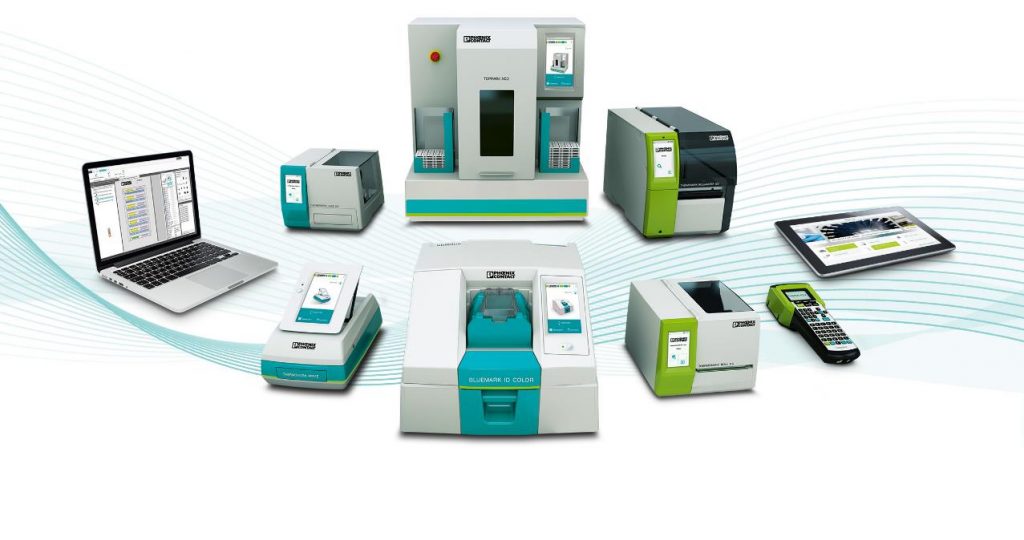
Phoenix contact has launched a series of marking materials and printers. Our printers are made user friendly with ‘simply easy’ motto. Our marking materials are developed with printing services that are widely available for:
Terminal blocks (not limited to Phoenix contact terminal blocks)
Wires (self-adhesive, clip type & with binder type)
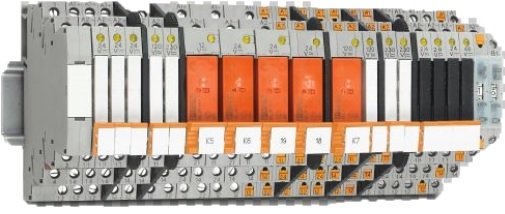
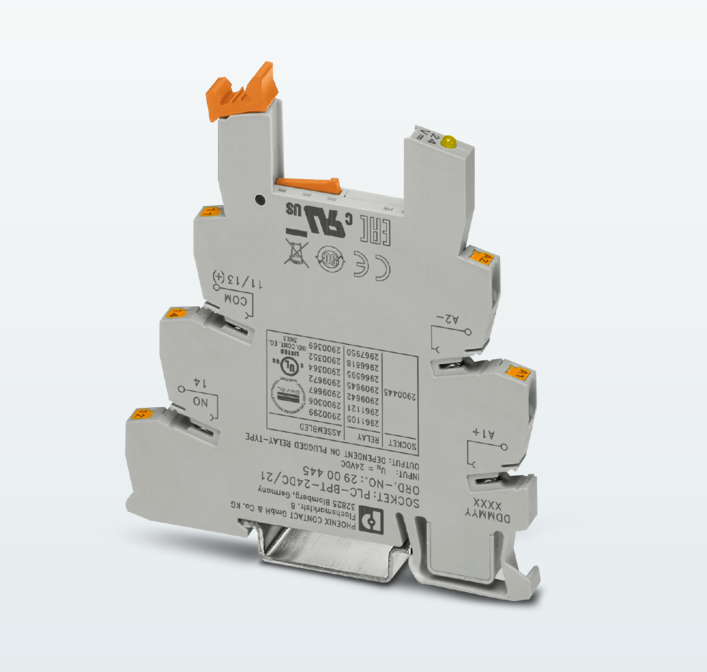
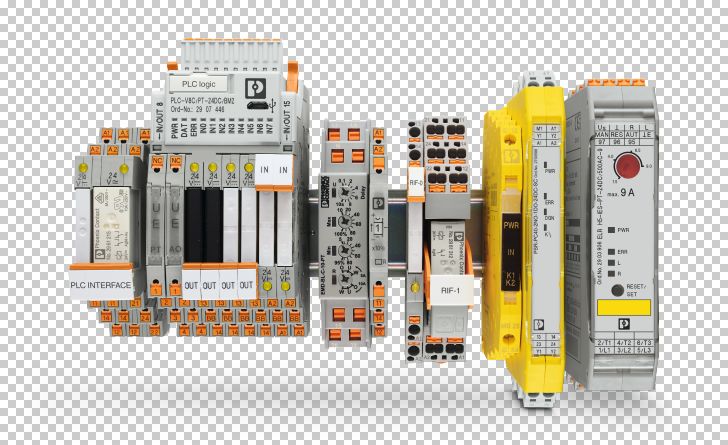
An experienced electrical engineer will be very familiar with compact relays. There are plenty of brands in the market and they are essential in many applications. Today, we are going to share with you why Phoenix Contact PLC-Interface relay is the cream of the crop.
High reliability by having no soldering points
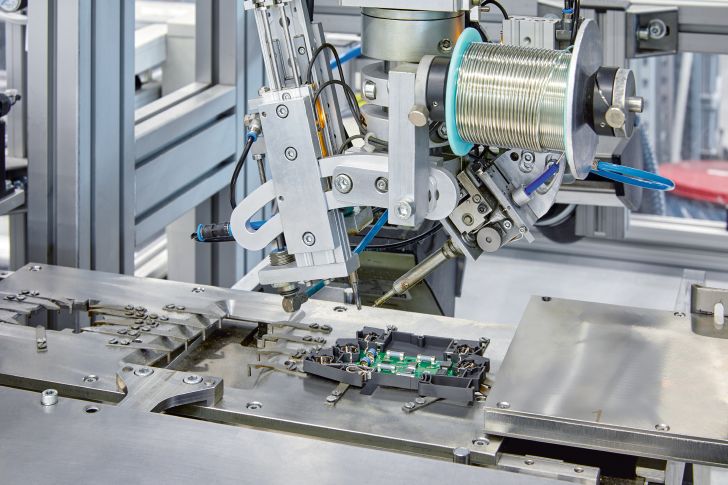
Unlike most compact relays in the market, Phoenix Contact PLC-Interface relay is made up of a single metal stamp circuit without any soldering points. Soldering joints are generally lower in strength and are advised to be used in high temperature applications. Corrosion might happen if the flux residue is not removed. Thus, by removing the weak solder points, we increase the reliability of our PLC-Interface relay.
Push-in Technology increases efficiency
We cannot imagine the time
without Push-in Technology. It saves up to 80% wiring effort as compared to the
good old screw connection. It was first implemented in Phoenix Contact terminal
block and has slowly taken over as the preferred connection technology in most
of Phoenix Contact products. Using a simple spring mechanism with a striking
orange button, Push-in technology has won the hearts of many users. It is now
available in PLC-Interface relay.
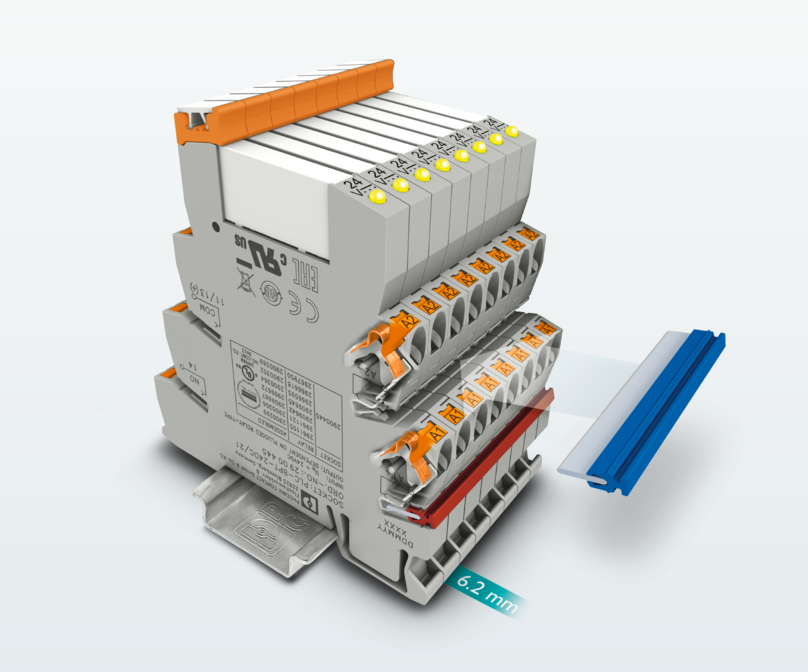
Compactness and modularity saves space and reduces downtime
Real estate in the control
cabinet is extremely precious. We are always trying to fit as many components
as we can into the smallest possible control cabinet. With just 6,2mm
thickness, you can fit over 160 pieces of PLC-Interface relay on a 1-meter DIN
rail. By keeping the control cabinet small, you can save on the material cost.
The modular system also ensures easy replacement of the relay in case of wear
and tear. The pluggable relay reduces downtime needed for repair and
maintenance.
Wide variety of accessories provides ease of wiring
Phoenix Contact
PLC-Interface relay comes with many accessories such as built-in bridges for
convenient distribution. This makes installation and wiring faster as compared
to doing it manually with wires. We also have a wide range of marking materials
for easy and appropriate labeling of the relays.
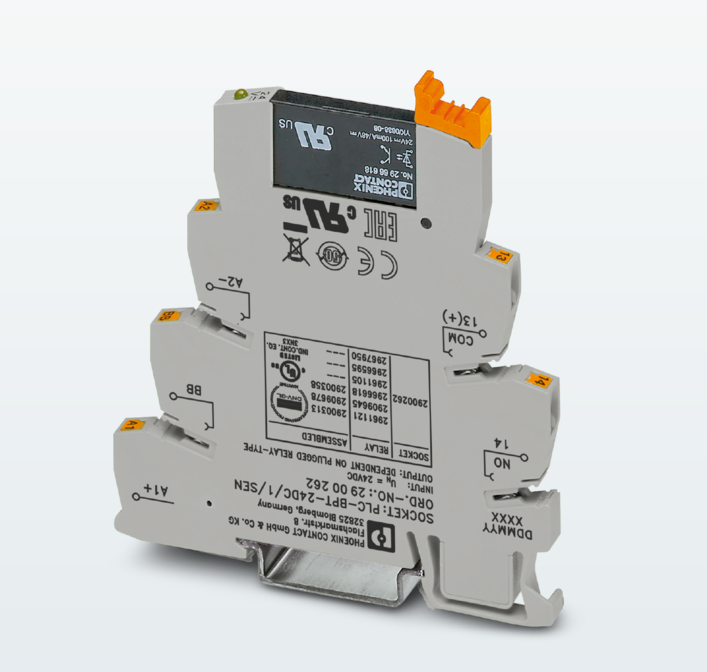
High availability with solid-state relay and other features
Solid-state relays are
almost wear-free as they do not rely on mechanical movement to perform the
switching. This gives the PLC-Interface relay a long service life. With
integrated circuitry, PLC-Interface relays are protected against reverse
polarity. Safety is further enhanced with the safe insulation between input and
output (EN 50178). PLC-interface relay works well even in harsh and aggressive
conditions. Rated IP 67, it is resistant against moisture and dust.
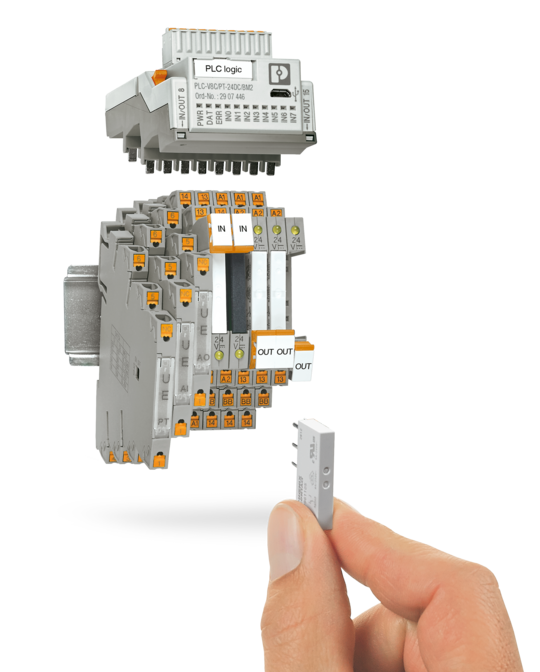
We make smart relays smarter with PLC logic
Phoenix Contact is the
pioneer to combine logic, interface and field connection. It gives the device
the ability to switch and control the I/O signals, and combines the relays with
analog modules. All can be achieved by simply plugging in a small controller
into a standard PLC-Interface. With the width of 50mm, the small module
provides up to 16 I/O signals. Extension modules can be added to increase up to
48 I/O signals. An intuitive software, Logic +, is also available for quick
programming of the logic relay system.
Besides PLC-Interface relay, Phoenix
Contact provides the best switching devices for all applications. To know more
about the switch devices we have to offer, feel free to contact us at
marketing@phoenixcontact.com.sg!
Machine building has evolved greatly over the years. Traditionally, it was classified under heavy industries, usually on a smaller scale and served mostly local or regional areas. However, as a result of the industrial revolution, machines became larger and more complex. The process of producing machines had also become more complicated as well.
Automation is adopted to reduce the production cost and increase productivity. It also lessens the reliance on labour and improves the reliability and quality of machines. All the above mentioned qualities are needed for modern day machine makers to stay competitive in the market.
Data acquisition becomes crucial. In machine building, data such as temperature, pressure, speed and proximity etc. can be attained via sensors. These sensors collect information and send them back to the control system.
In the beginning, the sensors were wired directly to the control system without any organisation. This method of connection is messy. It also makes troubleshooting and maintenance difficult as it is challenging to isolate the defective sensors when a fault occurs. In addition, this way of connecting sensors requires a large amount of cables, leading to increased manufacturing cost of the machines. In many cases, cables take up the bulk of the cost involved in the set up.
As a result, more and more machine builders start to adopt sensor and actuator cabling. In sensor and actuator cabling, the sensors are connected to a distribution box via circular connectors. The distribution box is then connected to the control system via one master cable. Sensor and actuator cabling greatly reduces the amount of cables required in a set up. It also makes troubleshooting and maintenance easier. There is a LED light indicator (which turns red when a malfunction occurs) and a labelling option (for easy identification of the sensors) for each sensor on the distribution box.
Phoenix Contact offers a wide range of products, from distribution boxes to self-assembled connectors, for sensor and actuator cabling. The self-assembled connector comes with different connection technologies to minimise the installation time and eliminate the use of special tools. We advocate choosing the connection technologies based on your applications. Phoenix Contact had also incorporated the famous Push-in Technology into the self-assembled connector. It could be used with or without ferrules, depending on your preference.
If you prefer pre-fabricated connectors, Phoenix Contact can also cater to your exact needs. We offer different cable materials, from polyvinyl chloride (PVC) to high specification robotic cables of customisable length and a wide variety of header types. Other customisation options such as colour, printing and labelling can be done as well.
Furthermore, Phoenix Contact has a wide array of accessories such as distributor connectors, adapters and valve plug connectors as we strive to be the one-stop provider for sensor actuator cabling solutions.
Interested to know what we can provide for your applications, write to us at marketing@phoenixcontact.com.sg to request for a roadshow to know more!
I was a project engineer working for a Building Automation Solutions company about twenty years ago. It was my first experience working with electrical and control junction boxes which housed all the required controllers, terminal blocks, networking devices, circuit breakers, power supplies etc.
Back then, it was very laborious and time-consuming to install the equipment inside the junction boxes as all the internal and field wiring were needed as well in order to complete the working installation. This was then followed by the need to request for the end user to witness and approve the Factory Acceptance Test (FAT), Site Acceptance Test, and Testing & Commissioning etc. before we could wrap up the project and finally invoice the client accordingly.
My “nightmare” happened two months into a completed project when several previously-installed outdoor “Weather Proof” IP 66 junction boxes were found with rainwater seeping into the panel that destroyed the electrical/electronic components.
Upon further investigation, it was discovered that the rubber gasket which was supposed to keep the water and dust out of the junction boxes was made of inferior material. The problem was compounded after constant exposure to adverse weather elements in those two months after installation works were completed.
On hindsight, the failure of the gasket had resulted in the need to replace all the damaged components as well as the need to re-install the junction box and re-arrange all the required testing.
As a result of this incident, the end user lost confidence with the rest of the working Junction Boxes and we needed to replace all the installed outdoor “Weather Proof” IP 66 junction boxes so as to regain the customer’s faith in our products.
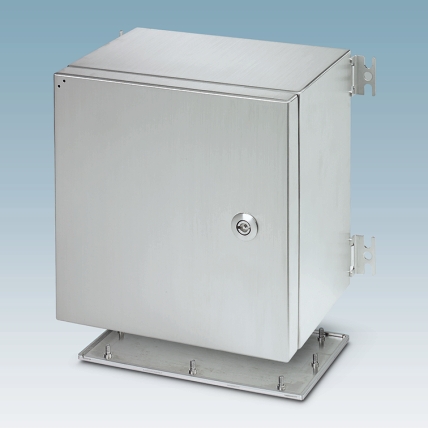
Thus, when Phoenix Contact first launched the new innovation of Clipsafe Ex Junction Boxes, the very first thing I examined was the gasket. I am relieved to learn that the gasket is of superior quality and has been put through rigorous testing and certification regimes. Thus, I am convinced and assured that similar incidents like my previous encounter will not repeat itself. I will be proud when I promote these Junction Boxes that will address my customers’ needs.
Want to find out more? Feel free to contact us at marketing@phoenixcontact.com.sg!
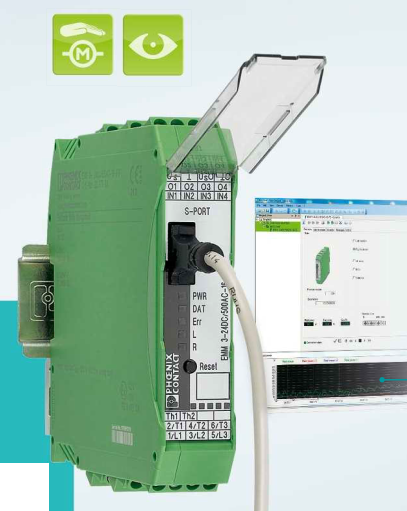
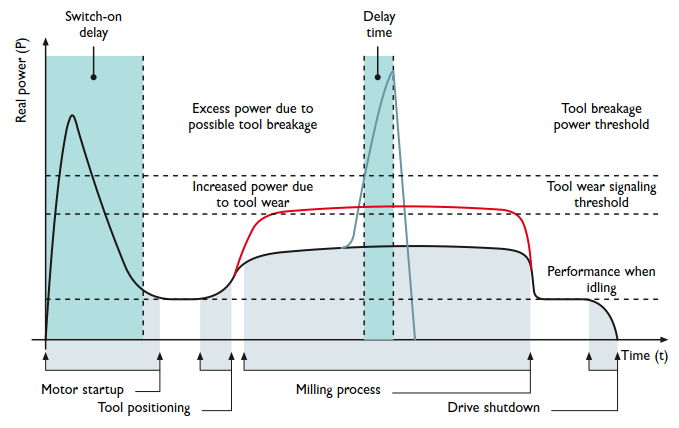
A motor manager from Phoenix Contact deserves more attention than it gets, as it is a product built with the same quality and technical understanding of the Phoenix Contact brand. Motor managers from Phoenix Contact monitor motors for overload and underload, function, dirt, and wear. One can therefore provide permanent protection for pumps, actuating drives, fans, and machine tools, just to name a few examples. It offers full motor protection for both bimetal and thermistor, and also monitors all electric paramaters such as real power, current, voltage, and cos phi.
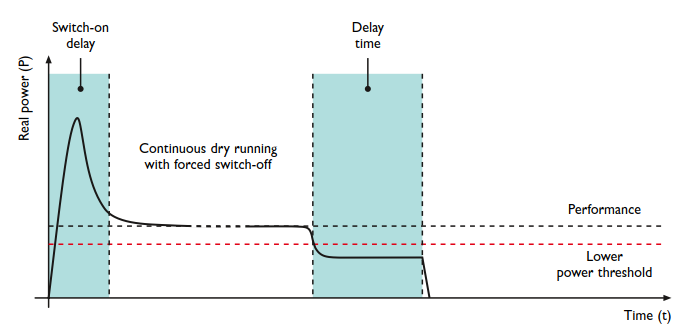
One of the applications of the Phoenix Contact Motor Manager is the underload detection in a pump. In the example pictured above, the continuous dry running of the pump will cause the pump to be damaged without any motor manager. With the motor manager, it will lower the power threshold and then stop the pump completely to prevent any hazardous dry running of the pump.
Another application of the Phoenix Contact motor manager is the overload detection in a machine tool. For example, if the feed value on a milling machine is set too high, the tool might break due to overload. Therefore, with the motor manager, one can set the power threshold accordingly to fit the milling process. Furthermore, with the motor manager, one can also detect tool wear in advance.
The advantages of using Phoenix Contact Motor Managers:
Integrated full motor protection
Protects high-grade system parts
High system availability
Saves the cost of sensors
Easy configuration and diagnostics
ATEX-certified for Ex e motors
Connection to controller via bus gateway
Parameterization via FDT/DTM concept with IFS-Conf software
Process data such as performance values, operating hours, and switching cycles are safely transmitted between field and control level
On top of that, the Phoenix Contact Motor Manager can also be use together with the CONTACTRON, which is a hybrid motor starter. The CONTACTRON can increase the reliability of the motor starter to ten times compared to conventional contactors solution, reduce space requirement by up to 89%, and saves labour cost due to significantly less wiring effort. Do visit Phoenix Contact’s blog or website for more information on CONTACTRON, or drop us an email at marketing@phoenixcontact.com.sg.
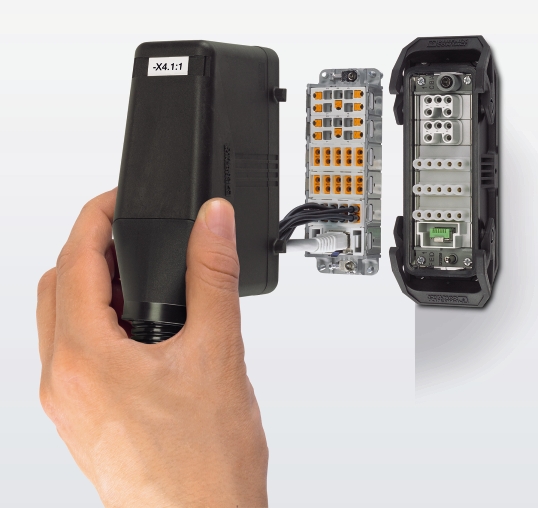
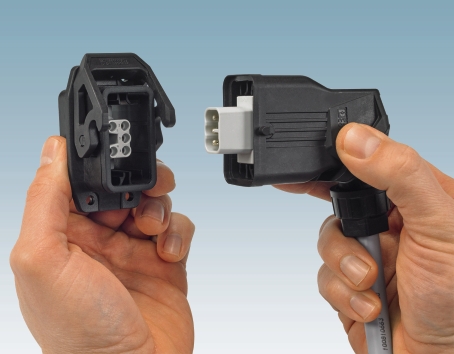
It is no secret that HEAVYCON is a great way to install and uninstall control cabinets as it saves you time and money. With HEAVYCON, the time taken to install and uninstall a control cabinet is reduced by 40% while labour cost is reduced by 30%. For applications where re-terminations are required, the savings on time and labour costs are even higher.
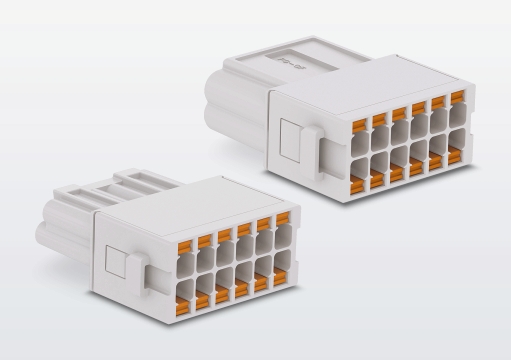
This is especially so with HEAVYCON modular, as it provides flexibility and allows for customisation without charging premiums. You can choose any signal, data and power modules from more than 50 modules in our product portfolio and snap them in easily into the newly improved snap-in frame.
When HEAVYCON meets Push-in Technology
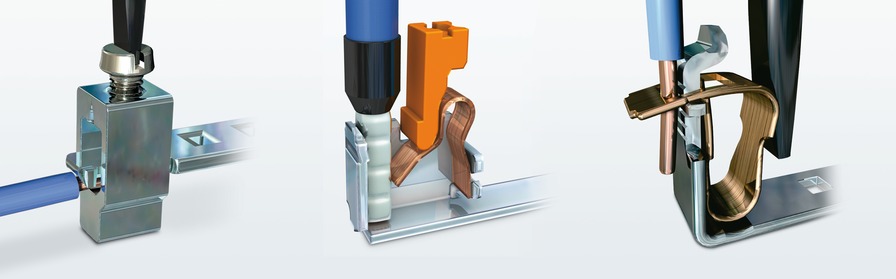
Push-in technology is a direct and tool-less connection technology developed by Phoenix Contact. It uses a special contact spring for easy insertion of cables. It was first used in Phoenix Contact terminal blocks. The recognisable bright orange release button enables easy disconnection of cables using simple tools like screw drivers.
Push-in Technology has since been incorporated into HEAVYCON. This is basically an installer’s dream come true as it shortens installation time even more and make HEAVYCON even easier to use.
In 2018, Phoenix Contact had come up with a high density HEAVYCON module with Push-in technology.
This is the game changer as it allows for connection of up to 12 cores cable per module. Combined with a 6-slots frame, it can accommodate up to 72 cores cable in one single connector. This is the highest density heavy-duty connector with Push-in technology in the market to date. Such high density is only achievable via crimp technology in the past, which can be expensive due to investment in the special tools needed.
Also new, the M1 housing caters for application where only one specific module is needed. It eliminates the need for the snap-in frame which reduces the cost of ownership. Now you can get the same amount of convenience and flexibility with less amount of money.
For more information on the development of HEAVYCON with Push-in technology, stay tuned to our blog! If you have any queries, feel free to contact us at marketing@phoenixcontact.com.sg!
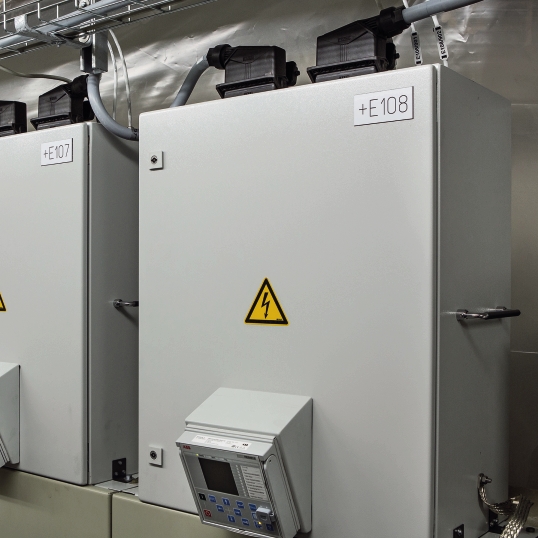
Don’t be surprised that safety precautions are the most important activity that is emphasized! In fact, there are an abundance of companies that invest heavily in health and safety.
As an established industrial business, you would not want to be known to operate in a place with high risks of work hazards. And how do the simplest warning labels help in doing so?
1 – Awareness
The key reason of having safety warnings all over a danger zone is to remind people never to let your guard down. This avoids the situation where people are not fully aware of the risk, keeps people alert and reduces the chance of someone injuring themselves. For new people, new employees who are not familiar with the environment, these warning labels serve to help them understand the risks involved.
2 – Compliance
There are a lot of standards and regulations that are laid down by the government and organizations to be in compliance with safety standards. To prevent people from scrimping on small costs for these warning labels, these safety standards are in place to ensure all the right labels and warnings are placed!
Ultimately, it is always beneficial to your business to keep it a safe environment. So there is no need to pay for any worker’s compensation payments, or incur additional costs to cover the injured employee’s scope of work. Of course, keep your business reputation at its tip top condition, being a safe environment for your employees!
Phoenix Contact has a range of plant markings that can be easily customized and printed. Check us out here!
Hey! We are also launching a Snap-Our-Label contest, with WARNING labels as the theme of the quarter. Stand a chance to win a Thermofox Set as well as many other prizes!
To get a free sample of the warning label, click the link below!
Heavy-duty connectors are typically made of aluminium as it is supposed to be tough and durable. However, being an innovative company and discontented with the current industrial norm, Phoenix Contact had come up with HEAVYCON EVO in plastic.
The plastic used in HEAVYCON EVO housing is not just any normal plastic, it is made of polyamide, reinforced with glass.
So, how strong is strong? Several tests were done to the plastic HEAVYCON including basic IP and NEMA tests in accordance with DIN EN 60529, NEMA 250. This ensures that the contact inserts within the plastic housing are protected against the ingress of dust and heavy jet water. The other tests include:
Vibration test in accordance to IEC 60068-2-6
Harmonic, sinusoidal vibration is applied to HEAVYCON plastic housing to simulate rotating, pulsating or oscillating forces. HEAVYCON plastic housing fulfils these requirements, making it ideal for heavy machinery application.
Temperature shock test in accordance to IEC 60512-11-4
We simulate significant temperature changes by switching HEAVYCON plastic housing between 2 chambers of extreme temperatures within seconds. The result is affirmative – HEAVYCON plastic housing is suitable to be used in applications with ambient temperature between -40 to 125 degree Celsius.
IK shock test in accordance to IEC 62262
Shock is introduced by dropping a hammer of 1.7 kg mass from a height of 0.3m. HEAVYCON plastic housing is able to meet the mechanical requirements similar to the HEAVYCON aluminium housing.
Roll over test in accordance to DIN IEC 62196-1
This is a special test carried out on the plastic housing where a forklift truck weighing several tons rolls over it. HEAVYCON plastic housing is able to withstand high amounts of stress from heavy, moving loads without any adverse effects on its function. In fact, in Singapore, we proved it again by driving a car over the connector.
Dynamic load test
Besides the strength of the plastic housing, we have to ensure the latching mechanism is heavy-duty enough as well. In this test, we applied a force of 200N to the cable at an angle of 90 degree. This is to test the HEAVYCON EVO bayonet as well as the locking latch between the housing and panel mounting to make sure that they do not malfunction under extreme static load.
Through the tests we have done, we can conclude that plastic can be as strong as metal too, in this case aluminium. To find out more about the durability of our HEAVYCON EVO in plastic, leave us an email at marketing@phoenixcontact.com.sg!