
Tag Archives: Signal conditioners

Signal Conditioners

From |

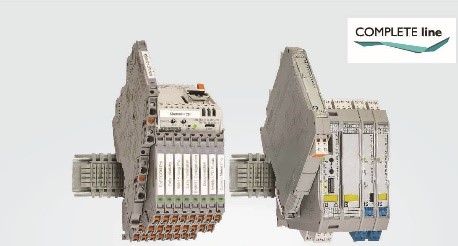
At Phoenix Contact, there is always a signal conditioner for any application, such as filtering, converting, isolating and amplifying.
Amplifying
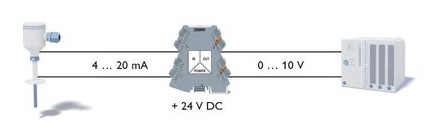
Converting
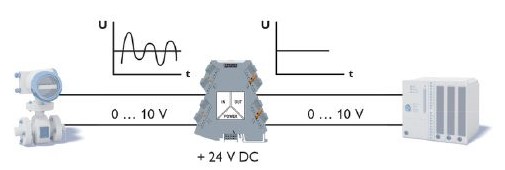
Filtering

The portfolio also comprises of solutions for interference free signal transfer in the areas of functional safety or explosion protection.

Industries such as plant engineering, power utility and process technology will require more process signals compared in the past. This is due to process optimization or energy savings. The need for more signals will be required and space is also a factor for consideration.

These optimized signals will go directly into the controller. Phoenix Contact’s Mini Analog Pro’s width is only 6.2mm, which makes it suitable to be installed in confined spaces.
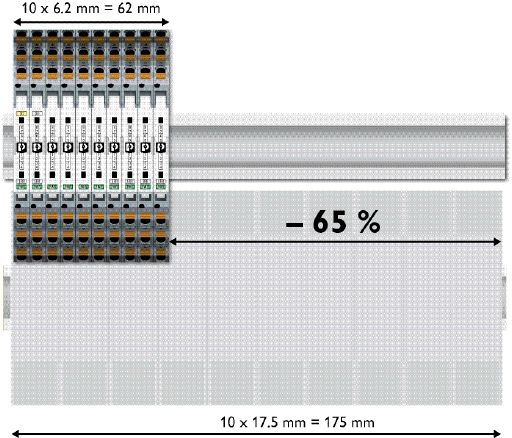
The design makes the access points highly visible and allows simple connection of wires, therefore, saving lots of time and money.
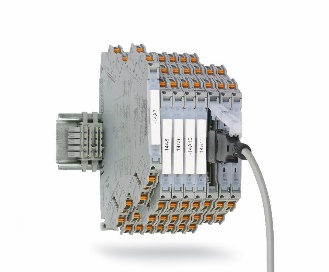
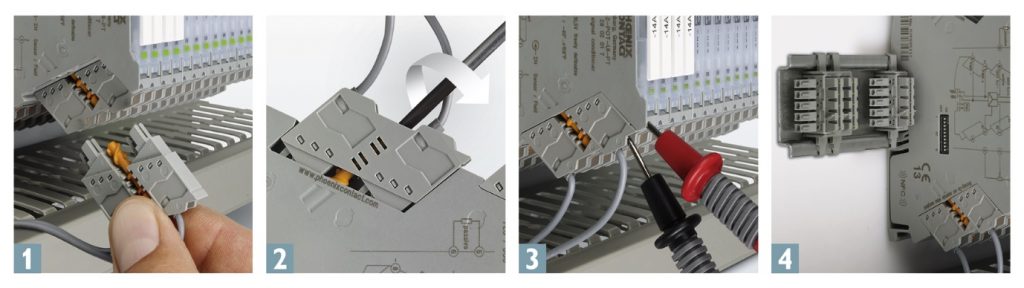
FASTCON Pro interchangeable terminals are pluggable connection terminal blocks that are available in push in or screw technology. It is also integrated with measuring points, allowing measuring of analog signals during operation without the hassle of disconnection in the circuit.
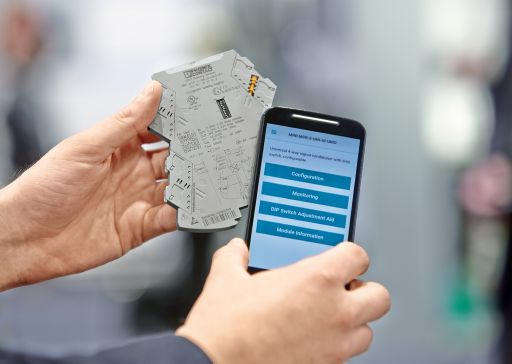
Built in Dip switches, software solution or the app function enables easy access to information. Remote configuration can be done via PC or smartphones with Bluetooth or NFC functions.
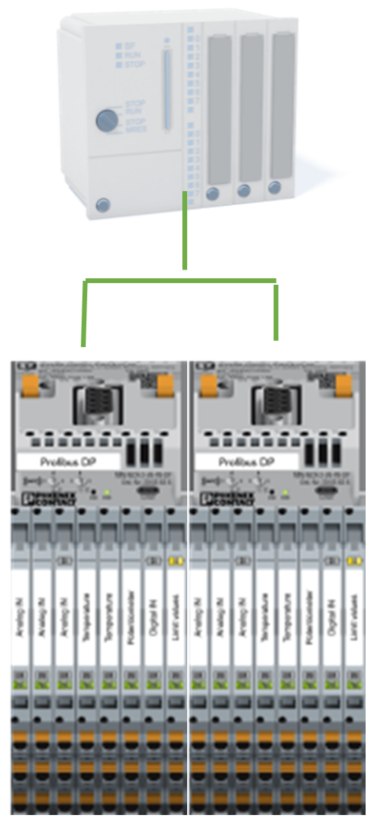
Easy and detachable gateways with plug and play solution can integrate up to 8 field signals directly into digital communication protocols and into controller level. This removes the costs and trouble of use of signal specific cards, the risk of wiring error and high space requirements in the control cabinets.
Choosing the Right Signal Conditioner

From |

Basic 4-20mA current loopSensors and other devices with 4-20mA current loop output are very popular in industrial fields. We can find them from Process Control to data logging systems. A basic current loop has parts as stated below:

  • Sensor: a device which draws current from its power source in direct proportion to the value it measures (level, pressure, etc.).
  • Power source: supplies DC power to sensors or any device in the loop.
  • Reading devices: a PLC, a controller or data logger which reads the current value provided from the sensor and uses it for the next step of controlling or data logging.

In order to isolate, convert, filter and amplify or duplicate control signals we use signal conditioners. Signal conditioner makes a simple 4-20mA current loop into a field loop and control loop like below:

The devices in both the field loop and the control loop need to be powered. They can be powered by a DC Auxiliary power supply or by another active device in the loop. That being said, we have many types of Signal Conditioners (According to how it is powered or can it supply power for other device) that can be used in this scenario.

Types of sensors

The most common 4-20mA sensors in industrial fields are 4-wires sensors and 2-wire sensors. The difference lies in how they powered.

A 4-wire sensor is an active device which has a separate power supply for itself (from DC or AC power supply).

4-wire sensor

4-wire sensor

On the other hand, a 2-wire sensor is a passive device which draws power from a DC auxiliary power supply in the loop or from other active devices in the loop (like a repeater power supply signal conditioner)

2-wire sensor

2-wire sensor

Types of 4-20mA Signal Conditioners:

  • Passive Signal Conditioner: A passive signal conditioner doesn’t need a separate power supply for itself. It draws power from the field loop or control loop. This means there are 2 types: one powered by a field loop and one powered by a control loop. As passive signal conditioners can cause a drop in voltage in the loop, if there are too many passive devices in loop it could lead to inaccuracies in the measured values. In the picture below is a field loop powered signal conditioner with 2-wire sensor, where the devices in the field loop are powered by an auxiliary power supply.

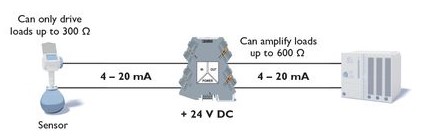
  • Active Signal Conditioner: This type of signal conditioner is powered by a separate power supply so it doesn’t cause voltage drops in the loop. It can also provide power for the control loop. For example, an active mini MCR Pro signal conditioner can drive up to a 600 Ohm load in a control loop. The field loop still needs an auxiliary power supply when using a 2-wire sensor. Pictured below is an active signal conditioner and 4-wire sensor. In the control loop is a passive analog input controller.

  • Repeater Power Supply Isolator: This type of signal conditioner is powered by a separate power supply and it can supply power for the sensor’s loop and also for the control loop (with a maximum load of 600 Ohms). It can be used for 2, 3 or 4-wire sensor without the need of a power supply for the field loop.

So depending on the type of application, we can choose the right 4-20mA signal conditioner. Based on information about the type of sensor, whether the field loop has an auxiliary power supply as well as if the control loop has a passive or active controller, we can choose the suitable 4-20mA signal conditioner.

If you have any questions, feel free to contact us!

Signal Conditioning – Why we need to isolate, convert, filter and amplify control signal

From |

When dealing with Measurement and Control signals, Signal Conditioners are crucial for the healthy operation of the whole system. Let’s find out why:

  1. Electrical Isolation – The most important task of a signal conditioner is the electrical isolation of signals. A reliable Signal Conditioner offers consistent isolation of input, output, and supply. As such, ground current loops can be prevented in the event of potential differences, which would otherwise lead to a distortion of the measured process values.

    MINI Analog Pro isolating signals

    MINI Analog Pro Isolating Signals

  1. Convert – An advantage of signal conversion is the conversion of sensor signals into a signal that can be read by the controller, such as PT100 in 4…20 mA. In addition, failure-prone signals such as 0 – 10 V, for example, can be converted into non-prone current signals.

    MINI Analog Pro converting signals

    MINI Analog Pro converting signals

  1. Amplify – Signals always need to be amplified in the event that cables are long or if high loads are to be driven. It is here where the signal conditioners must provide a high output power at a low input power.

    MINI Analog Pro amplifying signals

    MINI Analog Pro amplifying signals

  2. Filter – In industrial environments, interference often occurs as a result of high-frequency signals. The input filters of the signal conditioners therefore reliably filter out such interference signals.

Getting cold feet? No fear, Phoenix Contact has the all in 1 solution to save the day. To find out more, click here: