
Category Archives: Device Connectors

Future-Proof Your Devices With Phoenix Contact Modular Housing

From |

Housing is one of the key fundamentals for every household. Having the flexibility and availability of the right home will allow one to adjust comfortably when the family nucleus changes with time. Imagine a young couple that is planning for a family but is financially strapped and cannot afford a large home, obviously they will have to settle with a home that is smaller and more affordable. After a couple of years, their parents and children start to live with them. If they are more financially sound by then, the couple would need a place that is larger to accommodate a family of 7 people. The availability of homes in the market is key for the family of this size. 20 years down the road, the children would have grown up and moved out, and the family nucleus has strung back to just the couple living together. They will have the flexibility to downsize their home, or stay where they are currently residing.

In the same way, any device will need a housing to encapsulate the PCB. PCB design changes with time and with the demands and needs of the market, the PCB can become larger or smaller. A suitable electronic housing will need to provide the flexibility to adjust to the needs of the PCB and components.

Phoenix Contact offers a wide range of housing for our customers. From DIN-rail mounted, desk or wall mounted, to outdoor applications and handheld types.
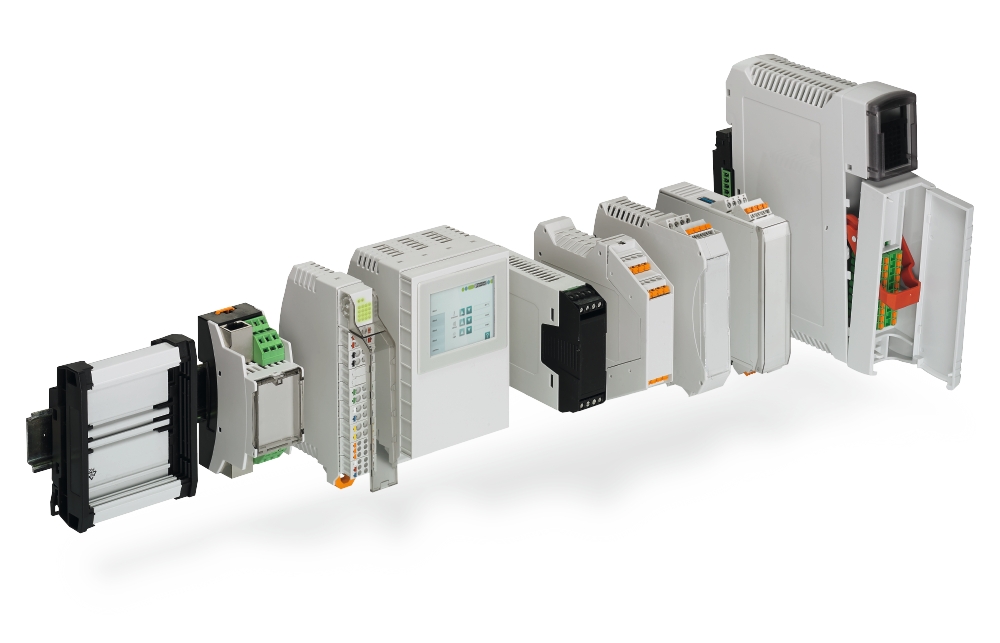
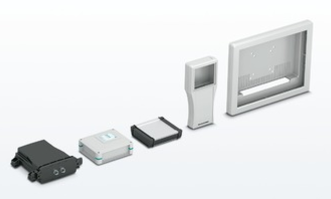
For this blog, we would like to touch on the latest addition to our electronic housing family, the modular ICS housing system mounted on the DIN-rail that is for future-oriented automation devices.
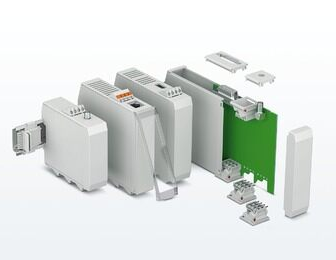
What is so special about this product compared to other housing products that are available in the market? How is Phoenix Contact ICS modular housing unique from rest in the market?

Let’s start from the beginning, from the R&D standpoint.

Say today the R&D team needs to redesign a din rail mounted controller to be integrated with their new machine, they need to come up with the concept and proof of concept within 2 months. With Phoenix Contact ICS modular housing, we can fulfil their needs, taking into consideration of their demands of:

  1. Tight timeline
  2. Unique design required with their company logo
  3. Reasonable cost

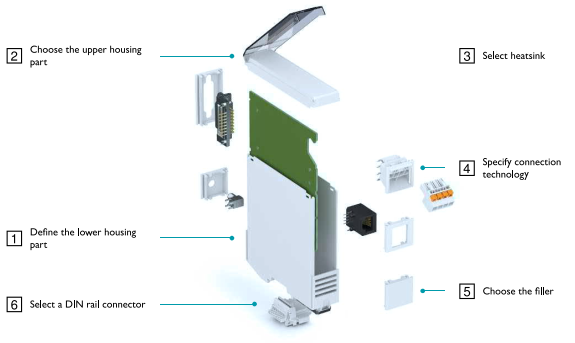
Phoenix Contact has an online configurator that allows the customer to configure and select the right housing for their needs. The available options for the R&D engineers in our online configurator would consist of:

  1. Size of the housing to fit the size of the PCB.
  2. Single or twin PCB allowed in the housing.
  3. Accessories options on the upper and lower side of the housing – such as connectors, heatsink & fillers with vent, USB, RJ45, D-sub or antenna.
  4. If customer has any customise cut out required, we can do it accordingly with our existing fillers.
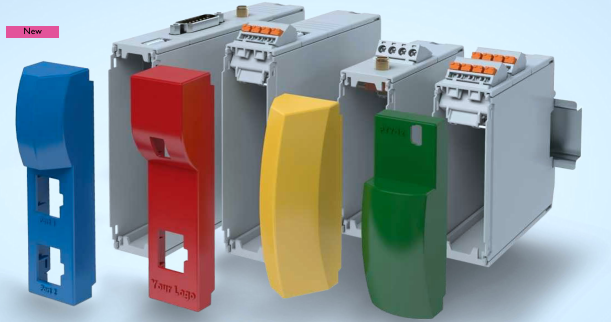
  1. T-bus connector available for the requirement of additional I/O modules.
  2. Front cover design options: Hinged transparent cover, flat closed cover or individualised custom cover. Customised printing and cut outs are also available for a nominal fee.
    No additional tooling charges involved!
  1. 3D simulation and CAD files available for download together with the part numbers of all selected parts and accessories.
  2. Heat simulation available if used for IC or electronic components that generate lots of heat.
    While many other companies charge for the thermal simulation, these are all freely available online!
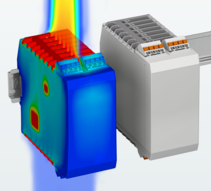
Only Phoenix Contact provide such extensive product offerings and services which translate to:

  1. Cost effectiveness – No tooling fee on a new housing design with the advantage of our semi-customisable housing and free thermal simulation.
  2. Unique housing designed by the customer – Custom housing with printing and individualised covers.
  3. Quick sample service – samples can be requested online or through an email to the local representative.
  4. Future-proof and full proof design – Engineers can switch to the same series of housing with different sizes for future designs and Phoenix Contact will constantly be adding more accessories and services to value-add to the customers.

After all the designs are completed, engineers will need to transfer the information to their purchasing team and prepare for mass production. From the online configurator, you can download the part numbers of every piece part in an excel spreadsheet. This will seamlessly translate the information from the R&D team to the purchaser with extensive information in terms of:

  1. Drawings
  2. Pricing
  3. Piece parts and manufacturing part numbers
  4. One supplier for the fully established housing requirements from material, printing, and customisation.

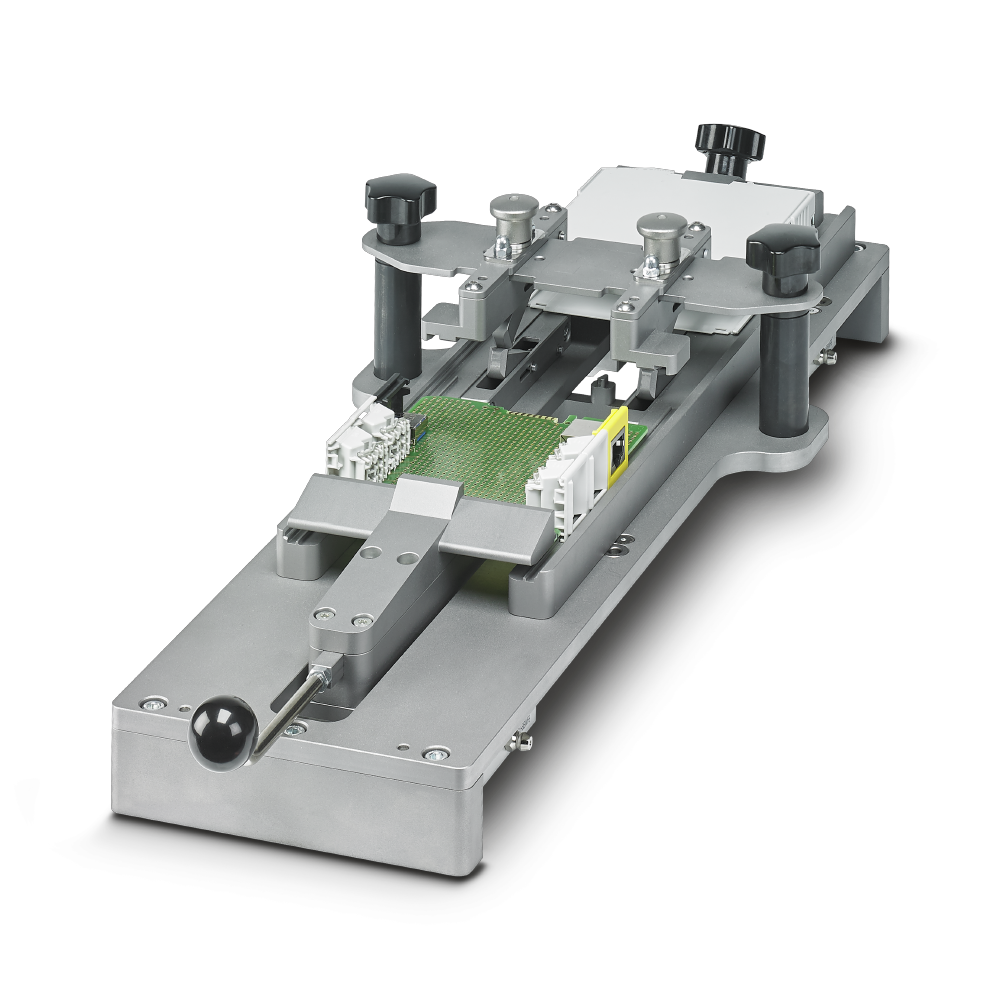
A well-thought-out product, the ease of the production process cannot be neglected. Phoenix Contact has designed a mounting device that is able to assemble all the different housing configurations, and shorten the assembly process to mere seconds. That is both innovation and cost saving. To find out more about the mounting device and the operation, see this link.
Reach out your local Phoenix Contact sales team to find out how we can help launch our new projects effective and efficiently.

Looking forward to hearing from you soon.
When Power Distribution Meets Push-in Technology

From |

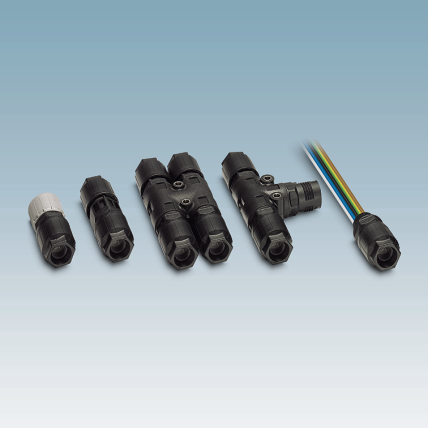
QPD, which is short for QUICKON Power Distribution, is the brain child of Phoenix Contact. Since its launch, it has been well received by many customers in the lighting industry. As the name suggests, it provides easy and efficient power distribution through QUICKON, also known as insulation displacement connection.

QPD consists of a huge variety of connectors such as a 1-in-3-out distributor and cable extender, which offers the flexibility and convenience needed when laying power cables for various lighting infrastructures. Granted that QPD is made of plastic and is very lightweight, it provides up to Ingress Protection (IP) 69k which basically makes it submersible.

However, Phoenix Contact did not stop there. With the increasing popularity of automation, many companies want to minimize manual work. While QUICKON is a fantastic connection technology, it has limitations when comes to automation.  It is neither easy nor cheap to design a machine that could automate cable termination via QUICKON.

Thus, we made the great product even BETTER.

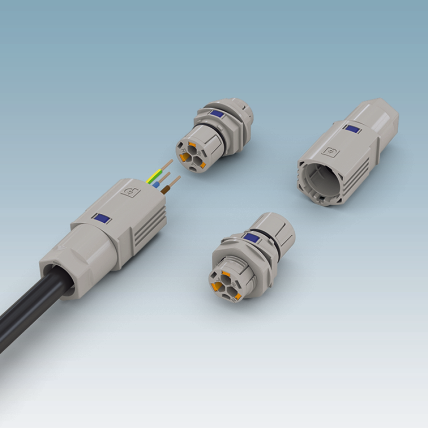
IPD (Installation Power Distribution) designed with Push-in technology, is optimized for automation. As Push-in motion is simple and linear, it is easier and more economical to design a machine to automate the insertion of stranded cables with ferrules/solid cables via Push-in technology. The removal of cables works the same as Phoenix Contact’s Push-in terminal block. Push in the classic orange release button with a screw driver to open up the cage within the connector and gently pull out the cable.

IPD is the perfect panel feed-through for lighting connection and has up to IP 67 protection which is suitable for use with outdoor lightings. IPD comes in classic white, which blends in seamlessly when installed on lighting devices. No hassle is needed to tuck the connector away – it could be installed in plain sight and would still look good.

To receive e-brochure of QPD and IPD, feel free to get in touch with us at marketing@phoenixcontact.com.sg!

Direct Connection Adaptivity

From |

Connect adaptivity directly: SKEDD direct connection technology brings new flexibility to device design

SKEDD direct connection technology makes device design more flexible

Whether modern climate and ventilation systems in building technology or compact controllers in classic industrial applications, intelligent automation structures require functionally embedded systems. This poses a challenge to device manufacturers to develop universally operational solutions for specific tasks and ambient conditions. SKEDD direct connection technology revitalizes PCB connection technology.

The first direct connector in the world with Push-in spring connection allows application-specific device designs with just a few PCB layouts

Increased device flexibility – that is to say, adaptability – means that fewer versions need to be produced and made available – and overall unit costs are lower. PCBs and connection components are the central nervous system of electronics and as such have a large impact on the performance and flexibility of electrical devices.

More flexibility thanks to SKEDD

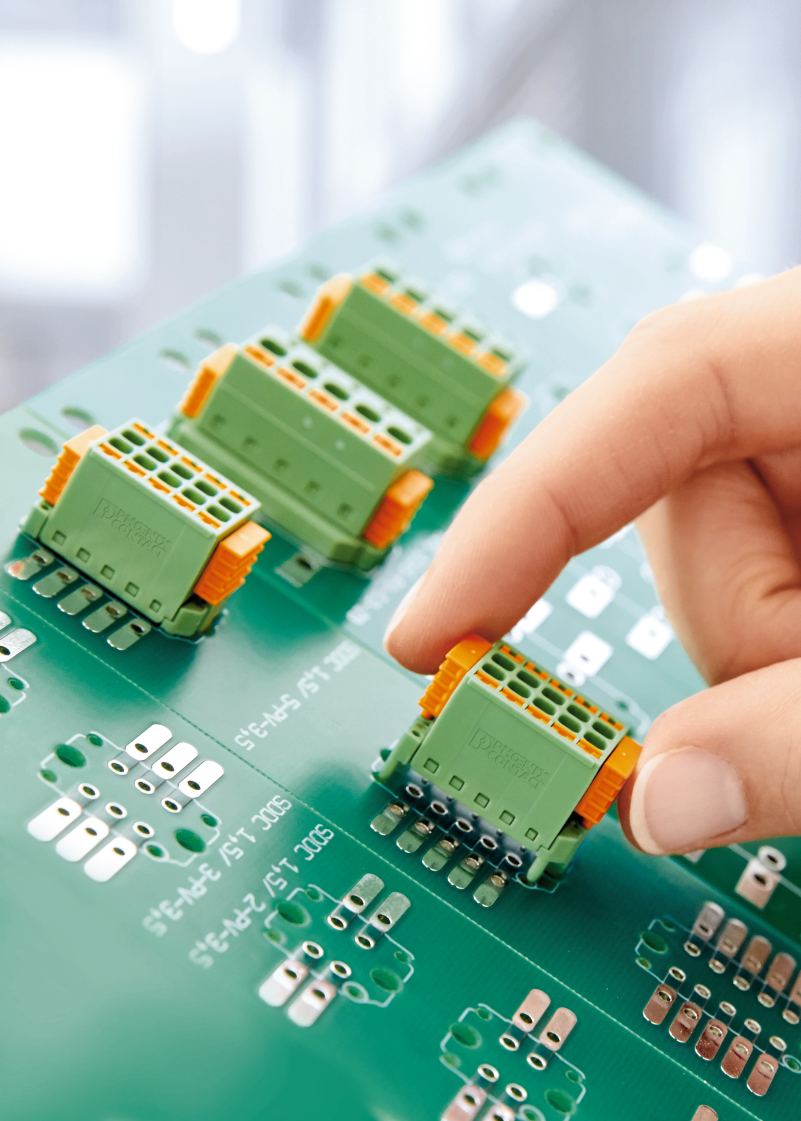
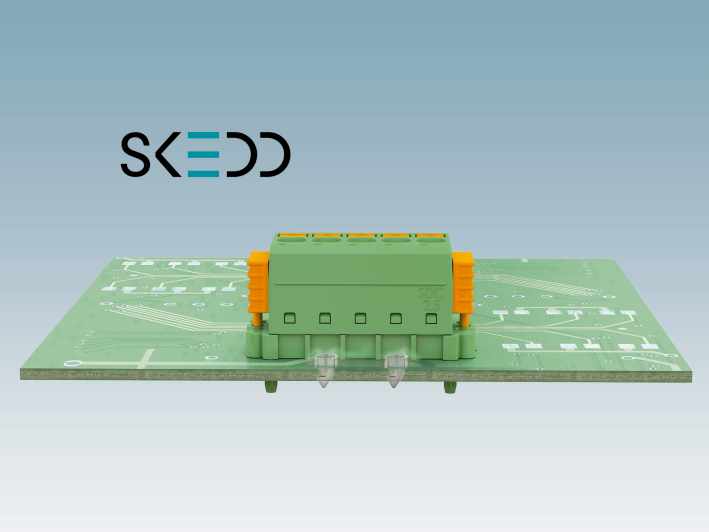
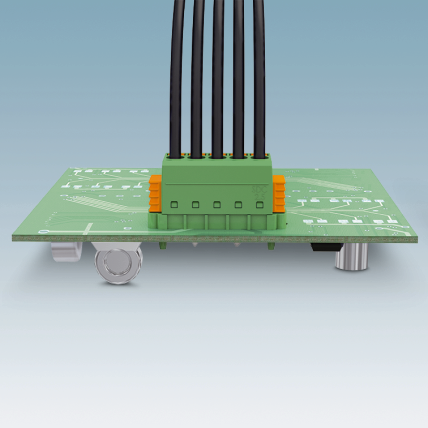
The innovative direct connection technology SKEDD –Swedish for “it happened” – makes direct pluggable and detachable PCB connections at any position on the PCB possible for the first time. The SKEDD connector types SDDC 1,5 and SDC 2,5 from Phoenix Contact no longer require headers – they can be plugged in via tin-plated through-connection bore holes by hand. The advantage: In the past, the electronics manufacturer needed to combine application-specific connection technology such as PCB terminal blocks or headers with the PCB using an irreversible soldering process. This largely dictated functionality of the PCB and the overall device. SKEDD direct connection technology makes this process unnecessary; only the corresponding bore holes need to be provided in PCB manufacturing process. In this way, the PCB does not become thermally loaded again.

Currently, many PCBs are processed first in the SMD method, and PCB terminal blocks or headers are soldered on as the second step in the wave soldering process. If the second soldering process is removed, the operator saves process and component costs. This also makes all logistics and materials planning for the headers unnecessary. Equipment costs and feeder space requirements are also reduced when using the SMD soldering process. Accordingly, there is more space for additional components when the header is omitted using the SMD process. In an ideal case, additional modules can even be produced on a single system without conversion.

Reliable mechanical connection

Both PCB and device manufacturers see immediate benefits from this technology. In addition to saving costs, they are now able to use a single PCB layout for different device designs – and still implement flexible application-specific connections for signal, data or power transmission.

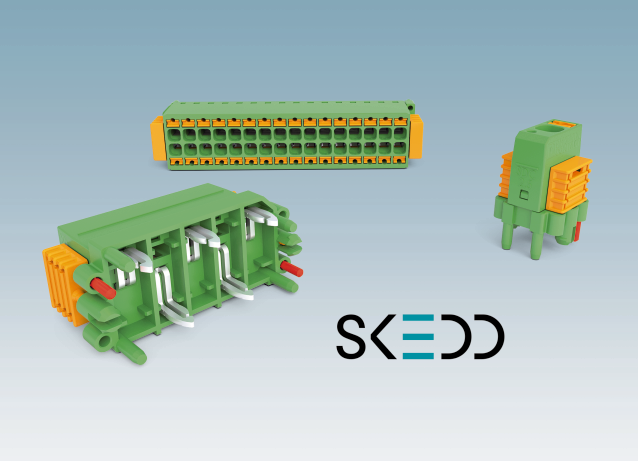
Single- and double-row direct connectors offer solutions for countless applications such as climate control systems, smoke and fire alarms or large household appliances

SKEDD contacts are an improvement on press-in technology, and they place no special requirements on the PCB. The contact zone consists of two flexible contact limbs that are easy to bend outward and that are adapted optimally to the plated-through bore holes. When inserting the contact into the bore hole, the contact limbs are pressed together – thereby ensuring a secure mechanical and electrical connection. Lateral body-bound rivets on the connector increase the mechanical stability as well. The interlock is designed for standard PCBs with a thickness of 1.6 mm and allows for up to 25 connecting cycles.

SKEDD contacts consist of two flexible contact limbs that are easy to bend outward and that are adapted optimally to the plated-through bore holes

Tests in accordance with the railway equipment and household appliances standards

In addition to the required approval and qualification tests, the SKEDD direct connectors from Phoenix Contact meet the highest requirements of mechanical and electrical safety. The series SDDC 1,5 and SDC 2,5, for example, are qualified for special fire protection requirements in accordance with DIN EN 60335-1 (“Household and similar electrical appliances – Safety”). Included in this standard are household appliances such as dishwashers, washing machines and portable cooking appliances, drives for awnings and blinds, heating units, climate systems and heat and cooling circulation pumps in private and commercial areas.

Two tests prove the capability of the electrical components and the polyamide insulating material used. First, a glow-wire with a temperature of 850 °C is applied to the material for 30 seconds. The Glow-Wire Flammability Index(GWFI) test is successfully passed if the test plate continues to glow less than 30 seconds after removing the glow-wire. The second test establishes the Glow-Wire Ignition Temperature (GWIT). For this test, a glow-wire with a temperature of 775 °C is held to the plastic test plate. The material may glow briefly, but for less than 5 seconds, and it may not ignite.

The SDC 2,5 single-row connectors are also qualified and approved for PCBs with HAL surfaces (Hot Air Levelling, surface protection) in accordance with DIN EN 61373 (“Railway applications – Rolling stock equipment – Shock and vibration tests”). These standards place high demands on the vibration-proof and shock-proof capabilities of devices and components used in trains. For this test, the connectors were exposed to 15 hours – five hours per spatial axis – of random vibrations with a frequency of 1 to 150 Hz and an effective acceleration of up to 5.72 m/s². Interruption of the contact may not exceed 1 µs during this process.

A wide range of solutions

The standardized tests attest to how reliable the direct connection technology functions, even under demanding ambient conditions and high safety requirements. SKEDD direct connectors are suited for classic industrial applications as well as for applications in building automation and railway technology.

The SDDC 1,5 and SDC 2,5 product series from Phoenix Contact offers solutions for countless applications such as climate control in rail vehicles, smoke and fire alarms or large household appliances. Both series feature tool-free push-in spring connection: This means that both solid and stranded conductors with ferrules can be connected without opening the clamping space. The integrated test points enable convenient function checks when loaded. Designed for conductor cross sections up to 2.5 mm², the single-row SDC 2,5 direct connectors are suited for currents up to 320 V. The double-row connectors from type SDDC 1,5 offer an efficient connection solution specifically for signal densities that are often high in measuring, control and regulation technology.

SKEDD direct connectors are suited for backside PCB connections, for example, or for internal device wiring

Summary

Tool-free, reliable and process-efficient – the combination of Push-in spring connection and SKEDD direct connection technology offers new flexibility in device wiring. SKEDD connectors do not require headers and can be plugged in directly by hand in tin-plated through-connection bore holes. This enables PCB and device manufacturers to implement countless device designs with application-specific connections for signals, data and power using just a few PCB layouts. Various tests have proven it: Whether for applications with high vibration requirements like railway technology or with special fire protection requirements like in household device technology – direct connectors with SKEDD technology are an interesting new solution.

Single- and double-row direct connectors

Phoenix Contact offers single- and double-row direct connectors with the series SDDC 1,5 and SDC 2,5.

The advantages at a glance:

Flexible positioning on the PCB

  • Easy to plug in by hand and create vibration-proof connection
  • Reduced component and process costs
  • Tool-free, time-saving connection with Push-in technology
  • Intuitive operation, thanks to color-coded push button
  • Quick and convenient testing using integrated testing option
  • Single- and double-row designs for up to 32 connection positions
  SDDC 1,5 SDC 2,5
Contact arrangement Double row Single row
Grid 3.5 mm 5.0 mm
Current 8 A 12 A
Voltage 160 V (IEC)

300 V (UL)

320 V (IEC)

300 V (UL)

Number of positions 2-16
(4-32 contacts)
1-16
Conductor cross section (solid and stranded conductors) 0.2 to 1.5 mm², AWG 24-16 0.2 to 2.5 mm², AWG 24-12

Feel free to contact us at marketing@phoenixcontact.com.sg to find out more!

Leave it to the PROfessional

From |

Many may know that Phoenix Contact places a lot on emphasis on innovation. New products are being created every year to satisfy the market needs. Automation has been the hottest topic in town and many industry players have been riding on the bandwagon. A fast and efficient system needs to be reliable as well. The value of automation cannot be fully realised without dependable components. Connectors, being one of the core components used in machines such as robotics, should not be neglected.

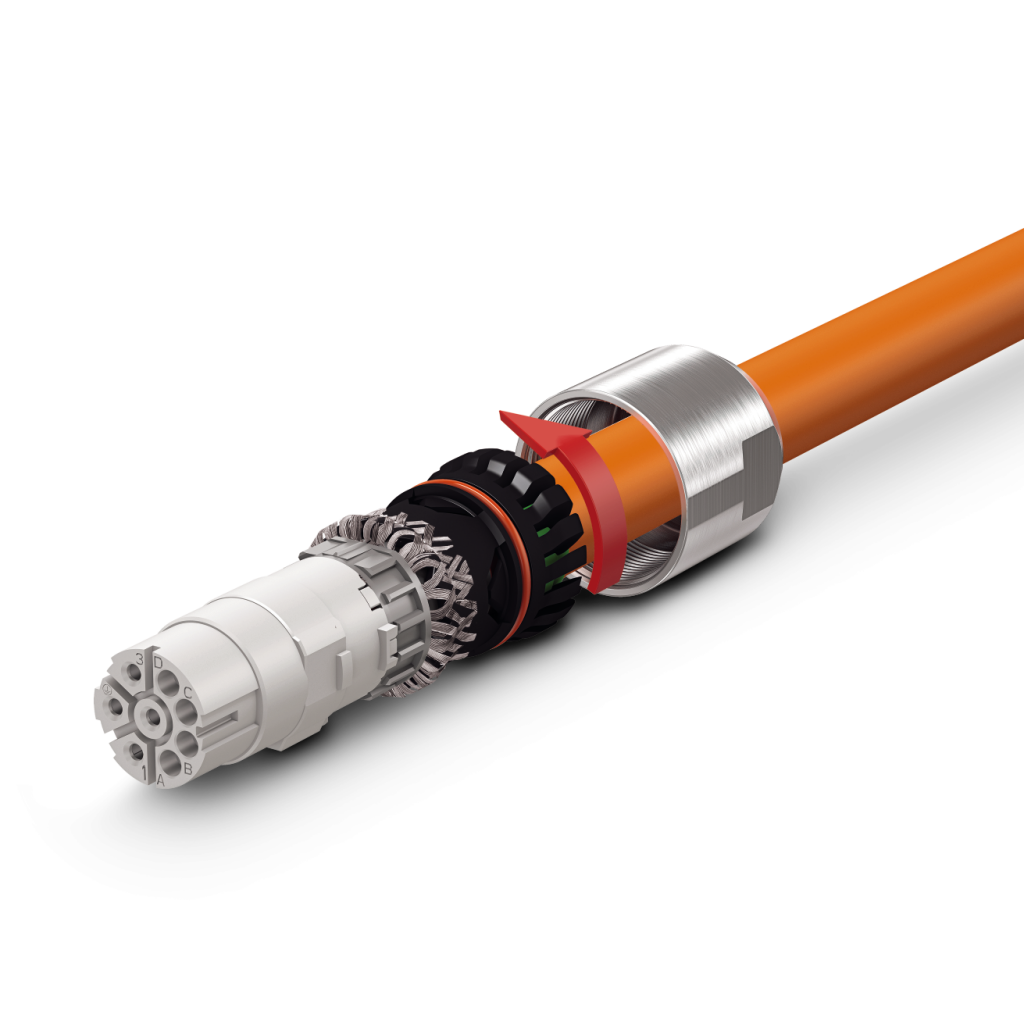
M17-M40 PRO series is a facelift from the original M17-M40 connectors.  Phoenix Contact makes a good connector better. M17-M40 PRO series comes with the highest cross manufacturer compatibility worldwide. Detailed CT scan and tolerance analysis had been carried out to ensure good connectivity and minimum losses for retrofitting.

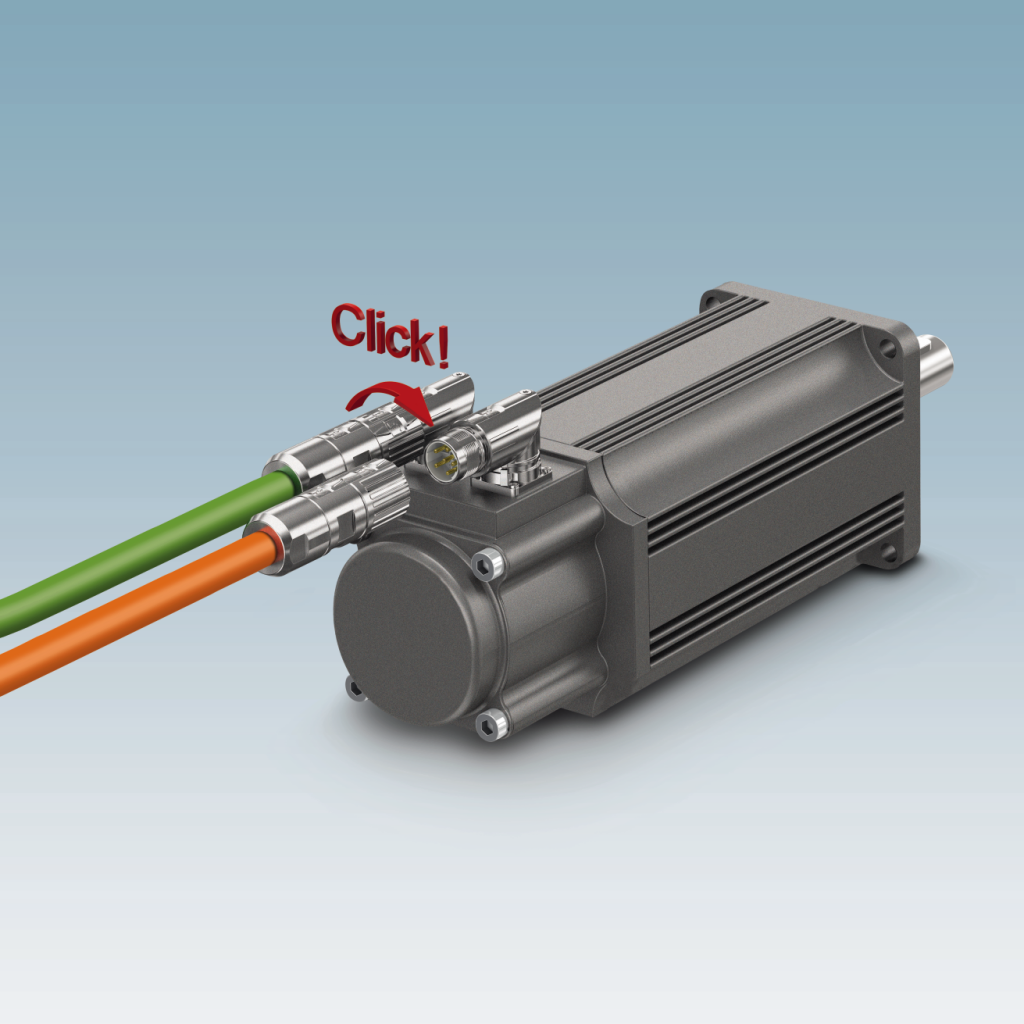
Patented locking system, ONECLICK gives you optic, haptic and acoustic feedback when it is connected. So you can see, feel and hear your connector being connected. This is extremely helpful if you have the plug in the connector that is out of your line of sight.

Shielding is important to reduce electrical noises and eliminate signal loss. In order for the shielding to be effective, it has to be connected correctly to the connector. M17-M40 PRO series is designed not only to have effective shielding, but it can be easily terminated without any tools.

M17-M40 connectors are often used in servo motors which are installed at joints of robot to actuate the movement, giving the robot arm its precise angle. This application usually has stringent requirements such as vibration resistance up to 20G. Of course, M17-M40 PRO series is able to live up to the test and more. Both locking systems (standard and ONECLICK) are tested with vibration resistance of MORE than 20G.

PRO series comes in 3 sizes- M17, M23 and M40 with signal and power connection. Interested to try out all the benefits mentioned above? Get in touch with us at marketing@phoenixcontact.com.sg!

Modular Electronics Housings as a Modular System

From |

Phoenix Contact presents a new series of modular electronics housings for control cabinet applications.

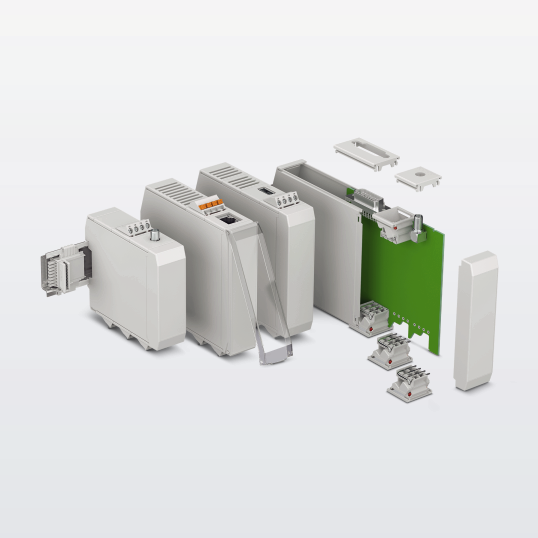
The Industrial Case System (ICS) series includes a wide range of overall widths, heights and depths, as well as the optional TBUS8 eight-position DIN rail connectors for simple module-to-module communication.

Users have flexible options for equipping the housing with various connections, such as RJ45, USB, D-SUB or antenna sockets, enabling the integration of countless functions. Different colors, printings and component versions enable individualized and application-oriented device solutions. PCB connectors and the appropriate headers with a pitch of 5.0 mm round out the range of accessories.

The three- or four-position connectors are designed for currents up to 16 A and voltages up to 300 V and enable simple conductor connection using a screw or Push-in spring connection.

Want to find out more? Feel free to contact us at marketing@phoenixcontact.com.sg!

Finepitch Product Range Part 2

From |

Missed the first article in this two part series? Read it here!

Stringent requirements

As the number of participants in the field increases, so does the need to network them using information technology, equip them with appropriate electronics and interfaces for signal, data and power transmission, and shield them from harsh environmental conditions. Electromechanical interfaces play an important role here: they are the key to exploiting further miniaturization potential and making devices more reliable and flexible in industrial applications. However, dirt, vibrations, high temperatures and electromagnetic radiation place high demands on passive components.

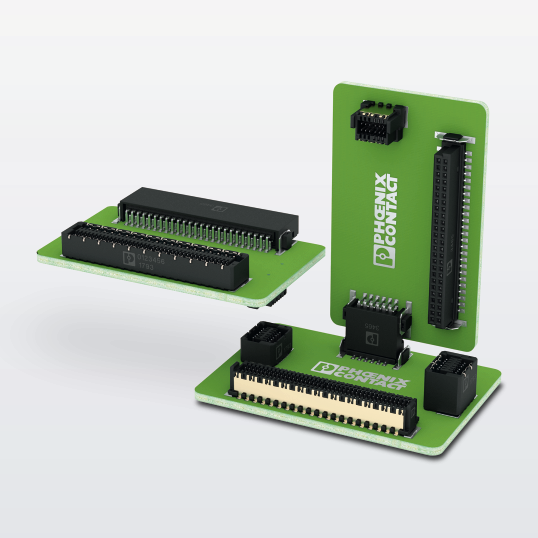
Phoenix Contact responds to these requirements with a newly developed series of board-to-board connectors with 0.8 and 1.27 mm pitch. Both product families are ideally suited for the device-internal connection of several printed circuit boards. Thanks to horizontal and vertical variants, device manufacturers can implement mezzanine, orthogonal or coplanar PCB arrangements and thus offer flexible electronic layouts for different device applications.

Maximum freedom: Horizontal and vertical female connectors allow mezzanine, orthogonal and coplanar PCB arrangements

Full flexibility

All board-to-board connectors are designed for currents up to 1.4 A and voltages up to 500 VAC; and they offer solutions for 12 to 80 connection poles. Reverse polarity protection is particularly important in the compact pitches to prevent damage to the contact metals when they are mated and to ensure long-term stable connections inside the device. All board-to-board connectors are therefore polarized accordingly – the special geometry of the insulating housing reliably prevents female and male connectors from being mismatched.

Up to 500 mating and withdrawal cycles

The double-sided contacts of both product families make contact on the gold-plated rolled surfaces of the metals and thus guarantee an optimum contact force at all times, even under high shock effects of up to 50 g. Another advantage of the robust design: up to 500 mating and withdrawal cycles are possible without impairing electromechanical stability.

ScaleX contact system: The double-sided contacts provide high stability and allow up to 500 insertion and withdrawal cycles.

The unshielded Finepitch 1.27 series is suitable for stacking heights from 8 to 13.8 mm and, thanks to pre-assembled female connectors with flat ribbon cable, also enables wire-to-board applications, for example for larger PCB spacings.

The Finepitch 0.8 mm series offers particularly compact solutions for high-speed data transmission at up to 16 Gbps. Depending on the application and the required degree of protection, unshielded versions and versions with lateral shielding metals are available for maximum data integrity. Mechanically robust thanks to ScaleX technology. The hermaphroditically designed contacts of the more compact product series allow stacking heights from 6 to 12 mm. The newly developed ScaleX contact system not only guarantees particularly high mechanical stability. It also permits high tolerances for male and female connectors positioned differently for production or assembly reasons. The catch range of the Finepitch 0.8 series is ±0.7 mm per axis, the angle tolerances for mating are up to ±4 degree in longitudinal direction and ±2 degree in transverse direction. These high tolerances compensate the mechanical offset between the printed circuit boards.

Simple solution for SMT processes

The new board-to-board connectors of the Finepitch series are ideally suited for integration into the fully automated SMT process. Specially shaped and tin-plated gullwing surfaces offer a high contact area on the solder pads and thus improve the mechanical stability between the connector and the PCB surface. The soldering surfaces are designed in such a way that they still allow “overhead” soldering. This is always necessary when the printed circuit board is assembled on both sides. The unshielded versions also permit automatic optical inspection (AOI) and are delivered in a taped package for the appropriate process. Board-to-board connectors of the Finepitch 0.8 mm and 1.27 mm series offer ideal solutions for the flexible connection of several printed circuit boards in industrial electronic devices. The particularly robust contact systems allow different PCB arrangements and stacking heights and thus support flexible and modular device designs. Phoenix Contact is thus following the trend towards miniaturization and modularization of intelligence in the field. The great advantage for device manufacturers is that they can obtain tested and reliable device interfaces for the transmission of signals, data and power from a single source and can thus offer highly adaptive devices for the intelligent factory – regardless of the location and local market conditions.

Interested to find out more? Get in touch with us at marketing@phoenixcontact.com.sg!

Finepitch Product Range Part 1

From |

Robust Connection

Board-to-Board Connectors for the Industry

In the past five years, hardly any other buzzword has driven the industrial production and automation sector like “the intelligent factory”. Otherwise diverse markets as the USA, Europe and China agree on the implications: Industrial production must become more networked, more efficient, more intelligent and thus more internationally competitive. Robust board-to-board connectors are an important step along this path.

Intelligent solutions for the intelligent factory: Board-to-board connectors allow connections in new dimensions

One of the drivers of a increased competitiveness should be enhanced versions of production resources that lead to higher performance, more flexible production lines and lower manufacturing costs. For the year 2020, various analyses forecast almost 20 billion (IDC, 2016), almost 30 billion (Gartner, 2017) or even up to 50 billion (CISCO IBSG, 2011) IT-networked “things”. Even the most cautious forecast means that in just two years there will be almost three times more things communicating with each other than people.

In addition to the ubiquitous smart devices, these things also include the intelligent devices of the industrial production: controllers, power supplies, I/Os, HMIs and many more. These devices themselves have become more intelligent in recent years. Their electronic components, such as processors, could be produced at substantially lower cost and thus became more powerful and numerous. Together with their components, industrial electronic devices themselves became ever smaller, more powerful and more numerous. As a result, more intelligence from a formerly central and strictly hierarchical unit moved decentrally into the field.

Miniaturized and Reliable: Board-to-Board connectors are used for the internal connection of printed circuit boards

Stay tuned to our blog for the second part of this article, and feel free to contact us at marketing@phoenixcontact.com.sg if you have any queries!

Finepitch

From |

New robust full dimension Board-to-board connector

“Smart factory” describes a production environment whereby the equipment and machinery are able to improve processes through automation & self-optimization. It is a combination of efficient production, information, and network communication, with the potential for integration across the entire manufacturing supply chain. This demands making devices which are more reliable and flexible, yet they need to overcome high temperatures, electronic magnetic interference, and vibration, as well as be shielded from harsh environment conditions.

Electromechanical interfaces are the key to handle further miniaturization potential and making devices more reliable and flexible in industrial applications.

Phoenix Contact introduces a series of board-to-board connectors with 0.8mm and 1.27 mm pitch. It is ideally suited for multiple PCB inside of industrial devices such as controllers, power supplies, I/Os, HMIs and many more. It supports full dimension variants (vertical & horizontal connectivity), shielded and unshielded, for signal and data transmission. It also boasts the following features:

  • Reliable mechanical and electric connections thanks to the double-sided contact system
  • Flexible device design: various numbers of positions, designs, and stack heights with high wipe lengths
  • Shielded for very good electromagnetic compatibility

Main features

  • Pitch: 0.8 mm
  • Positions: 12, 20, 32, 52, 80
  • Stacking heights: 6-12 mm
  • Data rate: up to 16 Gbps
  • Optional shielded for EMC
  • Currents: up to 1.4 A

Main features

  • Pitch: 1.27 mm
  • Positions: 12,16, 20, 26, 32, 40, 50, 68, 80
  • Stacking heights: 8 to 13.8 mm
  • Currents: up to 1.4 A
  • Test voltages: up to 500 V AC

https://www.youtube.com/watch?v=EKPGrCsgPq4

Interested to find out more? Get in touch with us at marketing@phoenixcontact.com.sg!

Efficiency Housing

From |

Simple & affordable PCB enclosures

EH stands for “Efficiency Housing”. Designed to protect electronic parts in the environment of the application by means of a suitable “packaging”, the EH enables the fast and uncomplicated installation of the printed circuit board.

We offer several varied designs of the housing systems for cabinet-type enclosures, suitable for fast and cost-effective PCB mounting whereby the printed circuit board is accessible from the front of the control cabinet when installed in the housing.

Online configuration

With regards to the digital era, online configuration plays an important role. In just a few steps, you can customize the desired EH housing from the Phoenix Contact website. The online configurator offers a user-friendly configuration of all individual components with drag-and-drop functionality – also available on mobile devices with iOS and Android operating systems. The desired housing size and colour can be selected and the appropriate connection technology can be added.

After the desired family of housings is selected, the PCB connections that match the selected design are displayed. The individual components can then be exported as parts lists or transferred directly to the shopping cart and ordered. You are guided step by step through the configuration process. Your application is configured towards an optimal solution. Even the PCB can be configured, which is then provided as a 3D file layout for production.

Advantages:

  • Ideal solution at affordable price
  • Easy design-in, thanks to variable housing form factor
  • Efficient pricing through targeted material selection

Feel free to contact us at marketing@phoenixcontact.com.sg to find out more!

Harsh Environment PCB Enclosure

From |

Selecting an enclosure is simplified by reviewing the sizes of the components & the PCB board that is to be enclosed, followed by the aesthetic look. However, when choosing an enclosure suitable for a harsh environment, the requirements become complex. Several things need to considered, such as how the enclosure is going to be mounted, whether the enclosure needs a vent, what is the degree of protection, what kind of test needs to be performed and many more.

Making a wrong choice can be extremely destructive, brand damaging and it also signals the end of the product.

What we can offer

Phoenix Contact presents new housings for electronics, for especially harsh ambient conditions. The robust housings of the Environment Case System (ECS) series with IP69 degree of protection are suited for a broad temperature range of -40°C to +100°C, and reliably protect the integrated electronics from physical influences.

  • Ideal solution for applications both indoors and outdoors
  • Protection class IP66/69
  • Protection against dust, water and UV-radiation
Main features Customer benefits
Vented or Unvented Enclosures Using the vented version allows pressure to escape to reduce the stress on the seal and also allows any condensation built up to escape, protecting the valued electronics inside the enclosure.
Tamper Protection Allows manufacturers or installers to add tamper evidence security in the latch areas to tell if anyone has opened the product in the end application.
Accepts 1.57mm and 2.36 mm thick PCBs


Customers are able to choose which thickness they want to use for their PCB design.
Pole Mounting (Accessory) Using our pole mount accessories the customer can easily mount their device on a pole (mast) or frame.
PCB Lock Integrating this accessory allows technicians to only pull the PCB out of the enclosure to a set length. It can also prevent the PCB and faceplate from falling out of the enclosure when unlatching.