
Category Archives: Control & Industry Solutions

Cable Entry System – CES

From |

Have you ever left your earphones in your pocket and when you wanted to use them again, they emerge as a tangled ball of mess? Annoying, isn’t it?

Well, the wiring of current and conventional electrical panels brings about a similar problem. The above picture shows its set up and at a glance, three words pop up in my mind: Complex; Costly; Time-consuming.

So why is this so?

Firstly, in the current system, multiple holes of different sizes need to be drilled in accordance with the cable sizes. Imagine the hassle having to drill ten holes of different diameter just to see messy wires intertwined together.

Next, a common occurrence to such wiring systems is the need to add additional cables. If you are lucky, there will be enough space on the flange plate to drill the extra holes. However, if the space is insufficient, or if you need larger holes for new cables, you would most likely have to replace the entire electrical panel and redo the entire wiring system from scratch. Not only does this add on to the hassle, it also adds on to labour and cost.

Lastly, conventional wiring systems require more time to rectify problems in communication. This is due to the difficulty in identifying specific cables especially when they are bundled together. The troubleshooting process thus leads to longer downtime which means financial losses for the company.

The Solution

Phoenix Contact has thus come up with a solution to eliminate this problem. Our Cable Entry System (CES) comes with specific features to tackle the hassle of the conventional system.

Firstly, only one or two holes would have to be cut to enable installation of up to ten cables in the system, greatly reducing the set up time. Furthermore, the CES can cater to different cable diameters ranging from 2mm-24mm. All these can be easily installed by mounting the sleeves of varying sizes on to the robust metal reinforced frame.

Next, additional cables can be installed by removing the blind sleeves from the extra cable holes provided by the CES. In the event that the existing cable configuration has to be amended, the CES allows for easy reassembly just by replacing the sleeves with those of different cable diameters. This eliminates the trouble of cutting out new holes on the flange plate.

Lastly, the CES allows cables to be easily identified as the rectangular frame organizes the sleeves holding the cables in an orderly manner that is easy on the eyes.

Besides tackling the inconveniences of the conventional electrical panel wiring, the CES offers protection class of IP54, making it suitable for harsh environment conditions.

If your current electrical wiring system reminds you of your ball of tangled earphones, it‘s about time you switch to Phoenix Contact’s Cable Entry System. Our CES will be the solution to increasing your productivity and cost saving to your electrical panels wiring.

Interested to find out more? Contact us at marketing@phoenixcontact.com.sg!

ReSy 104 : Upgrading Control Systems in Power Industry

From |

Nowadays, in the age of Smart Grids, power systems are getting more complicated in order monitor and avoid system down time. End users /operators require the ability to control everything from big substations to small hangover substations; even to each MV cabinet or recloser located in remote areas such as at a consumer site or along power lines.
So do you meet these requirement within a  reasonable cost especially in existing substations, MV cabinets where installation space is very limited.

Solution with ReSy 104 + PLC

The ReSy 104 remote control communication library is based on the IEC 60870-5-104 protocol.

The remote control system enables communication between the control center and substation via a standard TCP/IP network. You can also use transmission via DSL, SHDSL, GPRS, EDGE, and 3G.

With PLC for Fieldbuses and Ethernet, Phoenix Contact offers a flexible system structure that covers a wide range of application options in a centralized or distributed format. Thanks to a compact design and numerous supported protocols, Phoenix Contact PLC is ideal for applications where compact size and high-quality is required at a competitive price.

How Phoneix Contact's ReSy 104 RTU works.

Fig 1 : How Phoneix Contact’s 104 RTU works.

By combining ReSy 60870-5-104 + PLC Phoenix contact can offer possible applications for

  • IEC 60870-5-104 enables data transmission via a standard network, which can communicate with multiple devices and services simultaneously.
  • Full function PLC with able to communicate with field device via numerous built in protocol such as Modbus , Profibus, Profinet, etc…
  • High standard of security and encryption for reliable data transmission with the FL MGUARD series of security devices from Phoenix Contact
  • Smooth communication between devices from various manufacturers. The supplied interoperability list states which functions are supported.
  • The remote control station can be connected redundantly to two or more higher-level control systems or remote control heads via the ReSy+ library
  • Acquisition of basic data types, such as messages, commands, plus counter values with and without time stamp.
  • Event-oriented communication ensures the active transmission of current events.
  • Historical data backup ensures that data is logged with a time stamp.
ReSy Solution

Fig 2 : Possible solution with ReSy 104 + PLC

To find out more about our ReSy 104 solutions, just leave us your contact and we will get in touch with you shortly.

Data Exchange Between Enterprise and Automation Control Level

From |

Phoenix Contact's ILC for easy data exchangeAt present, control applications focus not only on reliability but also flexibility. Following current automation trends in automation 4.0, many vendors will need to improve market share in this market segment.

Interface data between third-party functions might be considered to develop parallel to improve the product quality. For controller device, we can classify its interface levels into field level and enterprises level.

Usually, there are no issues when various controller vendors need to transfer data between one to another at the field control level.  This is because there are many common protocols like MODBUS, PROFIBUS and etc to exchange data easily between third-parties. However, it is a different story when there is a need to exchange some data at a higher level like in an enterprise system.

A couple of constrains when designing interface system is the data exchange rate and also the time lag which occurs. In order to maintain a high quality data exchange rate, it is often deemed necessary to utilize high-end hardware and software, resulting in a very expensive solution.

Easiest Controller for Data Exchange between Enterprise and Automation Control Level

Phoenix Contact’s controllers, right up from our basic series, have a library which is able to connect directly to a RDBMS database by providing query string patterns like common SQL script. In comparison, other controllers require additional equipment or other APIs to collect data from controller first before sending it to the target database.

Easily enable data transfer from the sensor directly to a DB with Phoenix Contact’s Controllers.

Reference product

System overview

System overview

For more information on Phoenix Contact’s Controllers, leave us a message and I will get in touch with you soon.

IIOT Connectivity Made Easy – PICs

From |

As industries advance towards future technology, businesses have to constantly keep themselves up to date. Failure to comply may result in two major repercussions:

  1. Slow adopters will see themselves lagging behind competitors
  2. Late adopters may see a rise in the prices to install these new technologies

IIOT, or the Industrial Internet of Things, is not a new term. Regrettably, many companies are still not developing sound approaches to adopt them.

Take for example refineries. Traditional data analytics such as spreadsheets are still being used to analyze processes and trends; using historic data to make operational decisions.

Interior of process plant

Refineries store millions of databases and at times it becomes challenging for engineers to extract information from a cesspool of data. To make matters worse, varying branches of the organization may utilize foreign systems which proved difficult when systems needs integration.
As a result, refineries are considered to be data rich but in hindsight, information poor.

I’ve got 99 problems

In a traditional data-analytic methodology, it is acceptable for engineers to find themselves stranded with missing data. The solution? Most rely on “Experience” or so-called intuition to solve their engineering woes and make “informed” decisions. Guilty as it might seem, ask any engineer who have worked in refineries and they might just confess to using this ‘archaic’ technique.

Refineries of the future (or refineries who will sustain in the future) will need to change a different tack towards how they organize their data. Engineers can employ advance data analytics to analyze and make comparisons to several vital parameters (such as temperature, pressure reading and flow data) that makes use of varying systems that have diverse data formats, all in real time.

Smart factory

Advance data analytics can run audits and identify data correlation among the different results and in any case if a deviation in the results of the data were to emerge, engineers will be notified immediately, in real time.

For example, it is common for an instrument’s pressure reading to fluctuate. Instrument’s pressure reading could also irregularly plunge due to ordinary situations such as a spike in production. However, leakages along the pipeline could also cause pressure readings to drop.
With advance data analytics, engineers are able to determine if such major shifts are justified.

Easier Said than Done?

Adopting new technology always come with anxieties. It is always easier said than done. Although the idea of running advanced data analytics may seem ideal, it is not without its challenges.

In order for all the varying hardware to get connected, it has to comply with a single universal format that allows data to be unified. This might be expensive if you need to hook up current legacy hardware to new technologies that may not have the compatible specifications to begin with.

IIOT Connectivity Made Easy

IIOT structure

Now, who says out with the old and in with the new? With Phoenix Contact’s revolutionary IIOT Connectivity (PICs) Box, we can assist clients by saving the hassle to consolidate hardware from different manufacturers and get them connected to new technology, within seconds. Our PICs combines new technology such as Controllers and Sensors and affix them with your legacy equipment so that data could be read by our software, how you want it, the way you want it.

Who says connecting to IIOT needs to be expensive and complicated?
With our PICs box, you’ll convert your backward refineries into Smart Refineries of tomorrow. Don’t believe us? Request a free trial of our PICs box by leaving us an email at marketing@phoenixcontact.com.sg and experience IIOT connectivity made easy for you today!

Shunt Reactor Controller

From |

Shunt reactor controller

Shunt reactor

What is a shunt reactor controller? I recall having the same question running through my head when a customer told us about what he was trying to do. Well, before knowing what a shunt reactor controller does, let us look at what exactly is a shunt reactor?

Some of you might wonder “Why does it look like a transformer?”. Yes, you are right, to a certain extent, because a shunt reactor does have similarities with a transformer in terms of its construction. However, they are both very different in terms of their functionality.

While a transformer is used to efficiently transfer power from one voltage system to another to cater for the application required, a shunt reactor absorbs reactive power generated from the source i.e. motors, generators etc.

Active and Reactive Power

What is reactive power and why do we bother to absorb? That might be the next question to ask. Before going into that, we need to understand that in an AC circuit, there are both active power (or real power) as well as reactive power, in which the active power is used to power up a system. To understand this from another perspective, think of it as a pint of beer where the beer is your active power and the reactive power is the foam.

The Beer Analogy of Active and Reactive Power

Reactive Power Analogy with Beer

Image from Electronics Tutorials (http://www.electronics-tutorials.ws)

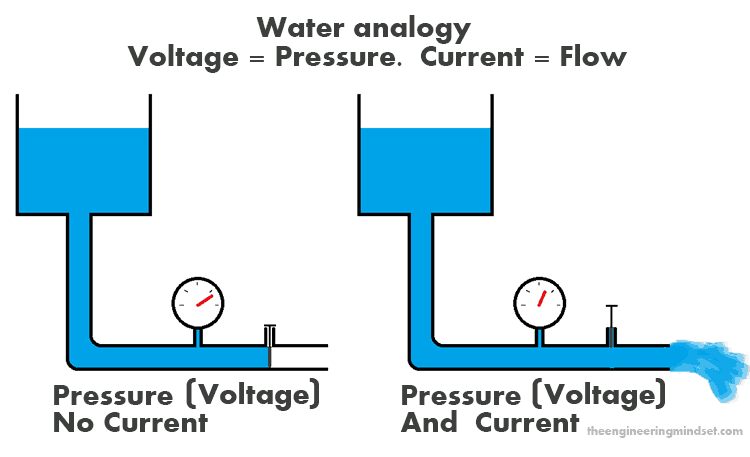
Let’s put water piping system as an analogy to electric circuit, and voltage is the ‘water pressure’. A certain level of water pressure is required in order for the water to travel across the piping system to the designated location to perform certain task, such as flushing your toilet bowl. Similarly, voltage plays the same role in an electric circuit to ensure that active power can be supplied to run any equipment or device. In this case, reactive power is the key element to maintain the voltage level in a circuitry.

The Water Analogy of Electricity

Water Analagy of Electricity

Image by: Paul Evans (http://theengineeringmindset.com)

Hence, instead of using the word ‘absorbing reactive power’, shunt reactor is rather used to stabilize or compensate the level of reactive power in an electric system.

From Component to Solution

Rewinding back a little on how this shunt reactor controller came about. It started with a normal enquiry sent in, asking for a voltage transducer. We followed up with a visit to the customer to understand further.

He showed us the solution that he was going to implement for his end user who runs a palm oil refinery. This was an existing solution in another plant where it was used to control the output of power that being transferred back to the grid from the bio-gas generation using the effluent of palm oil.

  • During the day, when most of the equipment in the plant is running, the whole electric system is highly loaded and more reactive power is consumed. Thus the causing the voltage to drop.
  • However, whenever there is less equipment running, less reactive power is consumed and hence the voltage increase.
  • This is the time when a shunt reactor has to be switched on to compensate the reactive power in order to maintain the voltage level at a particular rating.
  • Each shunt reactor has a fixed rating. Hence, putting several shunt reactors together and adding controls to it can achieve different reactive power compensation at one time, depending on the system load.
  • This whole solution is the basic working concept behind a variable shunt reactor, however cost is always a concern when it comes to such solution.

His idea was to duplicate the same solution in his project. Looking at the pictures he showed us, we believed that it was possible to be implemented with the range of products that Phoenix Contact has to offer. Hence we came up with the solution concept diagram with a brief program flow.

Customized solution from Phoenix Contact

We finally secured the project after a few rounds of discussion and modification to suit best to his application. The list of products that are put into this solution includes:

  1. ILC 171 controller – The processing unit to control the shunt reactor via relay and contactor.
  2. MCR voltage transducer – The main component to take in voltage from the system and convert it to readable value for the controller.
  3. UNO power supply – Main power source to the controller and other peripherals.
  4. TP 3150 Touch Panel – Serve as a HMI for the user to control the shunt reactor controller and display of current value of the system.
Shunt reactor operation concept

Basic operation concept of shunt reactor controller

Shunt reactor display panel

Shunt reactor controller

Shunt reactor

From a simple transducer enquiry to a shunt reactor controller project, we believe that with the available resources and wide range of product that we have, Phoenix Contact is able to customize the solution that is fit for your application.

Want to know more about how we can help in your next solution to your customer?

Feel free to drop us a feedback or send us an enquiry at marketing@phoenixcontact.com.sg. Who knows, your simple component enquiry for your project could be our next solution to you!

Case Study: Retail Giant, Aeon, Automates Lighting System With Phoenix Contact Solution

From |

Summary

  • Aeon, the biggest shopping center in Johor, Malaysia, needed a solution to centralize their  Existing Car Park Area, Extended New Car Park Zone & Shopping Mall Corridors Lighting Monitoring & Control system. Previously, their lighting controls were operated manually by switching the lights via a “ON/OFF” switch.
  • The client was also searching for an alternative to reduce operational cost without compromising on safety and reliability.
  • Phoenix Contact’s Malaysia team met their needs by producing a complete solution that reduced cost without substituting on safety and reliability.
  • By utilizing Phoenix Contact’s solution, the client could now control their lighting centrally using pre-programmed scheduler to automatically switch the lights on or off without the need of additional manpower and monitor the system for lighting breakdowns or power outages.
  • The client also achieved a decrease in energy consumption, essentially lowering the cost of operations.
  • Overall, besides reducing their electricity intake and operational time, our solution allowed them to save cost in complex installations, hardware purchases, and future maintenance.

Customer Profile

Image result for aeon

The client, AEON, is the largest retailer in Asia with a retail network comprising around 300 consolidated subsidiaries and 26 equity-method affiliated companies ranging from convenience stores, supermarkets, and shopping malls.

One of their subsidiaries is located in Johor Bahru, Malaysia.

Officially opened in 2006, the shopping center is the biggest mall in Johor to date. It boasts the biggest hypermart and is located at Johor’s affluent area, making it the most visited mall especially on weekends.

Being a premium shopping center in Johor, they needed to explore options towards electrical efficiency and ensure this undertaking do not dampen the experience of their visitors.

Challenge: Improve energy and system efficiency without disrupting shopper’s experience

The client needed a Lighting Monitoring & Control System to reduce the operational expenditure of running a shopping mall. Since they operate from 10 am to 10 pm (which means that they’ll be switching the lights on at 8 am and will close later than 10 pm), they will have electricity running almost more than 12 hours a day.

Read more on how we’ve helped AEON Malaysia save more while doing less

Phoenix Contact Has Industrial PCs (IPC) Too!

From |

Phoenix Contact has come a long way with our IPC.  Yes! Industrial PCs. We have always been known for our terminal blocks and other passive components such as relays and PCB connectors. However, Phoenix Contact is not a name one would link to IPCs.

Hydroelectric Power Station

Source: Ontario Power Station

Embarking on a drive to introduce active components during the 1970’s, the ‘Second Industrial Revolution’, success was achieved in the European Automotive market since it was a period of rapid growth. With the mass production of cars fueling industrial progress, our INTERBUS range of automation products soon elevated Phoenix Contact to become a household name in the European Automotive Industry.

Unfortunately, the same success could not be replicated in Asia.  With Japan being the only player in the past 5 decades and in recent times China, Thailand and Malaysia, the Phoenix Contact name did not really catch on in Southeast Asia for Automation products such as the Programmable Logic Controllers (PLC). Nevertheless, in the last two decades, Phoenix Contact continued to develope a wide range of automation products targeted at other industries.

One such industry is the Power Industry.

More Than Just Terminal Blocks

In one of our recent roadshows, we found out that a hydroelectric dam managed by the local utilities authority was expanding with two new plants. Our customer was in need of our components such as digital display, measuring instrument, relays, terminal blocks etc…and we provided them with samples to test.

During the engagement with the project team, we realised that they were in need of an Industrial PC to use with their software to drive the Power Management System.  We proposed our product but the team was skeptical if our IPC would be compatible with their software. They have had no prior experiences with our IPCs.

Consequently, we loaned them a sample for testing. Reformatting our IPC to install a fresh copy of their software, our hardware was connected and tested with their system. The team concluded that our IPC was 100% compatible with their software.

Why Phoenix Contact’s IPC?

Phoenix Contact’s IPC was chosen not just because it was 100% compatible with our customer’s software but because of our teams dedication to ensuring that our customers would be successful integrating our products into their system.

Throughout the testing, our team provided close support and technical assistance to help streamline their engineering and design process.

What Products Do We Recommend?

EMPro Energy Meter

EMPro Energy Meter

Measuring instrument – EEM-MA600 – 2901366 : For measurement and indication of electrical parameters (voltage, current, frequency, etc) in which voltage and frequency are converted to analog outputs to feedback to Power distribution system for generator control.

Digital Display

Digital Display

Digital display – FA MCR-D-TUI-UI-2REL-UP – 2907064: For the measurement and indication of generator bearing and winding temperature via RTDs. Relay outputs from digital display triggered upon reaching temperature threshold.

Industrial PC (IPC)

Industrial PC

Industrial PC – BL PPC 7000 – 2701398 – For the running and operation of the Power distribution software.

Relay module

Relay Module

Relay Module – PR2-RSC3-LDP-24DC/2X21 – 2834643: Used as interposing relay which requires at least 10A.

Our team is dedicated to helping you to find the products that best fit your requirements.  If you are successful, we are successful.  Contact us at marketing@phoenixcontact.com.sg and we will gladly visit you to let you know more about our products and services.

Marine-Certified TPM3000 – Built for the High Seas

From |

Marine-certified HMI

Marine-certified HMI

Marine-certified

Salt and water are the natural enemies of most man-made product and in any marine environment, you will find these in abundance. Saltwater will corrode all manners of metal over time. Therefore, to qualify for marine certification, any product has to pass stringent test.

Consequently, for any insurance to be arranged or licenses to be issued, it is necessary for ships and off-shore platforms to be surveyed and certified to international and/or national regulations by one of the marine classification boards.

To fulfill such exacting requirements, Phoenix Contact offers the TPM 3000 series Touch Panels. Designed for maritime applications, these Human Machine Interfaces (HMI) were specially tested and approved for shipbuilding.

Available in a range of sizes (4.3″, 5.7″, 7″, 10.4″, 12.1″ and 15″), each model features two buttons for dimming the display brightness, an external horn, and on the rear, a floating output for connecting external signal generators.

TPM 3000 Series Touch Panel

TPM 3000 Series Touch Panel

Summary of Benefits

  • Tested quality: certified according to GL, LR, BV, DNV, ABS, and EN 60945
  • Dimmable backlight
  • Acoustic warning from integrated buzzer
  • Flexible communication, even with third-party systems
  • Floating output for connecting external signal generators.
  • Readable in direct sunlight, thanks to GFG touch technology with anti-reflection coating

With wide choices of display sizes and range of functions, the TPM 3000 series will provide you with user-friendly and reliable operation, monitoring and alerting while at sea. The robust TPM 3000 series are designed for demanding applications on board ships.
>> Read more about the TPM 3000

Need An Affordable Custom Housing For Your Raspberry Pi Project?

From |

We are living in a fast paced society whereby information is moving at a incredible rate. The  infrastructure has evolved from traditional mail to fax to email. Despite its speed, the device is still shrinking in size. Gone are the days when people were buying big and bulky devices.
I still remember that my first personal computer was the 486 Compaq (It was the state of the art at that time). It came with a huge CRT monitor.

I could never imagine over the course of 20 years, the computer could shrink even further to a pocket size. Enter the new generation of micro-computing, the Raspberry Pi; the single board computer.  Since its introduction in 2012, Raspberry Pi devices has sold over 10 Million set.

Raspberry Pi Logo

Raspberry Pi

The Raspberry Pi’s application is limited by our own imagination. This could range from hobbies to professional applications which require high-quality, functional enclosures and connection technology (e.g Home Automation).

The professional devices need to be assembled and used in installation distributors or control cabinets in a safe way and in accordance with the applicable standards – especially if they are part of a commercial building or industrial automation solution. It is also essential to have simple and reliable wiring – when connecting sensors to the general purpose IO (GPIO), for example – if the Raspberry Pi is being used in a production environment. Furthermore, wiring should be completed quickly, and connecting GPIOs to expansion boards should not require additional time-consuming steps, especially during assembly.

Raspberry Pi Housing Solution

Raspberry Pi Housing Solution

To cater for such needs, Phoenix Contact produced the RPI-BC, the Raspiberry Pi enclosure solution.

https://youtu.be/7kjIeFjeA0g

Advantages such as

  1. Plug and Play. Tool-free mounting
  2. Spacious for additional PCB boards
  3. GPIO strip can be used with compact size PTSM series connectors
  4. Easy module-to-module connection via bus connector and DIN rails

Please click for more info about Raspberry Pi enclosure
If you would like a sample, please drop me an ivanang@phoenixcontact.com.sg or text @ +65 6435 9801.