


Tag Archives: PLCnext

PLCnext – An Intern’s Perspective

From |

Many of you may be familiar with our next gen PLC called PLCnext, but how easy is it to actually make the switch? Today, I would like to share with you from a fresh perspective – that of a Phoenix Contact intern who has been learning to use PLCnext Technology for a mere two months.

As someone who has taken a few programming-related modules in university, I thought I had at least heard of most of the programming languages. However, when I first started learning about PLCnext, I was introduced to IEC 61131-3.

Credits to Marvel Studios

IEC 61131-3 is the standard for dealing with programmable logic controllers (PLC). The software used to configure PLCnext controllers, called PLCnext Engineer, mainly uses 3 PLC programming languages:

  • Function Block Diagram (FBD)
  • Ladder (LD)
  • Structured Text (ST)

Once again, I had never worked with any of these languages before in my programming modules. FBD was relatively easy to pick up, as the default function blocks in PLCnext Engineer provided more than enough functionalities for my internship project. The FBD editor was also extremely user-friendly. It also had the capability to change variables on the fly using Debug Mode, which made troubleshooting a real breeze.
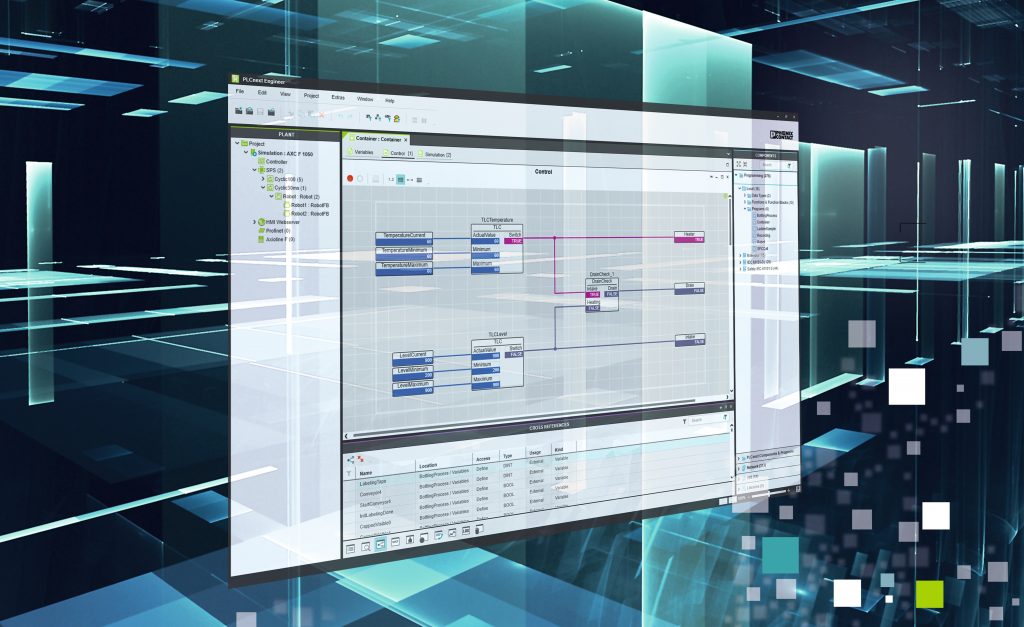
A very beautified picture of FBD code

And yet, FBD was not a language I was familiar with. If you have learnt a new language before, you may have experienced times when you cannot express yourself or cannot translate your thoughts from your native language to the new language you are learning. Thankfully, that is where the prowess of PLCnext Technology comes in.
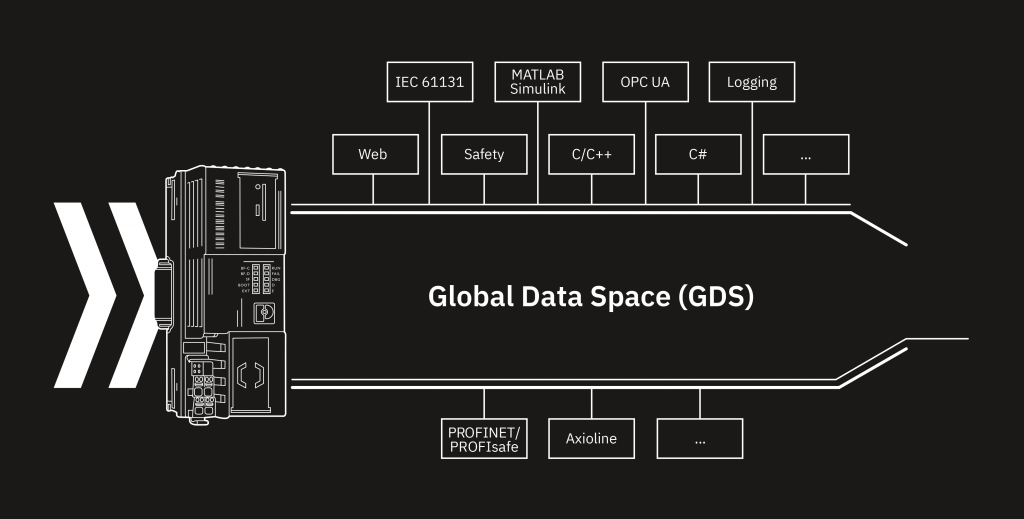
To make things short and sweet, PLCnext Technology essentially allows the use of different languages for programming of PLC logic. Instead of using IEC 61131-3 languages for the main program logic, languages such as C, C++, C# and MATLAB Simulink can be mapped to the IEC 61131-3 code. This is possible through a Global Data Space (GDS) which maps input and output ports of IEC 61131-3 languages with that of the other languages being used.

What this essentially means is that many people who are familiar with different programming languages can work on the same project! PLCnext Technology bridges this gap between programming languages, making automation that much easier.

That being said, some (extremely) basic knowledge of at least one of the IEC 61131-3 languages are required. However, this was easily picked up after I was loaned the AXC F 2152 Starter Kit to practice.
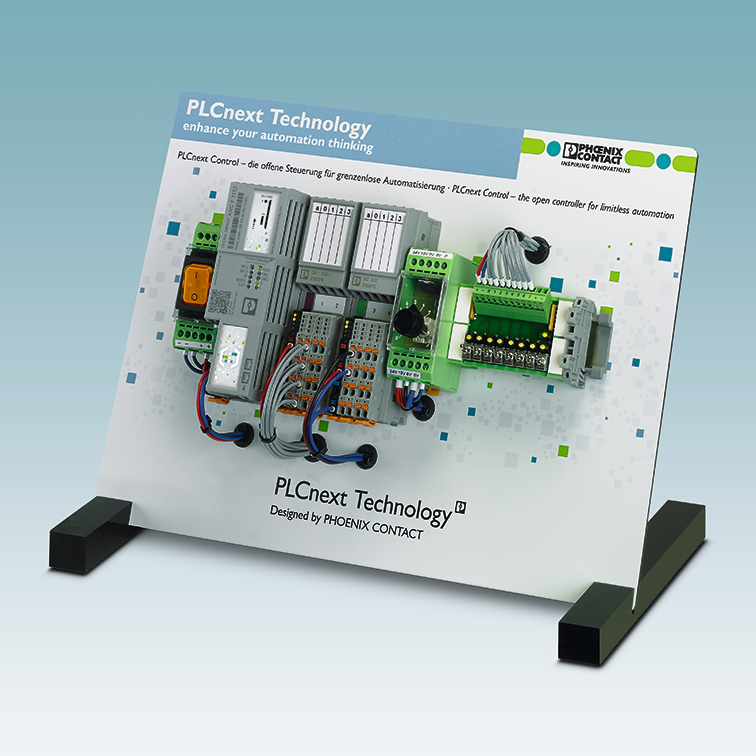
The AXC F 2152 Starter Kit

Two months into my internship, and I have already learnt enough to build a small-scale prototype of my final project. While I will not be delving into the details here, the important part is that majority of the logic is coded in C++, instead of IEC 61131-3 languages.
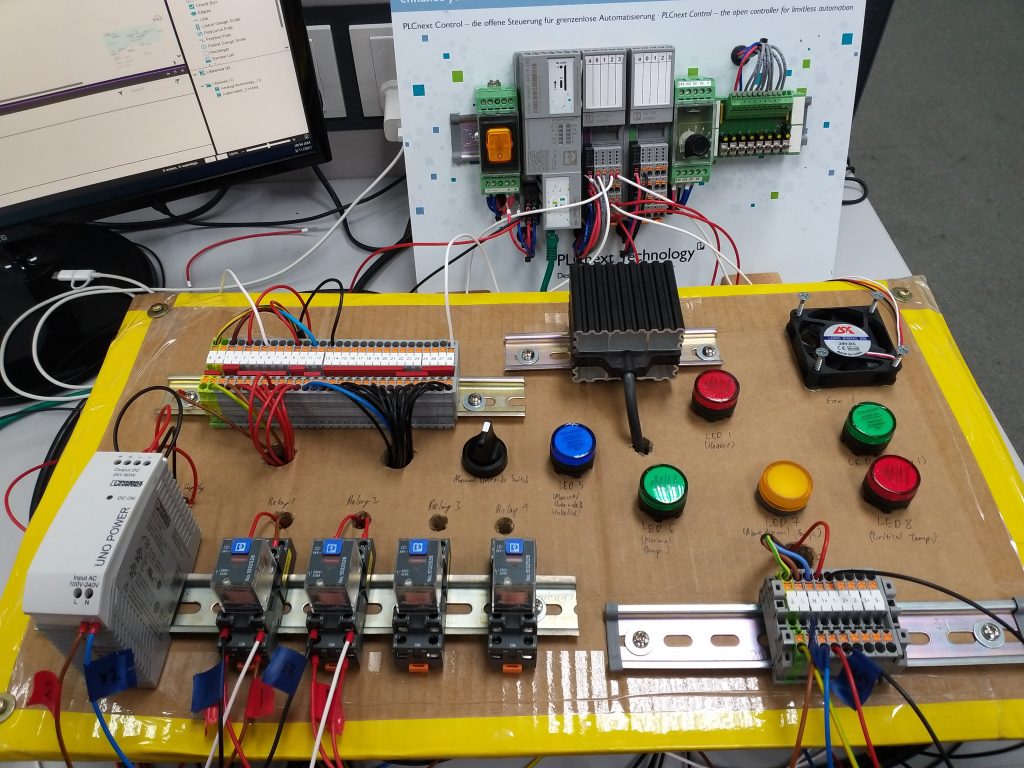
“This isn’t even my final form!”

If an intern can whip up something like this from scratch in two months, I am sure you can too!
PLCnext Technology – Limitless Industry 4.0 Solutions

From |

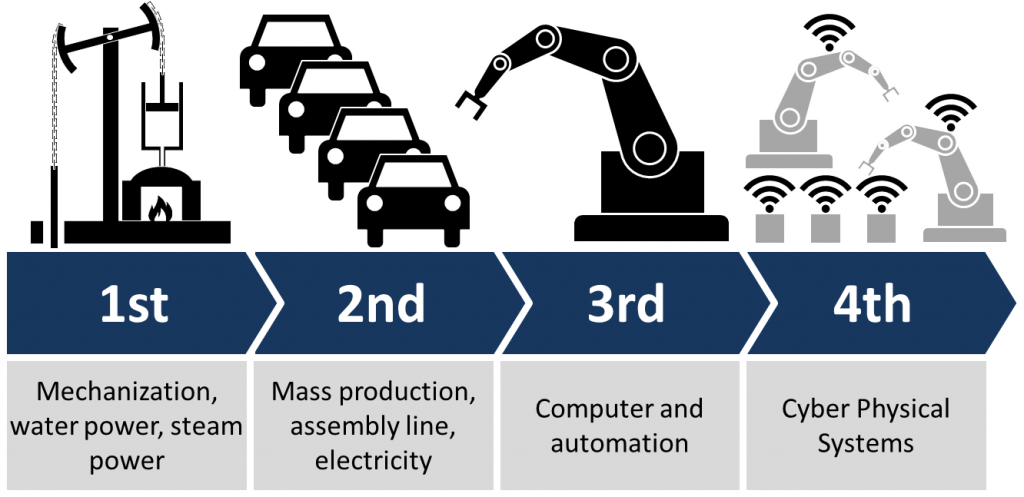
We have entered the 21st Century with the birth of the Industry 4.0 era. But what exactly is Industry 4.0? There are interpretations out there such as Smart Factory, Internet of Things, Industrial Internet of Things, Cloud Computing, Big DATA and Digitalization etc. It is observed that many corporations and business entities are on overdrive budgeting capex and formulating plans to adopt and embrace Industry 4.0.       

For most industries, what are the tangible and intangible benefits of digitalisation or achieving Industry 4.0? In the market, it has been revolving around these familiar hot topics: asset management, remote monitoring, machine learning, artificial intelligence, predictive maintenance to achieve world class operational excellence. In fact they are all based on 1 thing – Data. Data sets the precedence for the above. For new plants, the architecture of connectivity can be designed before construction to achieve the ability to harvest all necessary data into a single historian or platform, therefore implementation will be an easy feat. However, existing bases/plants have to face umpteen challenges.

Although existing plants do have sensors/devices that collect data, they are kept to a closed loop industry system. Moreover, a lot of the data/information collection is very manual, such as via maintenance crews going on site using handheld tools for measurement and manual recording. Compared to a new plant, it is not operationally as well as economically feasible to pause operations of an existing plant and overhaul the whole connectivity/system architecture to allow more data flow to enable Industry 4.0.  Therefore, without affecting present operation, to modernise an existing plant, a suite of smart devices is required to design a solution to help them realise Industry 4.0.

Very often, existing plants have old systems and devices running on various communication protocols, therefore it is always a challenge to harmonise and standardise the data collected. Moreover, additional devices and sensors are also required in the modernisation journey and that will increase the need for I/O points. Phoenix Contact can help clients overcome these challenges in modernising their existing plant and embarking on their digitalisation / Industry 4.0 journey, through the use of one of Phoenix Contact’s leading technologies: the PLCnext Technology. It can provide a very scalable and flexible solution that enables edge computing, possesses the ability to be an OPC UA server, provides a seamless integration of both IEC61131 and High Level Language(HLL) programming, and most importantly cybersecurity is an inherent feature of the PLCnext Technology. With these attributes, it provides an excellent platform to collate and share data on open communication protocols.   

Bundled with Phoenix Contact’s comprehensive portfolio of communication interface technology, such as gateways, wireless technology, ongoing partnership development for 5G technology as well as in house technical know-how and expertise, an enhanced connectivity one stop solution can be actualised through partnership with Phoenix Contact. This can help end users for both new and existing plants congregate all required raw data for further data manipulation such data analytics, machine learning or even Artificial Intelligence. The PLCnext Technology Platform has set itself as a gravity centre of a solution of limitless automation / Industry 4.0 Ideas.

For those who wish to embark on a digital journey of Industry 4.0, Phoenix Contact can be there to be your reliable partner.

The Next Gen PLC

From |

Discover the next generation of PLC TECHNOLOGY

With an imminent changing of generations, one can expect “Generation Y” to outnumber “baby boomers” in the coming years. Where the automation industry is concerned, this means that the Gen Y users who are more familiar with high level languages (e.g C, C++ and C#) will increase gradually while on the other hand, the users of traditional IEC 61131 programming language will decrease in years to come. Therefore a user-selectable environment is needed to cater to the development of both types of users from various generations. With the PLCnext technology, program sequences from different programming languages can now be combined into a few different tasks or one single task. High-level language programs therefore become automatically deterministic like a classical PLC program.

PLCnext Technology forms the basis of the new, open control platform from Phoenix Contact. This solution is future-proof, flexible, and perfectly suited for the requirements of the Industrial Internet of Things (IIoT) and Industry 4.0, both for existing users who perform IEC 61131 programming and for users using high-level programming languages.  PLCnext technology is the basis of a new, technologically leading generation of Phoenix Contact controls dedicated to the automation business of the future.

Interested to see how this works? Feel free to request a demonstration from us by leaving us an email at marketing@phoenixcontact.com.sg!

https://www.youtube.com/watch?v=ckcMJQ3S5VM&t=12s