

Category Archives: Industry 4.0

PLCnext Technology – Limitless Industry 4.0 Solutions

From |

We have entered the 21st Century with the birth of the Industry 4.0 era. But what exactly is Industry 4.0? There are interpretations out there such as Smart Factory, Internet of Things, Industrial Internet of Things, Cloud Computing, Big DATA and Digitalization etc. It is observed that many corporations and business entities are on overdrive budgeting capex and formulating plans to adopt and embrace Industry 4.0.       
For most industries, what are the tangible and intangible benefits of digitalisation or achieving Industry 4.0? In the market, it has been revolving around these familiar hot topics: asset management, remote monitoring, machine learning, artificial intelligence, predictive maintenance to achieve world class operational excellence. In fact they are all based on 1 thing – Data. Data sets the precedence for the above. For new plants, the architecture of connectivity can be designed before construction to achieve the ability to harvest all necessary data into a single historian or platform, therefore implementation will be an easy feat. However, existing bases/plants have to face umpteen challenges.

Although existing plants do have sensors/devices that collect data, they are kept to a closed loop industry system. Moreover, a lot of the data/information collection is very manual, such as via maintenance crews going on site using handheld tools for measurement and manual recording. Compared to a new plant, it is not operationally as well as economically feasible to pause operations of an existing plant and overhaul the whole connectivity/system architecture to allow more data flow to enable Industry 4.0.  Therefore, without affecting present operation, to modernise an existing plant, a suite of smart devices is required to design a solution to help them realise Industry 4.0.

Very often, existing plants have old systems and devices running on various communication protocols, therefore it is always a challenge to harmonise and standardise the data collected. Moreover, additional devices and sensors are also required in the modernisation journey and that will increase the need for I/O points. Phoenix Contact can help clients overcome these challenges in modernising their existing plant and embarking on their digitalisation / Industry 4.0 journey, through the use of one of Phoenix Contact’s leading technologies: the PLCnext Technology. It can provide a very scalable and flexible solution that enables edge computing, possesses the ability to be an OPC UA server, provides a seamless integration of both IEC61131 and High Level Language(HLL) programming, and most importantly cybersecurity is an inherent feature of the PLCnext Technology. With these attributes, it provides an excellent platform to collate and share data on open communication protocols.   

Bundled with Phoenix Contact’s comprehensive portfolio of communication interface technology, such as gateways, wireless technology, ongoing partnership development for 5G technology as well as in house technical know-how and expertise, an enhanced connectivity one stop solution can be actualised through partnership with Phoenix Contact. This can help end users for both new and existing plants congregate all required raw data for further data manipulation such data analytics, machine learning or even Artificial Intelligence. The PLCnext Technology Platform has set itself as a gravity centre of a solution of limitless automation / Industry 4.0 Ideas.

For those who wish to embark on a digital journey of Industry 4.0, Phoenix Contact can be there to be your reliable partner.

Phoenix Contact mGuard Secure Cloud

From |

What is Cloud Computing and why have people started to use it?

The usage of the internet has increased massively in last few years, which increases the cost of hardware and software. The new technology of Cloud Computing has been used to solve all these issues by providing online service, which reduces the cost of hardware and software effectively.

Cloud Computing is architecture or it can be defined as a type of internet service, which is designed to provide shared resources and computing services via the internet on demand over centralized server resources on a scalable platform. Cloud Computing allows customers to share resources like networks, storage, servers, services and applications without physical devices, on a pay-per-use basis.

There are three major cloud computing service categories:

Software as a Service (SaaS) Platform as a Service (PaaS) Infrastructure as a Service (IaaS)
These are applications hosted by third party providers. Customers are able to use them over the internet.

Pay-as-you-use model.

Examples:

Salesforce, NetSuite

Third-party application development platform and services built on its own infrastructure.

Again these tools are made available to customers over the internet.

Examples:

Google App Engine, AWS Lambda

Third-party servers, storage, computing resources available for customers. Customers can use IaaS to build their own PaaS and SaaS service.

Examples:

Google Cloud Compute, Amazon S3

Major security issues on implementing Cloud Computing Services

Cloud Computing is known as an emerging domain, the security of the data must be protected over the network. There are many issues in cloud computing but security is the major issue.

  • Misuse of Cloud Computing

Some criminals like Hackers and spammers can take advantage of the suitable registration, easy procedures and unspecified access to cloud services to launch malicious attacks like key cracking.

  • Insecure Application Programming Interfaces (API)

Customers handle and interact with cloud services by interfaces or API. Service providers must make sure that the security is integrated into their service models, while users must be aware of the security risks.

  • Wicked Insiders

Malicious insiders pose a greater threat in the Cloud Computing environment because consumers do not understand the providers’ policies and procedures. Malicious insiders may gain unauthorized access to the organization and its assets.

  • Shared Technology issues/multi-tenancy nature

This is based on a shared infrastructure and does not apply to multi-tenant architectures.

  • Data Crash

Compromised data may include deleted or changed data without backup, unrecorded with larger environments, lost encoded keys and illegal access to sensitive data.

  • Account, Service & Traffic hijacking

Account or service hijacking is usually done using stolen certificates. Such attacks include phishing, fraud, and exploitation of software vulnerabilities. Attackers can access key areas of Cloud Computing services such as confidentiality, integrity and service availability.

  • Unidentified Risk Report

Cloud services mean that organizations are less involved in software and hardware, so organizations should be aware that internal security, security compliance, auditing and logging issues may be overlooked.

Phoenix Contact mGuard Secure Cloud

A simple, secure, reliable solution to risks

mGuard VPN technology uses IPsec security protocols with strong encryption. This guarantees the confidentiality, authenticity and integrity of all information and data transmitted between the service personnel and the machine.

For any demo request or enquiry, feel free to contact us at marketing@phoenixcontact.com.sg!

Wireless Technology: the Industry 4.0 Backbone

From |

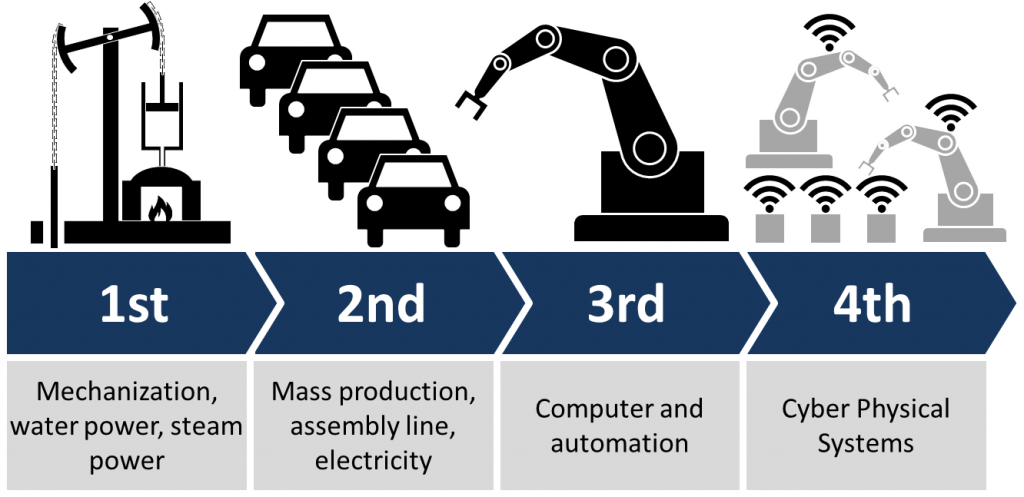
Industry 4.0 is the 4th generation industrial revolution. This world-changing principle enhances productive efficiency in smarter and faster ways by utilizing the state of the art technology of data analysis software alongside powerful computerized hardware capabilities.

The key to the success of Industry 4.0 is to connect thousands of devices to the central system in order to allow exchanging of various parameters to the processing unit, such as humidity, temperature, status, level, etc. Not only is data transmitted, but devices also receive commands for further actions.

Actually, the powerful hardware and advanced software capabilities have existed for over 20 years. However, the increased number of devices connected to the system means a higher cost of investment. In the past, the only reliable connectivity was through wired cables, which investment cost was directly related to the complexity of the number of devices.

This key obstacle has been rapidly resolved by the advent of reliable wireless technology. Today, various applications of wireless technology have been proven and widely used, such as:

NFC: Near Field Communication

RFID: Radio-Frequency Identification

Wi-Fi: Wireless Fidelity

What makes people trust wireless technology?

Security: New advancements in data encryption technology protects data from intruders.

Speed: The new standard of network 802.11ac helps increase data transmission speed to 10 times faster than the old standard which is sufficient for industrial control systems.

Savings: All stakeholders follow the wireless markets trend. Therefore, new hardware for wireless technology has been introduced daily. This brings significant reduction in the price of wireless devices which mean tremendous savings during investments.

Phoenix Contact offers a huge portfolio of products under the category of wireless technology, as shown below.

OPC_UA SERVER for PC WORX-based Controllers

From |

Dynamic market changes make it necessary to solve automation tasks in line with Industry 4.0. The objective is always to produce more efficiently and intelligently. Uniform protocols, rules, and standards for communication are required to intelligently link machines and system components.

In the past, it was a very challenging task for any engineer to setup, access or share OPC classic remotely in a network but that has changed now, with Phoenix Contact’s OPC_UA Server.

The PC WORX UA SERVER from Phoenix Contact enables you to access all variables of PC WORX programmable controllers via the OPC_UA (Unified Architecture) standardized communication protocol.

Fig 1: System architecture with OPC_UA

Fig 1: System architecture with OPC_UA

Why you should switch to OPC_UA

The OPC Unified Architecture Standard, OPC_UA, is being adopted more widely across the market as the new market standard and provides the basis for open and standardized communication in the digital future.

OPC_UA Server capability:

  • Handle up to 200 controllers in a visualization or production control system
  • Variables are mapped via the standardized PLCopen profile
  • The OPC_UA server uses the binary protocol for communication, resulting in high data transmission speeds
  • A security concept based on certificates protects against unauthorized access
  • Status & Quality of connection for each individual items

Fig 2: OPC_UA VS OPC Classic

Fig 2: OPC_UA VS OPC Classic

In the end, the key feature that makes OPC_UA server the backbone for any IIOT system that uses PLCopen profile would be the fact that it allows customers to build extremely fast web/cloud base visualization even without a need to pay additional costs for licensing.

Fig 3 & Fig 4: Web/Cloud Visualization of data from monitoring a mini solar cell via OPC_UA

Importance of choosing the right PCB enclosure

From |

What is considered important when it comes to choosing the right PCB enclosure. Let us guide you through the process.

Price? Style? Service & support? Reputation of the supplier?

In the matter of fact, all of above are essential. The engineers should select the enclosure at first and then choice the mechanical & electronic components to suit the enclosure.
We need to consider

Material
The 3 common plastic enclosures are ABS, Polycarbonate, Polyester which are high functionality, light weight, flexible in design.

The Ingress Protection
The ingress protection classification DIN EN 60529 determines and rates protection against solid particle (e.g. dust) as well as liquid incursion.

The letters IP (ingress protection) is followed by a two-digit number; the first digit indicates the level of Solid particle protection and the second digit indicate Liquid ingress protection. IP Code

Environmental Considerations
How the enclosure will last over many years of operation depends on how well you evaluate the environmental impact of elements such as UV rays, temperature, airborne debris, etc.
Different materials offer varying degrees of impact resistance.

Dimensions
The internal and external dimensions of a PCB enclosure is extremely important. Sadly, in many cases, the PCB is chosen first and this makes it difficult for the engineer to source the best fit enclosure solution.

Modification of Standard Enclosures
The enclosure supplier may need to support modifications with value-added services that include drilling, milling, printing, color, etc. Some suppliers can even provide advance services like fitting membrane keypads, displays on the enclosure, etc as a complete solution.

Ease of Assembly
A complex PCB design may make it difficult to assemble electronic and mechanical components in the enclosure, which make is an important point to consider when selecting an enclosure.

Range of PCB Enclosure

Check out Phoenix Contact’s range of enclosures here

We, at Phoenix Contact, understand your problems and offer a wide range of options for shape, color, and function when it comes to choosing the right enclosure. Whether on a wall or on a DIN rail, from light gray to sky blue, narrow or wide, many many to choose from. With the two new enclosures, Universal case system (UCS)  and Environment case system (ECS) added into the selection, it is much easier to choose your enclosure.

Please view the Enclosure brochure.

Want to find out more? Feel free to contact us at marketing@phoenixcontact.com.sg!

Fastest and easiest way to connect up for IIOT

From |

Data is the new oil - Connect up for IIOT

Image by Gerd Leonhard (https://www.flickr.com/photos/gleonhard/)

Have you been hearing a lot about IIOT? Do you want to kick-start IIOT quickly and easily? What is the fastest and easiest way to connect up for IIOT?

If you want to find out more about Phoenix Contact IIOT Connectivity Solution, read on!

Phoenix Contact IIOT Connectivity Solution (PICS)

Like all revolutions, the excitement surrounding the fourth industrial revolution is increasing as the pace to create working cyber-physical systems to fully integrate big data into processes gathers steam. This is evident with more system providers emphasizing on providing a solution capable to gather and analyse big data to create actionable insights for their customers.

https://www.youtube.com/watch?v=HZ07iDk7-tc

How to connect up for IIOT

The first step to create such a system will be to get the IT backbone (Data servers, Software, Enterprise cybersecurity etc) running. Once this is set up, customers and system providers often face difficulty collecting data back into said systems safely and reliably. There will be a need to look for multiple hardware specialists to obtain the necessary hardware. To make sure that the hardware is reliable and safe, companies will usually have to look for multiple hardware providers.  For example:

  1. Industrial communication products manufacturers
  2. Industrial electrical products manufacturers
  3. Industrial electronics products manufacturers
  4. Industrial Cybersecurity products manufacturers

This process is arduous and time consuming to say the least!

To address this, Phoenix Contact (SEA) Pte Ltd has launched an exclusive product for South East Asian market.  Phoenix Contact IIOT Connectivity Solutions (PICS) allows companies to explore the unknown and kick-start IIOT/Industrie 4.0/ other Future Ready Automation Trends with the fastest and easiest way to connect “Things” to Big Data Analytics Platforms.

If so, contact us today at marketing@phoenixcontact.com.sg for a free Proof of Concept/Demo box!

Data Exchange Between Enterprise and Automation Control Level

From |

Phoenix Contact's ILC for easy data exchangeAt present, control applications focus not only on reliability but also flexibility. Following current automation trends in automation 4.0, many vendors will need to improve market share in this market segment.

Interface data between third-party functions might be considered to develop parallel to improve the product quality. For controller device, we can classify its interface levels into field level and enterprises level.

Usually, there are no issues when various controller vendors need to transfer data between one to another at the field control level.  This is because there are many common protocols like MODBUS, PROFIBUS and etc to exchange data easily between third-parties. However, it is a different story when there is a need to exchange some data at a higher level like in an enterprise system.

A couple of constrains when designing interface system is the data exchange rate and also the time lag which occurs. In order to maintain a high quality data exchange rate, it is often deemed necessary to utilize high-end hardware and software, resulting in a very expensive solution.

Easiest Controller for Data Exchange between Enterprise and Automation Control Level

Phoenix Contact’s controllers, right up from our basic series, have a library which is able to connect directly to a RDBMS database by providing query string patterns like common SQL script. In comparison, other controllers require additional equipment or other APIs to collect data from controller first before sending it to the target database.

Easily enable data transfer from the sensor directly to a DB with Phoenix Contact’s Controllers.

Reference product

System overview

System overview

For more information on Phoenix Contact’s Controllers, leave us a message and I will get in touch with you soon.

Refineries of The Future – IIOT for Oil and Gas

From |

The Industrial Internet of Things, or IIOT, is revolutionising the way industries do businesses. Firms have to embrace automation and new technologies in order to keep up with a dynamic globalised environment.

By adopting IIOT at an early stage, it prevents a firm from lagging behind its competitors. Late adopters may see a rise in installation costs to implement these new technologies.

Current Practices are Outdated

From an industrial standpoint, many oil & gas refineries are still utilising traditional data analytics such as spreadsheets to analyse processes, as well as relying on past data to make operational decisions.

Refineries store millions of databases and thus it becomes a challenge for engineers to extract information from a cesspool of data. Additionally, for the sake of organising data, the organization may make use of foreign information systems that are not user-friendly.

As a result, refineries are considered to be data-rich but in hindsight, information-poor.

Process Plant

Using traditional data analytics, engineers often find themselves stranded with missing data. Typically, one would rely on past experiences to solve their engineering woes and make “informed decisions.” Just ask any engineer working in a refinery and they might just confess to using this prehistoric technique!

Refineries of The Future need to change how they organise data.

IIOT can help engineers analyse and compare their data in real-time. Vital parameters such as the temperature of a heat exchanger, flow rate of a valve or pressure of a pump can be monitored on the spot.

Advanced data analytics can perform audits and identify data correlation among statistics. If a deviation of results were to occur, the engineers will be notified immediately, in real-time. For instance, it is common for an instrument’s pressure reading to fluctuate. This could also be due to ordinary circumstances such as a spike in production. However, emergency situations such as pipe leakages could also cause abnormally low pressure readings. 

Engineers are able to justify these values with predictive analytics and thus determine the root cause.

Easier Said than Done

Adopting new technology is not without its challenges. In order for all the varying hardware to get connected, it has to comply with a single universal format that allows data to be unified. This might be expensive if you intend to hook up existing hardware to new technologies that may not be compatible.

PICS for Oil & Gas

How can PICS help?

With Phoenix Contact’s revolutionary IIOT Connectivity Solution (PICS), we eliminate the hassle of consolidating hardware with new technology. Furthermore, get everything assembled within seconds!

PICS combines new technology to drive your controllers and sensors and affixes them with your legacy equipment. This enables compatibility with our software, so that you can read your data the way you want it.

Who says IIOT technology needs to be expensive and complicated?

With PICS, you’ll have the ability to convert your backward refineries into Smart Refineries of tomorrow.

Don’t believe us? Request a free trial of PICS by leaving us an email at marketing@phoenixcontact.com.sg and experience what IIOT can do for your company today!

Manufacturing Expo 2017

From |

We would like to invite you to join us in at Manufacturing Expo 2017 located in Thailand, Bangkok, BITEC, from 21 to 24 June 2017. Manufacturing Expo is one of the biggest manufacturing exhibitions in South East Asia. It comprises of 7 sub-shows. We will be located at Automotive Manufacturing, under Singapore Pavilion (3D15)..

One of the most thriving industries in Thailand, Automotive adopts industry 4.0 to boost the production efficiency. Moving with the industry trend, Phoenix Contact would like to take this opportunity to showcase our capability on smart connectivity for smart factories as well as Phoenix Contact very own Industrial Internet of Things (IIOT) solution.

Being an innovative company, we strive to increase productivity and efficiency with cutting edge connection technologies. Quick connection technologies were incorporated into our connectors as well.

For example,

Push-in

Push-In Connector

Insulation Displacement Connection (IDC)

Insulation Displacement Connection (IDC)

Piercecon for high density (up to 17 positions)

Piercecon Connection

Besides signal, M12 connector is also used in transmitting data such as Ethernet and Profinet as well as power (AC/DC). Phoenix Contact is able to provide a complete solution from device connectors to field cablings.

Signal, Data, Power

Industry 4.0 requires the transmission of more signal, data and power than ever. Phoenix Contact circular hybrid connector provides an All-in-One solution.

HEAVYCON Modular

Using Heavycon Modular, signal, data and power can be mix and match easily in one connector. It also provides the flexibility for future expansion and modification

HEAVYCON Surface Mount

Besides copper based data connectors, we also have a complete solution for fibre optics according to your requirements.

Fibre Optic Data Connectors

Interested to know more about the applications of the products mentioned above? Come join us at Manufacturing Expo. Our sales team will be happy to assist you. Express your interest by helping us to fill up the survey form to receive a mystery gift.

Where do you implement IIOT for Power Industry?

From |

Many industries such as Building Automation (analysing of building operating parameters across various premises), Automotive (predictive warning for luxury vehicles), Land Transportation (think ERP 2.0 in Singapore!) has/will be implementing Industrial Internet of Things (IIOT) in its’ various forms for the different benefits and uses cases it provides.

If you are still confused about IIOT vs IOT vs Industrie 4.0 and other terms? Check out this link here.

The results have been intriguing and allowed those who have implemented such systems to stand out from their competitors amidst increasing competitiveness of their market.

In critical infrastructure (such as power industry), such a movement has been much slower. This is because a failure in critical infrastructure systems will have far reaching consequences unlike other industries. For example, an unnecessary power trip caused by a data packet not being received in time can affect hundreds or even thousands of residents in a large neighbourhood. Compare this to having a car breakdown in the middle of the road because the predictive warning for car servicing was not triggered!

IEC 61850 – What data can we track?

For Power Industry (Power generation, power grid operations, contestable energy market consumers etc.), we are in the infancy of a huge change, led by IEC61850 to achieve internet of things for power industry (commonly known as Virtual Heat & Power plant (VHP), Smart Grid or other variants).

IEC 61850 allows for

  1. Interoperability: with systems and products from different manufacturer designed and
    communicating in the same way, Power grid operators, Power Generators, Power Consumers can their own systems to communicate with other systems easily.
  2. Industrial hardening of equipment: Components of systems needs to comply with IEC61850-3 which require hardening of industrial components, able to withstand the harsh condition of power industry, such as high Electromagnetic Interferences.
  3. Common system architecture and easy naming nomenclature of data points, allowing for integration into one BIG virtual network to be much simpler.

And these in terms allows for some pretty cool things in line with IIOT:

Predictive maintenance

Imagine knowing exactly when to replace the switchgear/transformer parts and knowing when it will fail! Switchgear/transformer spare parts usually require lead time. Knowing in advance before the electrical assets needs replacements allows power grid operators/ power generators to prepare for the spare parts in advance, minimizing risk for downtime.

Proactive maintenance

Instead of waiting for something to happen before we fix it, there is an increasing trend that engineers worldwide are always studying and trying to understand their system better!

Increased productivity

At present, checks on health of systems and electrical assets are periodically conducted. Unfortunately, there is no real good reason why a monthly period is chosen over a bi-annual check. This is a waste of precious resources as manpower is conducted to do meaningless checks.  This time can definitely be better spent implementing a strong IIOT system that cuts down on these wastages and allows for a more advanced form of maintenance!

With these building blocks in place and obvious advantages, the last remaining challenge will be to adopt IIOT for Power Industry, i.e. where should we start to monitor and collect data from?

IIOT for Power Industry

For this, IEC is in the midst of a technical review for IEC 61850:

Part 90-3: Using IEC 61850 for Condition Monitoring Diagnosis and Analysis

This part of the standard will provide standardization for information modelling, exchange and configuration techniques for Condition Monitoring & Diagnosis for Power Utility Automation. What this mean is that in this part of the standard, there will be explicit description of how you can use IEC61850 to achieve predictive/proactive maintenance and increase productivity! There will be guides on which part of the switchgear/transformer/cables you should monitor and how exactly you should be monitoring them.

At Phoenix Contact, we have summarised IEC 61850 with regards to the portions it recommends condition monitoring and we are glad to share the summary below:

IEC 61850-90-3: Using IEC 61850 for Condition Monitoring

At Phoenix Contact, we also have a wide range of reliable IEC61850-3 industrial hardened components necessary for implementing of IEC61850 systems. Products include Network Switches, Ethernet to Fibre Media Converter, Parallel Redundancy Modules, Bus Couplers/IOs and Power Supply (AC to DC or DC to DC).

Products for IEC 61850

Do you want to know more about IEC61850/IIOT or how exactly condition monitoring can be done to stay ahead of IEC standards? Leave us your contact at marketing@phoenixcontact.com.sg and we will be in touch with you shortly.