
Author Archives: kmtan

An Answer to your Pain Point

From |

I believe everyone agrees with the statement: ‘There is no need to push your products to your customer. Solve their pain point’. This sentence resonates even more with me, as I was once a user of heavy duty connectors. I used this product so often that I have developed a love hate relationship with it. I LOVE it because of the convenience that this product has to offer, in terms of consolidating all wires from and into a panel. With this product, all the cables will be very organized, enough to make a person with OCD smile simply by looking at it. As for why I HATE it, it is the pain point that I am about to share.

The Art of Wiring

Before going into that list of HATEs, it is certainly useful to get the generic terms right. Otherwise everyone will start calling them their brand name, much like how I used to call them back then.

Housings and Base (with cable gland)

Housings and Base (with cable gland)

Contact Inserts

Contact Inserts

Pins/Sockets

Pins/Sockets

The NUMBER 1 in my list is definitely none other than the tedious procedure required to re-do the wrongly inserted pins/sockets. First of all, the incorrect pins/sockets have to be ejected out. This is when the ejector comes in handy, if and only if it is inside your toolbox. For my case, it was usually not inside my toolbox and I had to go through all sorts of hassle to get the pins/sockets out.

Push-in Connection Inserts

Push-in Connection Inserts

If you are a huge fan of Phoenix Contact, PUSH-IN technology is probably the most familiar term to you. YES, we incorporated that technology into our inserts and that made life easier for people like me. The only thing you need to eject out that pin/socket is just a screw-driver, or perhaps a pen.

So assume there is no wrong-doing in the wiring and everything goes smoothly until the day the panel is delivered to the end user’s place. During installation, you find that the space allocated for your panel is so limited. Worse, the space is not sufficient for the heavy duty connector because of the top cable entry direction. Squeezing it into the panel will result in over bending of the cable. This brings us to the number 2 in my list of HATEs.

Inter-changeable cable entry outlet

Inter-changeable cable entry outlet

With Phoenix Contact EVO series housing, this is no longer a problem anymore. All you have to do is just twist that cable entry outlet gland and face it to the lateral direction or vice versa according to your space constraints. It provides flexibility, allowing the user to interchange the cable entry between top entry and side entry without having to remove the entire cable from the housing.

The one last thing in my list is the lack of flexibility of the contact inserts. Imagine you have different types and sizes of cables and wires that you want to consolidate into/out of a panel. In addition to that, it is just a few of every type and size of cable that you do not require the whole 16 poles or 24 poles heavy duty connector. I experienced that before in one of my projects whereby the panel requires 5 units of 1.5mm2 cable, 3 units of huge power cables, 3-4 units of Ethernet cables and finally, a few pneumatics hoses. Due to such a “high mix low volume” scenario, I was left with no choice but to make several cut-outs on the panel in order to accommodate all these cables and hoses into the panel.

This is what team-work looks like

This is no longer a hassle if different types and sizes of cable can be accommodated into one single heavy duty connector, and this is the fundamental concept that brought us to the birth of modular contact inserts. With these revolutionary contact inserts, users can now choose different contact insert modules and assemble it into a frame to make it into a contact insert. As for the housing and base, you can choose to use the standard housing or the EVO series because they are both compatible.

The above are just my pain points about this product based on my experience and Phoenix Contact Heavycon offers the right solution to every hassle that I have with heavy duty connectors. I believe you too have other problem with your current heavy duty connector, so do contact us with your feedback or queries and we will solve that pain point of yours. Cheers!

CT Testing with FAME

From |

Test disconnect terminal block might not be an alien term to you, especially if you are in the power industry and dealing with switchgears. This is the most common component you will see in a control relay panel, which allows you to do testing and short circuiting of current transformers. At Phoenix Contact, we incorporate different connection technology into our test disconnect terminal block series, namely the screw connection, spring cage connection and push-in connection. Of course, the changes to our test disconnect product series do not end there.

Figure 1: (From left to right) Screw connection, spring-cage connection and push-in connection

While test disconnect terminal blocks offer flexibility to the user, as well as the benefit of saving space because of its modular design, it still has a slight disadvantage when it comes to testing. During function testing of current transformers and voltage transducers, performing combine switching operations across several points is often a requirement, and thus there will be limitations when it comes to such situations when modular terminal blocks are used. With all the constraints and limitations that comes with using a modular test disconnect terminal block, it opens up greater possibilities for the product development team to explore creative designs to solve the problem while maintaining the benefits of the modular terminal block. With that, ladies and gentlemen, I introduce to you FAMEFast And Modular Energy System, a solution specifically designed to cater to the need for performing complex switching operations, all at once.

Figure 2: FAME Plug and terminal strip

Figure 2: FAME Plug and terminal strip

If you find any of the above foreign to you, no worries! I have got you covered with quality posts by our product specialist. In this post, you will learn the fundamentals behind the make-before-break principle of a CT testing, as well as the reason for using test disconnect terminal blocks in such applications. Next, we look at FAME in detail from its basic operation to the difference between FAME 1, 2 and 3. These few posts will lay down the foundation for your understanding of the field of test disconnect systems.

While FAME is created for CT testing, and several versions of FAME have been developed for the different requirements of relay testing in different countries, we came to realize that there is room for other applications that FAME is able to offer. One specific example that best illustrates this is our recent product approval in Tenaga Nasional Berhad (TNB), Malaysia’s national grid operator. It all started with a product presentation of FAME 1 to the product approval committee members of the Protection Department of Transmission Division, with the purpose of having Phoenix Contact to be specified in as the test plug. However, things started to side track from our original plan when FAME 1 was proposed to be adopted as a secondary safety check in their Control Relay Panel. This is part of the initiative of TNB in the implementation of live maintenance. In this new add-on design, our FAME 1 will be sitting in between the first isolation (terminal block) and the trip coil.

Figure 3: Diagram of group isolation link in protection panel

This secondary isolation, also known as the group isolation link is used to isolate trip contact in a group.

  • It consists of two components, the power plug and the terminal strip.
  • During normal operation, the power plug is inserted into the terminal strip, forming a closed contact between the terminal block and the trip coil
  • When live maintenance is carried out, the power plug will be disconnected from the terminal strip, leaving an open contact.

Figure 4: (From left to right) Power Plug and Terminal Strip

This application in Malaysia is a good example and reference of how FAME can be adapted to serve different applications from its original design purpose. If you have a bright idea of how you can use FAME while reading this post, we welcome you to contact us. Who knows, your idea could be the next new application of our FAME!

Shunt Reactor Controller

From |

Shunt reactor controller

Shunt reactor

What is a shunt reactor controller? I recall having the same question running through my head when a customer told us about what he was trying to do. Well, before knowing what a shunt reactor controller does, let us look at what exactly is a shunt reactor?

Some of you might wonder “Why does it look like a transformer?”. Yes, you are right, to a certain extent, because a shunt reactor does have similarities with a transformer in terms of its construction. However, they are both very different in terms of their functionality.

While a transformer is used to efficiently transfer power from one voltage system to another to cater for the application required, a shunt reactor absorbs reactive power generated from the source i.e. motors, generators etc.

Active and Reactive Power

What is reactive power and why do we bother to absorb? That might be the next question to ask. Before going into that, we need to understand that in an AC circuit, there are both active power (or real power) as well as reactive power, in which the active power is used to power up a system. To understand this from another perspective, think of it as a pint of beer where the beer is your active power and the reactive power is the foam.

The Beer Analogy of Active and Reactive Power

Reactive Power Analogy with Beer

Image from Electronics Tutorials (http://www.electronics-tutorials.ws)

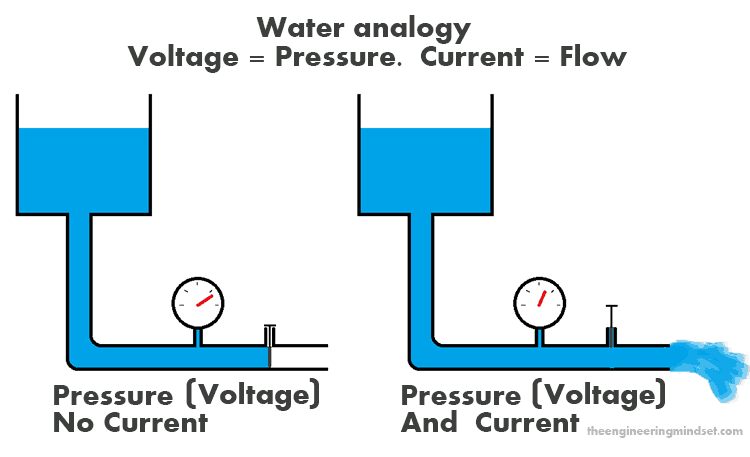
Let’s put water piping system as an analogy to electric circuit, and voltage is the ‘water pressure’. A certain level of water pressure is required in order for the water to travel across the piping system to the designated location to perform certain task, such as flushing your toilet bowl. Similarly, voltage plays the same role in an electric circuit to ensure that active power can be supplied to run any equipment or device. In this case, reactive power is the key element to maintain the voltage level in a circuitry.

The Water Analogy of Electricity

Water Analagy of Electricity

Image by: Paul Evans (http://theengineeringmindset.com)

Hence, instead of using the word ‘absorbing reactive power’, shunt reactor is rather used to stabilize or compensate the level of reactive power in an electric system.

From Component to Solution

Rewinding back a little on how this shunt reactor controller came about. It started with a normal enquiry sent in, asking for a voltage transducer. We followed up with a visit to the customer to understand further.

He showed us the solution that he was going to implement for his end user who runs a palm oil refinery. This was an existing solution in another plant where it was used to control the output of power that being transferred back to the grid from the bio-gas generation using the effluent of palm oil.

  • During the day, when most of the equipment in the plant is running, the whole electric system is highly loaded and more reactive power is consumed. Thus the causing the voltage to drop.
  • However, whenever there is less equipment running, less reactive power is consumed and hence the voltage increase.
  • This is the time when a shunt reactor has to be switched on to compensate the reactive power in order to maintain the voltage level at a particular rating.
  • Each shunt reactor has a fixed rating. Hence, putting several shunt reactors together and adding controls to it can achieve different reactive power compensation at one time, depending on the system load.
  • This whole solution is the basic working concept behind a variable shunt reactor, however cost is always a concern when it comes to such solution.

His idea was to duplicate the same solution in his project. Looking at the pictures he showed us, we believed that it was possible to be implemented with the range of products that Phoenix Contact has to offer. Hence we came up with the solution concept diagram with a brief program flow.

Customized solution from Phoenix Contact

We finally secured the project after a few rounds of discussion and modification to suit best to his application. The list of products that are put into this solution includes:

  1. ILC 171 controller – The processing unit to control the shunt reactor via relay and contactor.
  2. MCR voltage transducer – The main component to take in voltage from the system and convert it to readable value for the controller.
  3. UNO power supply – Main power source to the controller and other peripherals.
  4. TP 3150 Touch Panel – Serve as a HMI for the user to control the shunt reactor controller and display of current value of the system.
Shunt reactor operation concept

Basic operation concept of shunt reactor controller

Shunt reactor display panel

Shunt reactor controller

Shunt reactor

From a simple transducer enquiry to a shunt reactor controller project, we believe that with the available resources and wide range of product that we have, Phoenix Contact is able to customize the solution that is fit for your application.

Want to know more about how we can help in your next solution to your customer?

Feel free to drop us a feedback or send us an enquiry at marketing@phoenixcontact.com.sg. Who knows, your simple component enquiry for your project could be our next solution to you!