

New Approach to LPIT Protection Testing
Modern switching devices must deliver more than operational safety and availability. They must also support resource conservation, occupational safety, and efficient operation throughout the system life cycle. As power electronics become more integrated into the grid, the frequency spectrum used to assess grid conditions expands, while conventional converters increasingly reach limits caused by nonlinear characteristics and saturation effects. Low-power instrument transformers, or LPITs, provide an alternative. Their compact design supports space-saving switchgear concepts for modern medium- and high-voltage systems. However, LPITs also change measurement and protection architectures. Instead of power-carrying secondary circuits, they provide low-level sensor signals. Consequently, periodic protection testing requires a new approach.
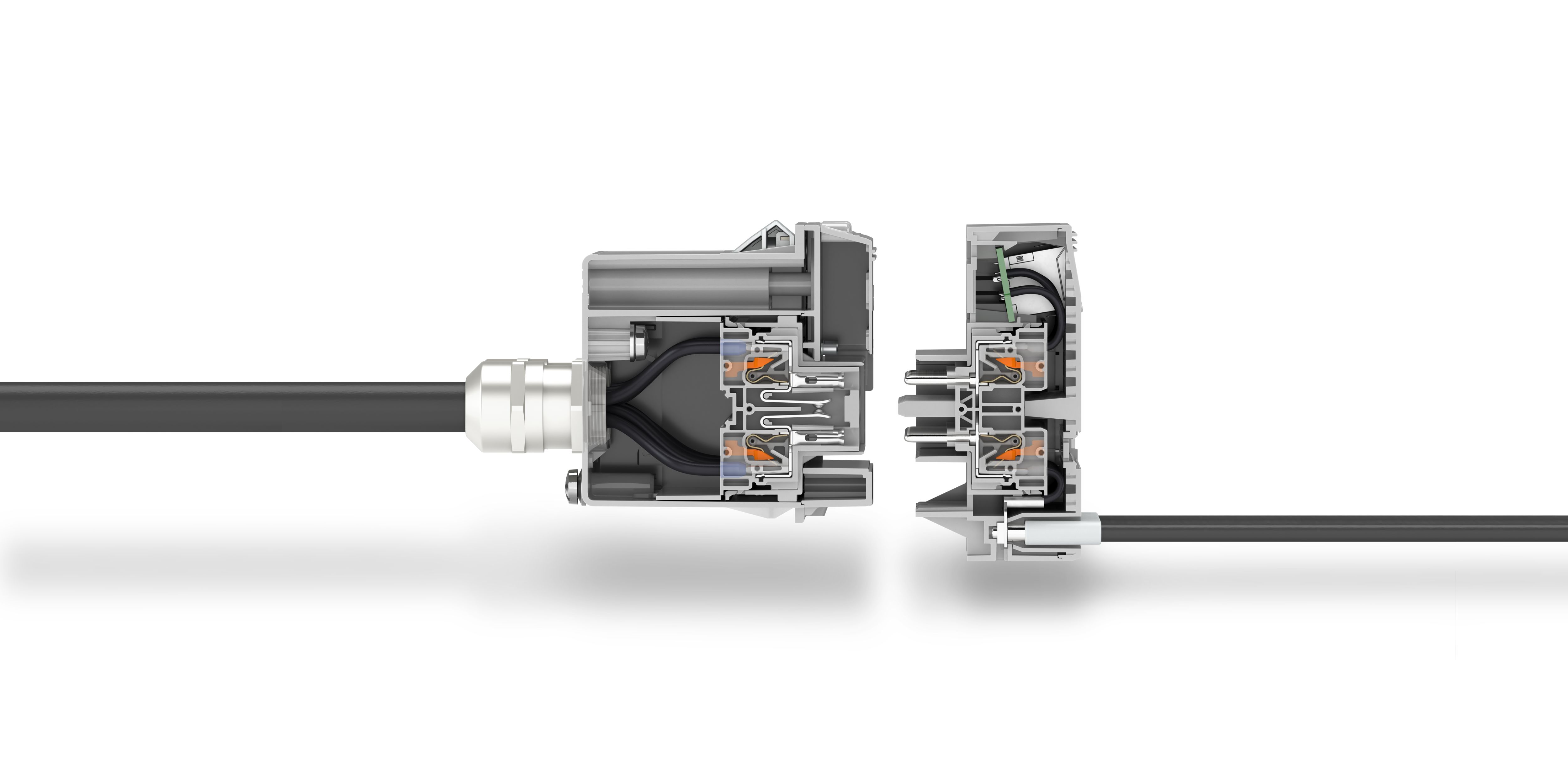
Why traditional testing methods fall short
Traditional testing methods are only partly suitable for LPIT-based switching devices. Manual wiring, serial switching, and changes to measurement circuits take time and introduce potential errors. They can also affect occupational safety, system availability, and operational processes. Operators therefore need a testing concept that provides reliable signal transmission and enables protection tests without disturbing existing wiring.
LPIT signals are more sensitive than conventional converter secondary circuits to electromagnetic interference, contact transitions, and inadequate shielding. For that reason, robust, continuous shielding is a fundamental system requirement.
Reliable signal transmission through shielding
Fame LPIT addresses this requirement with a comprehensive shielding concept. Double-shielded cables support interference-free transmission of current and voltage signals. Cable shielding works together with additional device shielding to reduce the coupling of external interference fields, helping maintain stable signal quality in EMC-critical environments.
The system uses a defined, single-sided shield connection to avoid unwanted equalizing currents and ground loops. This separation of reference potentials supports signal integrity and reproducible measurement and test results. In addition, the test interface has a fully shielded metal housing with a defined ground connection. When the interface is not being used, it remains sealed in an EMC-compliant manner.
Wiring-free testing with closed cabinet doors

Fame LPIT gives operators permanent access to LPIT signals through a robust, shielded interface. Testing does not require sensors or device connectors to be disconnected, measurement circuits to be reconfigured, or test-specific wiring and serial switching to be added. Cabinet doors can remain closed, with no open contact points during normal operation. This improves occupational safety and supports repeatable periodic tests while preserving existing wiring.
A standardized testing architecture
A standardized concept combines Fame 2 or Fame 3 with Fame LPIT. The seven-position Fame 2 or Fame 3 interface provides access to conventional protection and control signals, including tripping and excitation signals and the power supply lines. Operators can perform established function and tripping tests without changing system connections or signal routing.
One Fame LPIT interface is assigned to each phase for phase-specific access to sensor signals. Medium-voltage applications use the RJWE-SMV/8 interface, while high-voltage applications use the PTWE-SHV/8 interface. During testing, the TP-S/8 test plug temporarily connects test and measuring devices.
Each interface provides access to all eight potentials of the LPIT sensor technology. As a result, protection tests can include current and voltage signals as well as additional sensor data. Temperature data can also be incorporated, allowing temperature-dependent effects and appropriate compensation to be considered.

For operators, the practical benefit is a structured test workflow that accommodates both established protection procedures and advanced sensor-based testing. The interface remains available throughout the equipment life cycle, so recurring tests can follow the same defined connection concept. This reduces avoidable intervention and helps teams maintain consistent test conditions across medium- and high-voltage installations.
By separating conventional protection and control signals from LPIT sensor signals, the combined concept creates a clear, standardized testing architecture. Fame LPIT therefore enables wiring-free protection testing while the system is energized, supporting occupational safety, reproducibility, and system availability throughout the switchgear life cycle.
Ready to simplify LPIT protection testing?
If your medium- or high-voltage switchgear uses LPIT sensor technology, consider how a standardized, shielded test interface could improve your recurring protection tests. Fame LPIT provides wiring-free access to low-level sensor signals, allows testing with cabinet doors closed, and supports reproducible procedures without changing the existing measurement circuits.
Explore the Fame LPIT solution, review the available technical resources, or contact a Phoenix Contact specialist to discuss the appropriate testing architecture for your application.
