

The Growing Cybersecurity Challenge in Industrial Networks
As industrial systems become increasingly digital, they are unlocking new levels of efficiency and flexibility. But this transformation comes at a cost: greater exposure to cyberattacks. What was once limited to IT environments now directly affects operational technology (OT), putting production continuity and infrastructure reliability at risk in modern industrial network cybersecurity environments.
To address this growing threat landscape, cybersecurity is no longer optional—it’s becoming a regulatory requirement. Frameworks such as the IEC 62443 standards, along with European regulations like the NIS 2 Directive and the Cyber Resilience Act (CRA), are setting clear expectations for how industrial organizations must secure their systems. These regulations extend responsibility beyond critical infrastructure to include much of the industrial value chain, while also requiring security measures to be verifiable across a product’s lifecycle.
From Compliance to Industrial Network Cybersecurity in Practice

Meeting regulatory requirements is only the starting point. The bigger challenge lies in translating these standards into real, effective protection on the ground.
Industrial networks are made up of multiple interconnected components, each playing a role in maintaining security. Managed switches, security routers, and wireless infrastructure together form the backbone of modern industrial communication. But as connectivity increases—especially with remote access and wireless technologies—so does the number of potential entry points for attackers.
And the risks aren’t always obvious. Over time, misconfigurations, outdated firmware, or unsecured interfaces can quietly create vulnerabilities. In long lifecycle environments, these gaps can go unnoticed until they become critical.
What “Secure by Design” Really Means
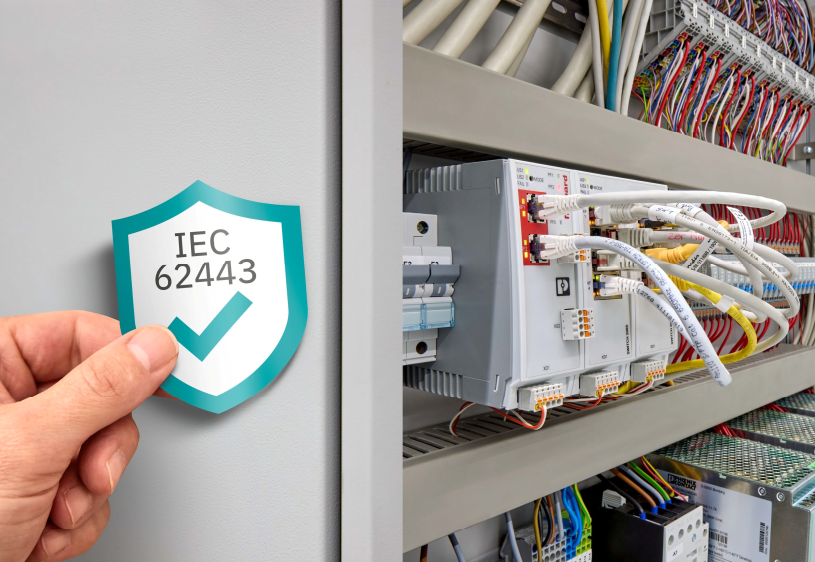
So what does secure infrastructure actually look like in practice?
Standards such as IEC 62443 define a clear set of expectations for industrial components—not just in theory, but in how they operate day to day.
Secure systems rely on a combination of capabilities, including:
- Controlled and role-based access to devices
- Encrypted communication between network components
- Verification of firmware integrity
- Continuous logging of security-relevant activity
- Built-in protections against unauthorized access or brute-force attacks
These aren’t just technical features—they’re what enable organizations to build structured, defensible network architectures.
Designing Security into Industrial Operations

In modern production environments, security is increasingly built into the way systems are designed.
Instead of treating networks as a single flat structure, manufacturers now organize them into clearly defined security zones. Communication between these zones is tightly controlled, ensuring that only authorized data flows are allowed.
Within these zones:
- Managed switches segment networks and prioritize critical traffic
- Redundancy mechanisms help maintain availability
- Security routers enforce strict communication rules and act as checkpoints between zones
Even remote access—an essential requirement for modern operations—is no longer left open. It is typically restricted, encrypted, and monitored, with clear visibility into who connects, when, and to which systems.
Securing Critical Infrastructure and Legacy Systems
Not all industrial environments start from scratch. Many organizations must secure existing infrastructure, often built long before cybersecurity became a priority.
In critical infrastructure, the challenge is even greater. Systems must be protected not only against external attacks, but also against internal risks such as misconfigurations. Advanced network controls help ensure that only authorized devices can connect, while centralized logging provides the visibility needed to detect and respond to potential incidents.
Legacy systems require a different approach. Since many lack built-in security features, organizations often add a protective layer around them—isolating them in separate network segments and tightly controlling access. This allows operators to significantly reduce risk without completely replacing existing systems.
Why Devices Alone Are Not Enough
While secure components are essential, they don’t solve the problem on their own.
True resilience depends on how these components are integrated into a broader security strategy. Concepts such as defense-in-depth, network zoning, and consistent system hardening ensure that protection is layered and comprehensive—not reliant on any single point.
Equally important is collaboration. Operators, system integrators, and manufacturers must work from the same playbook, following standardized processes and shared frameworks. This alignment is what transforms individual security measures into a cohesive, end-to-end defense strategy.
Cybersecurity as an Ongoing Journey
Industrial cybersecurity isn’t a one-time project—it’s an ongoing process.
As technologies evolve and threats become more sophisticated, maintaining security requires continuous monitoring, adaptation, and improvement. Certified components provide a strong foundation, but long-term resilience comes from combining these tools with structured processes and clear governance.

Organizations that take this approach are not only better prepared to meet regulatory requirements—they are also better equipped to protect operations, ensure uptime, and sustain long-term industrial growth.
Ready to strengthen your industrial network cybersecurity strategy?
Explore how IEC 62443-certified solutions can help you protect your operations and ensure long-term resilience.
