
Category Archives: Uncategorized

Virtual collaboration within the PLCnext Community

From |

Solving the challenges of the future with swarm intelligence

The significance of interdisciplinary collaboration between a company’s internal and external experts is increasingly recognized as essential for solving complex tasks efficiently. The PLCnext Community from Phoenix Contact exemplifies this approach in the open PLCnext Technology ecosystem. Just as collaboration is crucial in building a house with various specialists, it’s similarly vital in today’s digitized work environment across industries. Challenges like skilled worker shortages highlight the importance of cooperation among employees. In the automation industry, developers and engineers face intricate technological problems, often requiring collaborative efforts. This is especially valuable in new business areas where a company lacks experience. Online forums and digital communities facilitate information exchange and experience sharing among developers.

Reducing travel and office costs

Reducing travel and office costs

In the 1970s, digital exchange methods existed even before public Internet access. In 1979, students from Duke University created Usenet, a virtual platform for cross-border forum-based collaboration, using the UUCP protocol. Organizational psychologist Prof. Dr. Guido Hertel from the University of Münster highlights the benefits of internet-based collaboration, such as international teams working across time zones and involving experts with minimal costs. Virtual collaboration reduces travel and office expenses, and the rise of online meetings due to COVID-19 has made web-based video conferences normal. With increasing home office adoption, network-based collaboration tools like Slack, Wire, and Rocket are gaining importance.

Increasing sales growth

Increasing sales growth

A notable trend is the increasing reliance on cross-functional collaboration by large, globally operating companies as part of their digital transformation. A 2020 Accenture study found that companies using this approach achieved more than double the sales growth compared to those that didn’t. Effective collaboration across functions reduces costs and leads to measurable returns. Companies benefit even more in innovation and speed when they involve external partners in their development processes, alongside internal efforts. This shift turns a closed company system into an open ecosystem, tapping into external knowledge and creativity. Deloitte highlights this openness as a critical competitive advantage in the fast-paced digital economy.

Platform for subject-oriented exchange
Platform for subject-oriented exchange

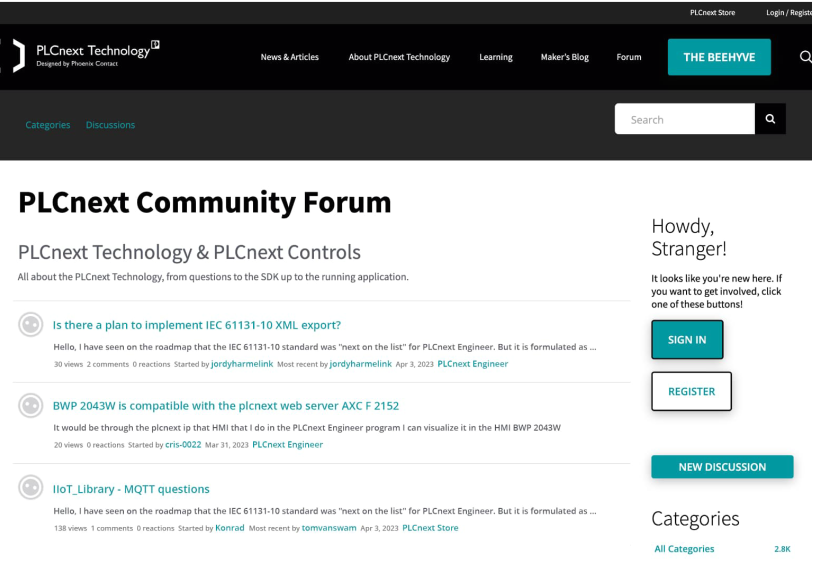
The terms “collective intelligence” and “group/swarm intelligence” refer to intelligent decision-making through collaboration among individuals, often observed in decentralized systems with non-hierarchical cultures. Phoenix Contact exemplifies this with PLCnext Technology in industrial automation. It reimagines automation for digital transformation, using a Linux-based real-time-capable PLCnext Runtime System that’s open to various protocols and tools. The PLCnext Store, an online marketplace, enables exchanging reusable blocks and apps, fostering collaboration. The PLCnext Community supports this ecosystem, aiding users in using the hardware and software, sharing experiences, and enabling project success. Notable examples include students using community resources to measure social distances and companies benefiting from shared insights for automation app development.

Project for protecting bees
Project for protecting bees

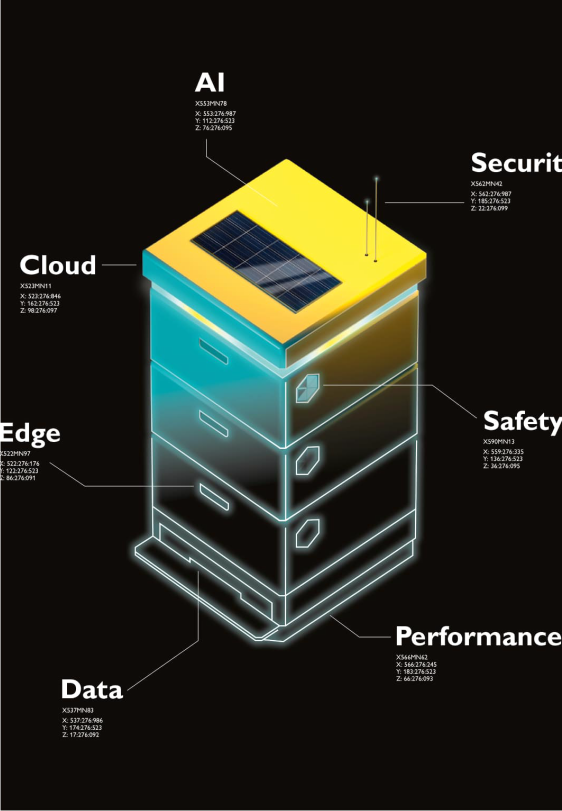
The PLCnext community is working on a sustainable project with the “Beehyve” campaign to protect bees using advanced automation. ChatGPT, an AI-based system, represents a new form of collaborative technology. Phoenix Contact has been working in collaboration with its customers, the science community, and society ever since it was founded 100 years ago.

Find out more on our website.
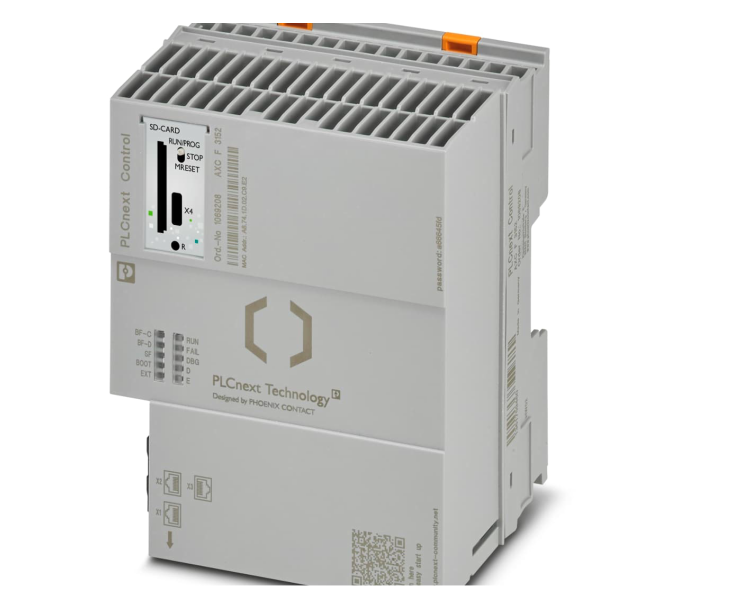
TSN test tools for real-time Linux

From |

Easy qualification of time-sensitive networking (TSN) solutions

Time-Sensitive Networking (TSN)


The Linux OS, especially with PREEMPT-RT, is widely used in automation devices, with growing popularity. Recent Linux versions support Time-Sensitive Networking (TSN). Phoenix Contact’s PLCnext Tech ecosystem, based on RT Linux, supports TSN on suitable Ethernet hardware.

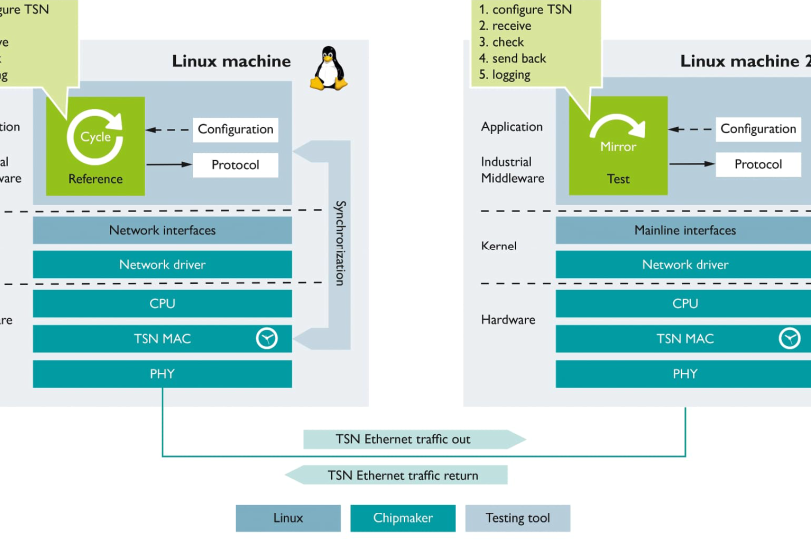
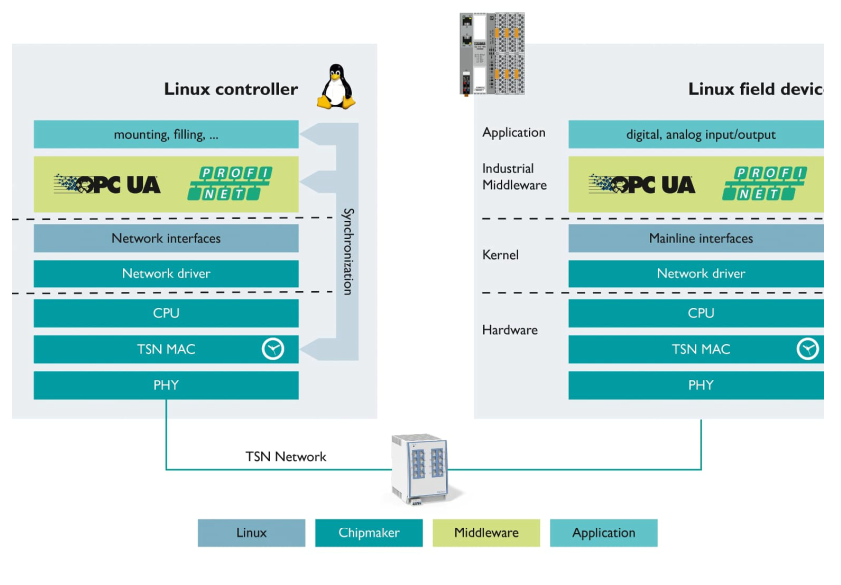
Testing hardware uniformity in Linux for easy integration into systems like PLCnext Control is the next step. Linux-based automation devices consist of hardware (CPU, TSN-capable MAC, PHY), kernel (core functions, network driver), network interfaces, industrial middleware (e.g., Profinet, OPC UA), application, and synchronization.

Time-Sensitive Networking (TSN)

TSN’s key feature is precise application synchronization. Recent kernel versions integrate Ethernet TSN mechanisms in RT Linux, benefiting manufacturers by enabling neutral TSN solutions without specialized hardware. The presented test environment validates implementations, promoting TSN’s simple and robust use in Linux-based devices across manufacturers, driving wider Time-Sensitive Network adoption.

Testing on widely used TSN-capable network chips

Testing on widely used TSN-capable network chips


The responsibility for TSN implementation under Linux has shifted from device manufacturers, like Phoenix Contact, to chip manufacturers. Consequently, an automation device’s performance and quality hinge on the underlying TSN hardware and software. This shift has prompted device manufacturers to develop their network drivers to ensure the desired quality. In some cases, specific hardware, like FPGAs, is required, adding expenses and making hardware changes during a product’s lifespan more complicated.

Hence, the opportunity for independent hardware and driver validation from chip manufacturers before device development and hardware setup is particularly appealing to device manufacturers. Chip manufacturers with TSN solutions not tied to specific automation applications also share this interest.

With Linux now incorporating essential TSN functions, the need for an autonomous TSN test environment has arisen. In response, Phoenix Contact collaborated with chip manufacturer Intel to design appropriate test tools, testing them on widely used TSN-capable network chips. These tools will be eventually released as an open-source solution within a suitable organization, serving all interested parties. This approach enables chip and device manufacturers to validate their respective TSN products. Additionally, the tools can aid in comparing solutions and educating customers or research entities about TSN.

Performing highly accurate measurements of runtimes and deviations

Performing highly accurate measurements of runtimes and deviations

To independently qualify a chip manufacturer’s TSN solution, an emulation replaces the industrial middleware and application. This emulation simulates the behavior of an automation device. After successful testing, the emulation is substituted with the manufacturer’s middleware and device application.

Find out more on our website.
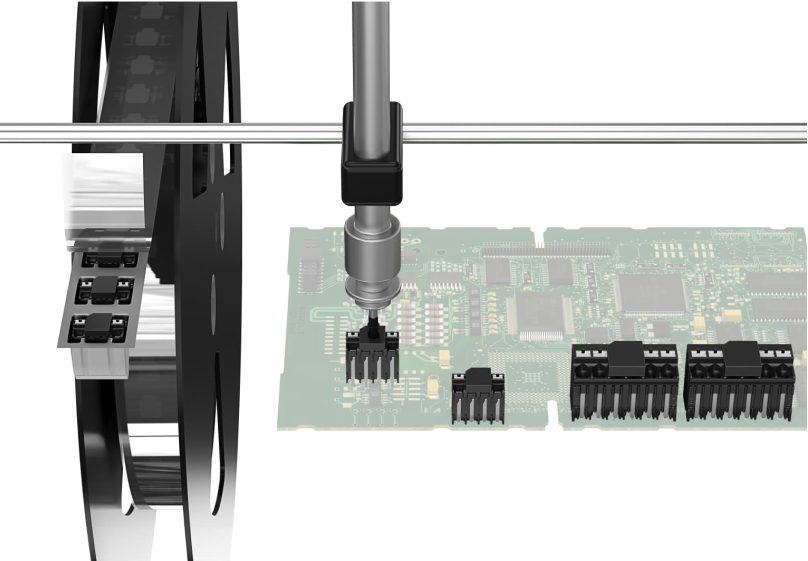
Minimum installation effort, maximum connection security

From |

Smart device connections

Fire alarm systems. connection security

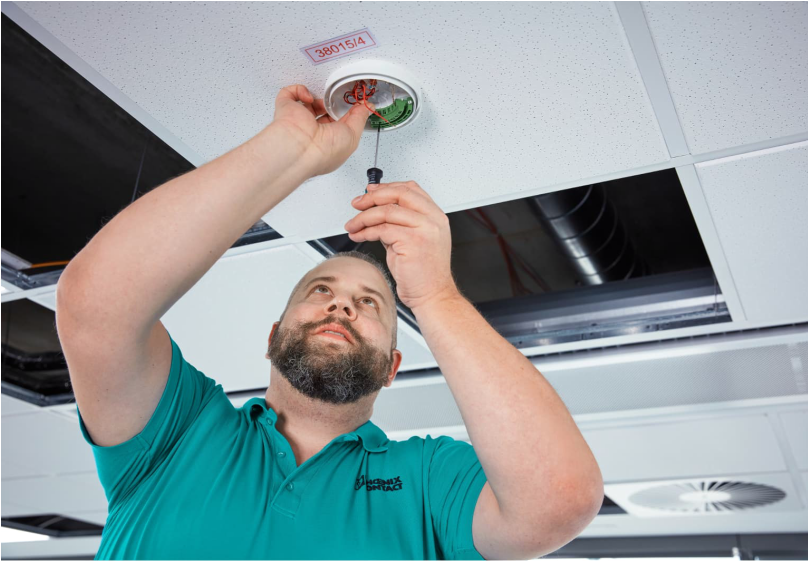
Fire alarm systems play a critical role in ensuring building and occupant safety against fire hazards. These systems involve numerous connection points and interfaces, making intuitive and time-saving conductor connections essential during development, alongside connection security considerations.

fire alarm control panel. Minimum installation effort, maximum connection security. smart device connections.

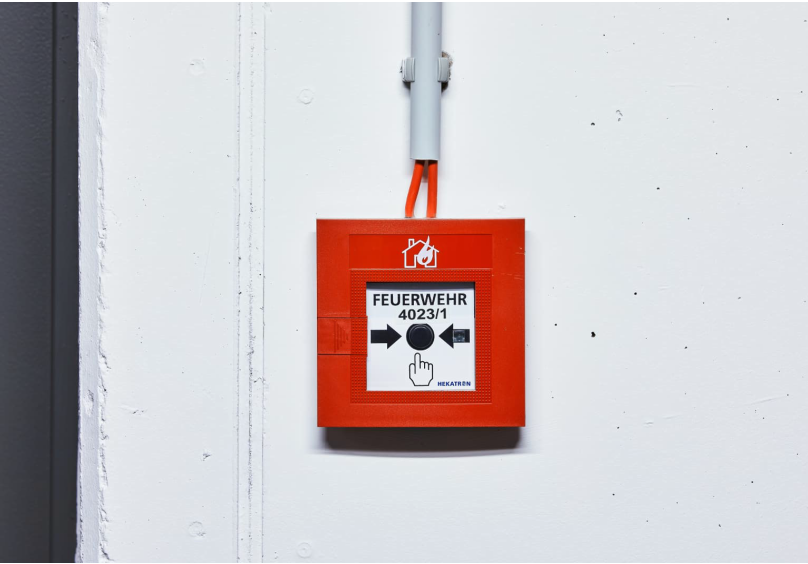
Standards like DIN 14675-1, DIN VDE 0833-1, and DIN VDE 0833-2 define the planning, installation, operation, and maintenance of fire alarm systems. The fire alarm control panel serves as the central hub, connecting signal lines from fire alarms and internal alarms. Interfaces automate device and air conditioning control, manage extinguishing, voice alarms, smoke, and heat ventilation, and assist transmission units.

Diverse fire alarm types are installed based on building size, layout, and environmental factors. Elements such as the fire’s nature, room structure, and disruptive influences impact selection. To minimize false alarms, appropriate fire alarms like point heat detectors or manual alarms must be chosen and configured.

Specialized applications utilize air intake and linear smoke alarms, equipped with features for reliable detection. These smart device connections allow fire alarm systems to be tailored precisely to specific building circumstances, enabling swift and dependable fire detection in early stages.

Developers and product managers are in control

Developers and product managers are in control

Examining connection ergonomics during the initial stages of field device development is undeniably advantageous. This process entails evaluating the choice between fixed connections and connector solutions, while also taking into account factors like installation location and protection requirements. Moreover, developers should proactively tackle technical considerations such as connection sizes, voltages, currents, and pitch at an early stage. By anticipating installation conditions and future maintenance needs, developers can intelligently guide device customization, thereby efficiently streamlining the entire installation and upkeep process.

Smart device connections make work easier for everyone – from the installers to the operators

Smart device connections make work easier for everyone – from the installers to the operators. s PCB terminal blocks and connectors for fire alarm systems.

Phoenix Contact offers PCB terminal blocks and connectors for fire alarm systems, notably incorporating advanced lever-Push-in and Push-in connection technologies such as PTS, SPT(A), LPC, and LPT(A) series. This facilitates easy and tool-free connections, accommodating both flexible and rigid conductors. Furthermore, the availability of THR variants serves to enhance automated assembly processes, effectively reducing associated costs.

Secure – you can count on it

smart device connections

Phoenix Contact’s LPT and LPC PCB terminal blocks and connectors feature spring-actuated contacts for reliable connections. Furthermore, an indicator lever shows clamping status, effectively preventing errors. Moreover, the preprogrammed spring force ensures stability without torque-related issues. Notably, these components meet international standards, including UL 1059, greatly simplifying approval for global markets.

Phoenix Contact’s cutting-edge smart device connection technologies simplify fire alarm system installation, reducing costs and ensuring global reliability. Push-in connections benefit manufacturers, installers, integrators, and operators by boosting reputation, expediting work, and enhancing system availability.

Find out more on our website.
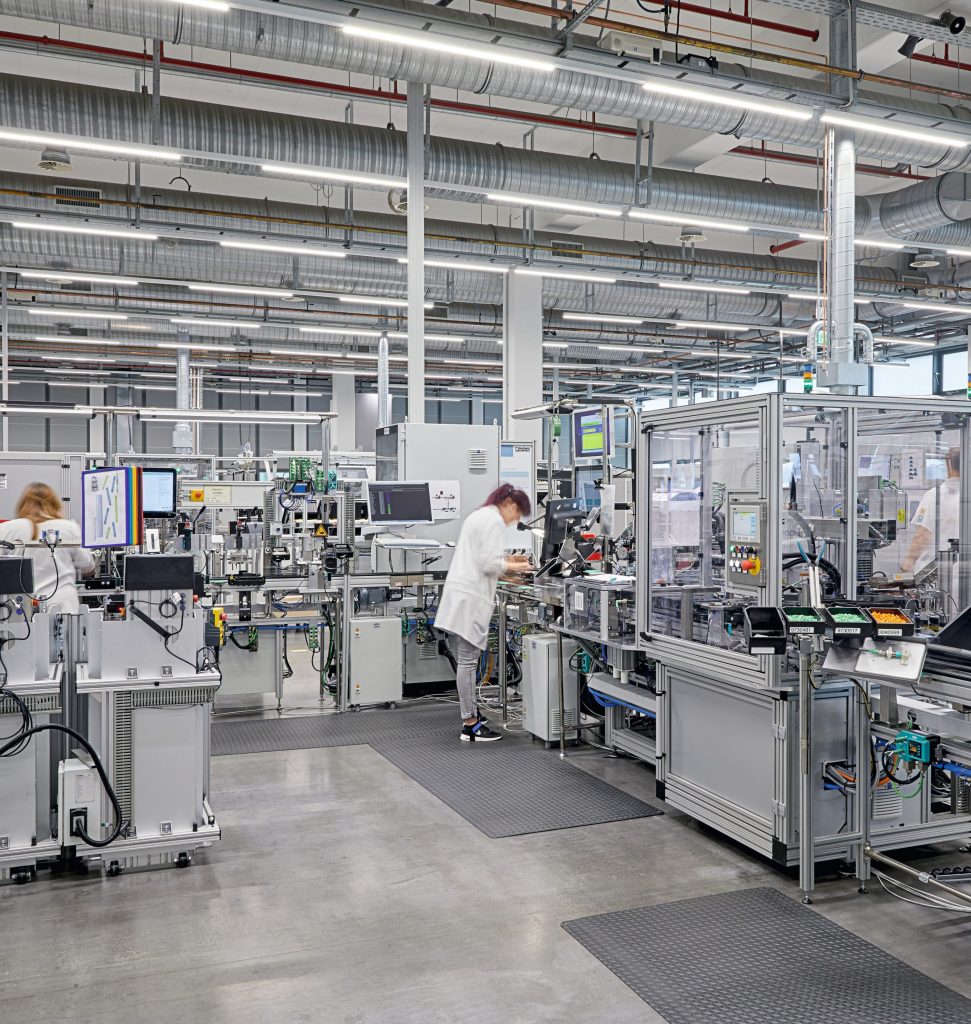
Digital Factory with MORYX

From |

MORYX is a software platform that enables the digital transformation of manufacturing processes. It connects different systems and devices, creates digital twins, and provides flexible and intelligent control options. MORYX is used in 45 applications worldwide. In the following use cases, we want to show which tasks MORYX takes over in practice and which advantages result.

USE CASE: SYSTEM PROTECTION TECHNOLOGIES FACTORY

USE CASE Moryx. SYSTEM PROTECTION TECHNOLOGIES FACTORY. Digital integration of ERP, MES, and PLM.

The “System Protection Technologies Factory,” operated by Phoenix Contact, utilizes MORYX since 2017 for the digital integration of ERP, MES, and PLM systems. MORYX serves as a higher-level digital instance, enabling seamless operation of all systems. The integration has resulted in significant improvements, including zero makeready time for one product line and reduced setup time from 10 to 5 minutes for other lines. The advantages and successes of MORYX’s implementation include parallel production of orders, automated machine setup, handling high product variance, flexible process definition, and accelerated production due to MORYX’s adaptability to changing production environments.

USE CASE: DEVICE CONNECTORS FACTORY

USE CASE Moryx. USE CASE: DEVICE CONNECTORS FACTORY. Digital twin for product, process and machine


Phoenix Contact’s Device Connectors Factory uses MORYX since 2020 to generate digital twins for product, process, and machine, resulting in increased flexibility, control options, and lower scrap.

The advantages of using MORYX’s digital twins include; 10% reduction in production time with optimized first-pass yield, changeover times under 1 minute through parallel production and automatic article management, and the ability to configure production without the need for extensive PLC knowledge. The implementation of digital twins has led to improved production efficiency, reduced scrap rates, and simplified production processes.

USE CASE: MACHINE INTERACTIONS APPLICATION

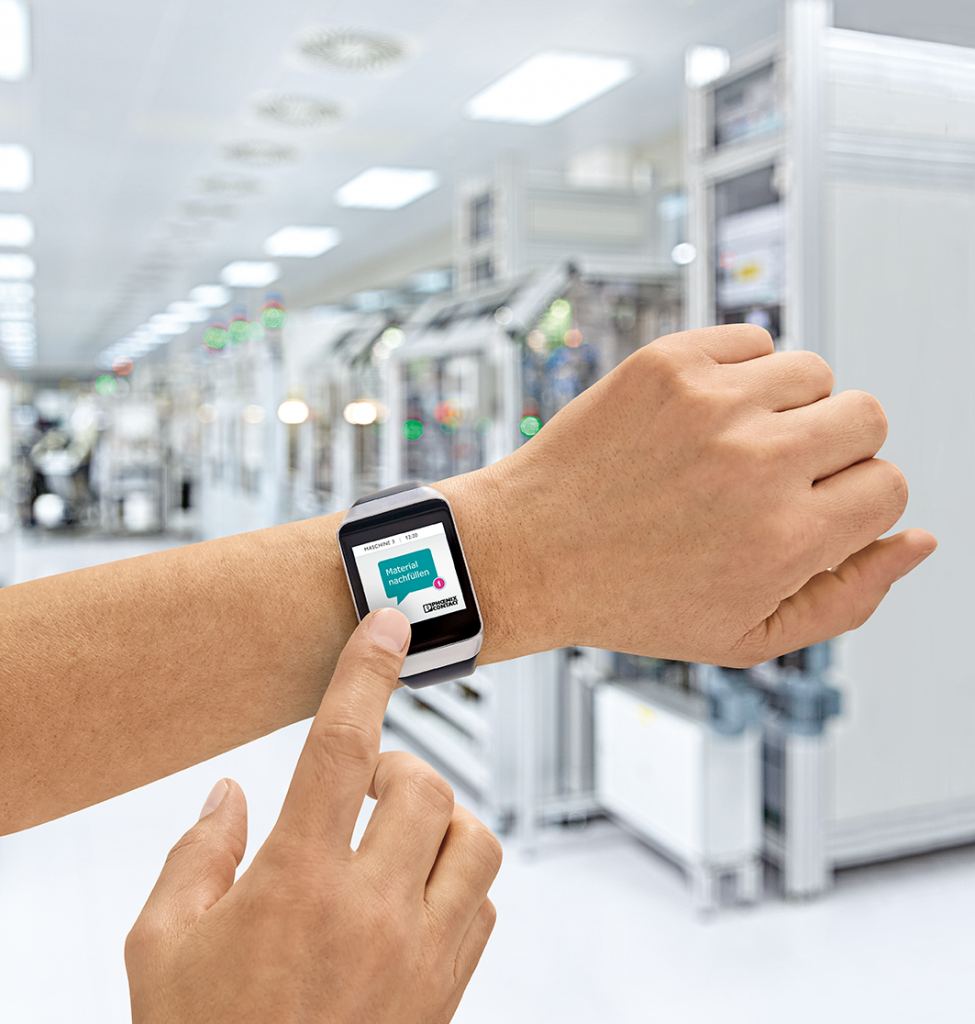
USE CASE Moryx. MACHINE INTERACTIONS APPLICATION. Smartwatch to notify a skilled worker

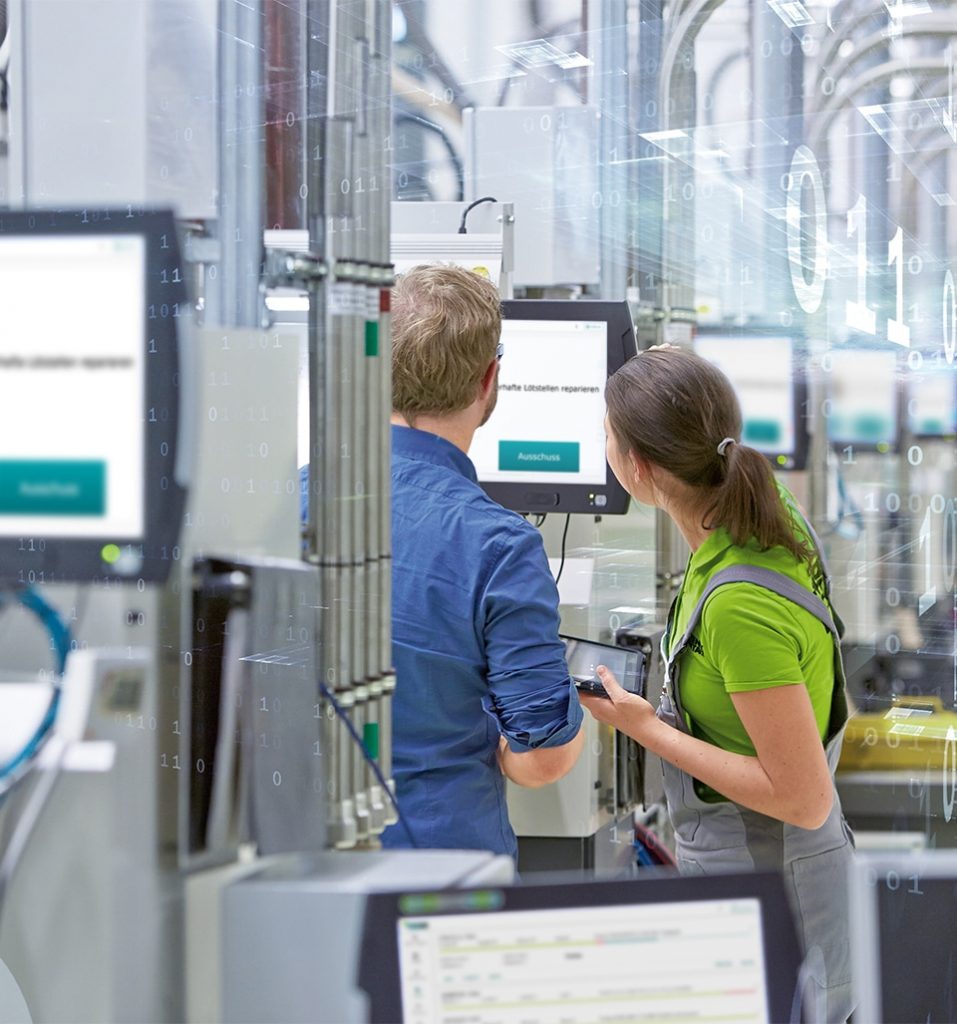
Phoenix Contact utilizes machine interaction applications, such as smartwatches to enable seamless communication between machines and skilled workers in one of their plants since 2019. MORYX records real-time machine conditions and messages, sending support requests to plant personnel via smartwatches if problems are detected. The smartwatches provide location-specific details, issue types, severity, and potential solutions, allowing one employee to supervise multiple machines, even across different production halls. The advantages of this system include optimal time utilization, stress reduction for employees, and access to real-time information for efficient decision-making and support.

We accompany you on the way to the Digital Factory

MORYX is a powerful and versatile software platform that can help you achieve your digital factory goals. Whether you want to integrate different systems, create digital twins, or develop interactive applications, MORYX can provide you with the right solution. Feel free to contact us if you have any further questions.

Find out more about Digital Factory with MORYX Here.

The Smart Production Library in PLCnext Technology

From |

Quick and easy programming, visualization, and diagnostics

The Smart Production Library for PLCnext Technology

The Smart Production Library for PLCnext Technology by Phoenix Contact enables companies to meet changing market needs, customized buyer demands, energy sustainability, and labor shortages through digitalization efforts. The library simplifies programming, visualization, and diagnostics in the engineering environment, making code generation and commissioning faster and easier.

Adapting to each application via drag-and-drop

Adapting to each application via drag-and-drop

The generator configuration file enables fully automatic visualization creation. The library includes functions for diagnostics, operating modes, and various technologies. The HMI web server handles visualization without data storage on display devices. Function blocks combine logic, visualization, and diagnostics, simplifying configuration. The interface features generic animations, easily customizable by adjusting parameters. The library supports extensions, drag-and-drop objects, and multiple languages.

The Library is divided into three functional areas: Basic functions, Operating mode functions, and Technology functions.

Library split into three functional areas. PLCnext technology.

Basic functions: Diagnostics of the controller and client access control, including exclusive mode and alarm management.

Operating mode functions: Support for various operating modes and safety features.

Technology functions: Control for actuators, sensors, and energy measuring devices, with the ability to add more technologies as needed.

Creating visualizations in just a few minutes

Creating visualizations in just a few minutes. PLCnext technology.

A clear application program structure aids visualization generation. The HMI generator features two methods: a comprehensive overview and selective visualization for stations. It quickly creates visualizations, saving time. Changes are immediate, ensuring error-free operation and consistent data management between PLCnext Engineer and the PLC.

Cloud integration via app from the PLCnext Store

The Smart Production Library is part of the PLCnext Technology ecosystem, enabling the integration of standard PLC programming with high-level languages for real-time execution. Cloud connection is facilitated through apps like “Node Red for PLCnext,” ensuring system availability without impacting automation processes.

Find out more on our Website.

Printing and application in a single step

From |

Greater efficiency and time savings of 60 percent for wire and cable identification


The Thermomark E Series marking system combines printing and application in one step, saving approximately 60% of the time in industrial marking tasks. It improves efficiency by enabling clear and uniform marking of components throughout the product lifecycle of a control cabinet. The system reduces the previously time-consuming process of printing, separating, and mounting markings on cables, wires, and components. It enhances safety and simplifies workflows with visible and permanent identification.

Automated identification

Automated identification

The Thermomark E Series marking system by Phoenix Contact automates printing and applying of marking materials in a single step, resulting in 60% time savings. It offers an efficient and user-friendly identification process with high-quality markings, improving longevity and durability.

Modular marking system

Modular marking system

The Thermomark E Series is a modular marking system with applicators connected to a thermal transfer roll printer. It offers flexible wire and cable identification solutions without additional devices, saving resources and space.

Efficient wire and cable identification

Efficient wire and cable identification. THERMOMARK E SERIES

Thermomark E Series provides three applicators for automated wire and cable identification. The E.Wire creates movable cable markers, the E.Sleeve processes shrink sleeves, and the E.Wrap applies wire-wrap labels. Each applicator offers specific features for efficient and precise marking based on different cable diameters.

Seamless software-supported marking processes

Standard IEC 61439 requires clear and permanent identification of devices in control cabinets. The marking software by Phoenix Contact allows for efficient data import from digital circuit diagrams, enabling the automatic transfer of marking information. Intuitive functions facilitate wire and cable identification, reducing errors. The Marking System software provides an overview of the project, guiding users through the identification process. The information can be displayed on a separate monitor or the Thermomark E Series device.

Find out more about Printing and application on our website.

Data transparency for superior system availability  

From |

Protection and supply – the intelligent way: The communicative 24 V supply system with everything in view 

Protection and supply – the intelligent way: The communicative 24 V supply system with everything in view 

The power supply is vital for control cabinets as it provides power to 24 V components. In industries where system availability is crucial, the Quint Power 24 V supply system from Phoenix Contact offers communication capabilities, increasing data transparency and system availability. Operators can access operating and diagnostic data to monitor the network and optimize costs through preventive function monitoring.

Raising optimization potential – maximum system transparency for maximum availability  

Raising optimization potential - maximum system transparency for maximum availability  

Data collection is essential for system availability. The Quint Power communicative power supply from Phoenix Contact offers two options: connecting to the Caparoc fuse via a proprietary data bus or using the IO-Link interface to connect to an automation system. Both options allow for data transmission and monitoring of power supply and UPS system data.

Monitoring and parameterization

The Quint4 power supply ensures complete data consistency, enabling early warning of malfunctions. It offers targeted maintenance, remote diagnostics, and cost savings. Data collected includes remaining service life and network surges, aiding preventive maintenance. Fieldbus interfaces and a web server provide system transparency. Parameter configuration is easy, avoiding user errors. Centralized configuration saves time and costs.

Integrated phase monitoring 

Integrated phase monitoring 

The Quint4 communicative power supply with IOL interface features integrated phase monitoring, providing information on three-phase availability. It can run at full power on two phases and constantly monitors rotating field direction and input voltage.

Power supply and electronic circuit breaker system grow to become a single system 

The Quint Power communicative power supply combines with the Caparoc circuit breaker system for monitoring fuse channel characteristics. It enables preventive maintenance, accurate remote maintenance, and cost savings. The system offers automatic configuration and optimization based on operating data, simple integration, and complete data consistency.

The communicative 24 V supply system from Phoenix Contact allows for monitoring load currents and operating temperature, providing optimal system monitoring. It enables preventive measures to be taken, reducing downtime and optimizing costs. The system offers extensive data for maintenance and early warnings for heavy equipment utilization.

Find out more on our Website.

Photovoltaics offensive at Phoenix Contact

From |

Achieving higher energy yields with new processes

Phoenix Contact is taking steps to maximize energy production by implementing new processes. Firstly, installing lightweight modules on buildings. Moreover, these films, weighing only three kilograms per square meter, directly adhere to the roof surfaces. Additionally, with their specialized surface design, they optimize light refraction and achieve energy yields comparable to standard modules. This approach not only increases efficiency but also reduces the amount of mounting material required.

Achieving higher energy yields with new processes

Combination of conventional and flexible modules

Phoenix Contact is implementing a mix of conventional and flexible modules in its photovoltaic systems. Building 34 will have lightweight modules generating 750 kWp, while Building 60, currently under construction in Blomberg, will use conventional modules only with over 1,000 kWp capacity. They aim to install solar systems across all German sites by 2030. Their international subsidiaries in the USA, China, Austria, and India are also expanding their solar initiatives

Weather station for calculating the performance ratio

Phoenix Contact offers a range of components and solutions for cost-effective operation of photovoltaic systems. The string combiner boxes provide protection and efficient distribution of DC currents. They use weather stations to evaluate system performance and make adjustments as needed.

Grid stability by using certified power control units

Grid stability by using certified power control units

Phoenix Contact utilizes in-house data loggers to collect and analyze data from their photovoltaic systems. These loggers connect various system components for easy data integration and storage. Additionally, their power control unit ensures grid compliance by monitoring voltage and reactive power and adjusting inverters as needed. Compliance with certified feed-in controllers is mandatory for larger photovoltaic systems since 2018.

Amortization after one-third of the service life

Phoenix Contact’s photovoltaic systems will have a total output of around six megawatts, meeting 5.5 percent of their electricity demand. Solar power proves to be cost-effective, with production costs one-third of procurement costs. This aligns with their climate neutrality strategy and vision for an All Electric Society. The photovoltaic systems are expected to pay for themselves within one-third of their service life.

Find out more on our Website.

Reliable data transmission is the backbone of automation

From |

The choice of the right connection technology is crucial for seamless processes in automation and digitalization. Reliable data transmission is essential, and selecting high-quality components is paramount. Low-cost options often lead to errors and costly repairs. Phoenix Contact offers specialized RJ45 patch cables for different application areas, ensuring reliable data transmission and compliance with required properties. Choose the right components for optimal efficiency and value in operations.

Ensuring Reliable Data Transmission for Efficient Processes

Reliable data transmission. The right connection technology is essential for processes to work

Automation, digitalization, and Industry 4.0 rely on consistent data acquisition and transmission. The choice of the transmission medium is critical for reliable data processing and control. Increasing data volumes require effective collection and analysis. Sensors generate data, while actuators utilize it to control systems. Selecting the right transmission medium is essential for seamless data transfer.

The wrong choice weighs heavily

RJ45 patch cable

Proper component selection is crucial for seamless data transmission. Choosing low-cost, low-quality options can lead to errors and costly repairs. Copper is commonly used as a transmission medium, but caution is needed to avoid unreliable products. Selecting high-quality cables designed for specific applications is essential for smooth processes and successful operations.

Choosing the right component

Phoenix Contact offers a clear portfolio of RJ45 patch cables for different application areas. The top line is the RJ45 Industrial patch cable, designed for demanding industrial environments. It features robust connectors, mechanical stability, 360° shielding, and the trustworthy transfer of data. for various protocols and speeds. They also offer variants for less demanding applications, ensuring reliable transmission while meeting specific requirements.

Find out more on our website.
Full Automation Suite for Megawatt Electrolyzers

From |

Fighting the climate crisis with series production

Power-to-X is a vital part of the energy revolution, aiming to replace fossil fuels with renewable sources. It involves converting renewable electricity into gases, chemicals, or fuels. PtG methods, particularly important for sector coupling, utilize existing gas infrastructure for storage and transport. The “European Hydrogen Backbone” envisions repurposing and expanding the infrastructure for hydrogen transportation. Automation and electrification strategies, such as Enapter AG’s AEM electrolyzers, are crucial for cost-effective and safe conversion processes. The installation of more wind and solar systems will further drive the transition to cleaner energy.

Fighting the climate crisis with series production

Interconnection of numerous electrolyzers to create gigawatt plants

Interconnection of numerous electrolyzers to create gigawatt plants

Germany is witnessing an increase in PtG plants, using various electrolysis methods and reaching several megawatts of power. Plans for 100 MW plants are underway in Lower Saxony. Projects in Neom and Rotterdam will utilize gigawatt-scale electrolyzers. Germany aims to create 10 GW of electrolysis capacity by 2030. Green hydrogen is converted back using fuel cells or chemically into substances like ammonia or methanol. Automation and communication strategies are crucial for all processes, from hydrogen generation to consumption.

Manufacturing containers based on the industrial model

Manufacturing containers based on the industrial model

Manufacturers are developing containerized electrolyzers for hydrogen production, allowing for modular and interconnected gigawatt-scale plants. Industrial manufacturing methods enable efficient mass production of these containers. Providers like Phoenix Contact offer connection and automation technology, assisting with component selection and providing engineering and design services. Enapter AG’s AEM Multicore electrolyzer system uses an ion-conducting membrane and a cheaper catalyst, allowing for cost-effective hydrogen production with renewable electricity.

Supply of ready-to-use control cabinets based on PLCnext Technology

Enapter’s scalable AEM Multicore solution consists of interconnected stack modules in a container, producing up to 450 kg of hydrogen per day. Phoenix Contact provides control technology and DC power supply for the electrolysis stacks, including ready-to-use control cabinets. The container control room monitors hydrogen production, tank levels, and safety measures. Phoenix Contact’s PLCnext Technology handles control tasks and supports maintenance concepts. The control cabinets incorporate Ex protection components for hazardous areas.

Implementation of safety-related applications up to SIL 3

Phoenix Contact’s automation solution allows for safety-related applications up to SIL 3 in electrolysis plants. They offer cost-effective options, such as extending the PLCnext Control with an SIL 3 module. Their safety portfolio includes power supply units, relays, and motor starters. Comprehensive solutions for DC power electronics, like Charx Power modules, are available. The use of electrical connectors improves assembly efficiency and reduces costs. Phoenix Contact provides a wide range of products to support the scaling of hydrogen production in Germany.

Consultation in all phases of the lifecycle

Consultation in all phases of the lifecycle

Phoenix Contact offers consultation services for various aspects of plant development. They help determine cooling capacity, assess safety integrity levels, and provide assistance with technical specifications, safety software implementation, and testing. Their consulting service covers control cabinet building, including CE marking, EMC, explosion protection, and access protection.

Communication solutions in all directions

Phoenix Contact supports communication and integration in power-to-X applications. They assist with the dynamic operation and functional integration of electrolyzers with power generation and consumption areas. They provide solutions for fuel cells as emergency power systems and offer support for remote control, maintenance, data collection, and digital twin implementation. Their portfolio includes products for reliable and secure data transmission. Phoenix Contact’s certified products ensure IT security. They are also developing software modules for future use, enabling newcomers to create their own software applications in the power-to-X industry.

MTP as the basis for modular solutions

Phoenix Contact supports the implementation of large modular electrolysis plants for green hydrogen production. They facilitate scalability and reduce implementation effort through the use of standardized MTP (Module Type Packages) interfaces, allowing for modular automation solutions.

Find out more about the new standards on our website.