
Category Archives: Uncategorized

Modular AC charging sockets for all requirements

From |

Modular infrastructure charging sockets
AC charging CHARX

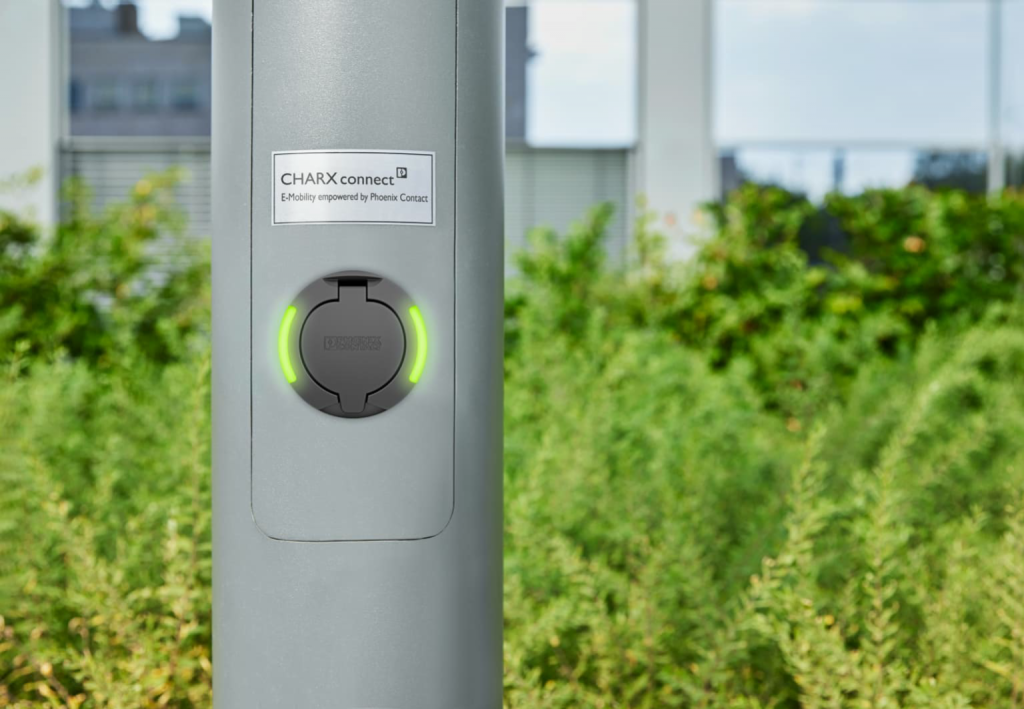
Phoenix Contact’s Charx connect modular AC charging sockets offer manufacturers the ability to customize their charging stations and home chargers. with a range of cover types, temperature sensors, and actuators. These flexibly designed sockets facilitate the creation of tailored, application-oriented charging infrastructure.

User-oriented charging infrastructure

Charx Connect

AC charging stations with charging sockets are versatile for home, work, and road use. Moreover, manufacturers can integrate additional features to make charging easier for users. Applications include private-sector carports and garages, semi-public sector, this includes charging employee cars in parking garages. The role of AC charging sockets varies depending on the location and customer needs, as installation costs vary depending on location.

Modularity for more efficiency
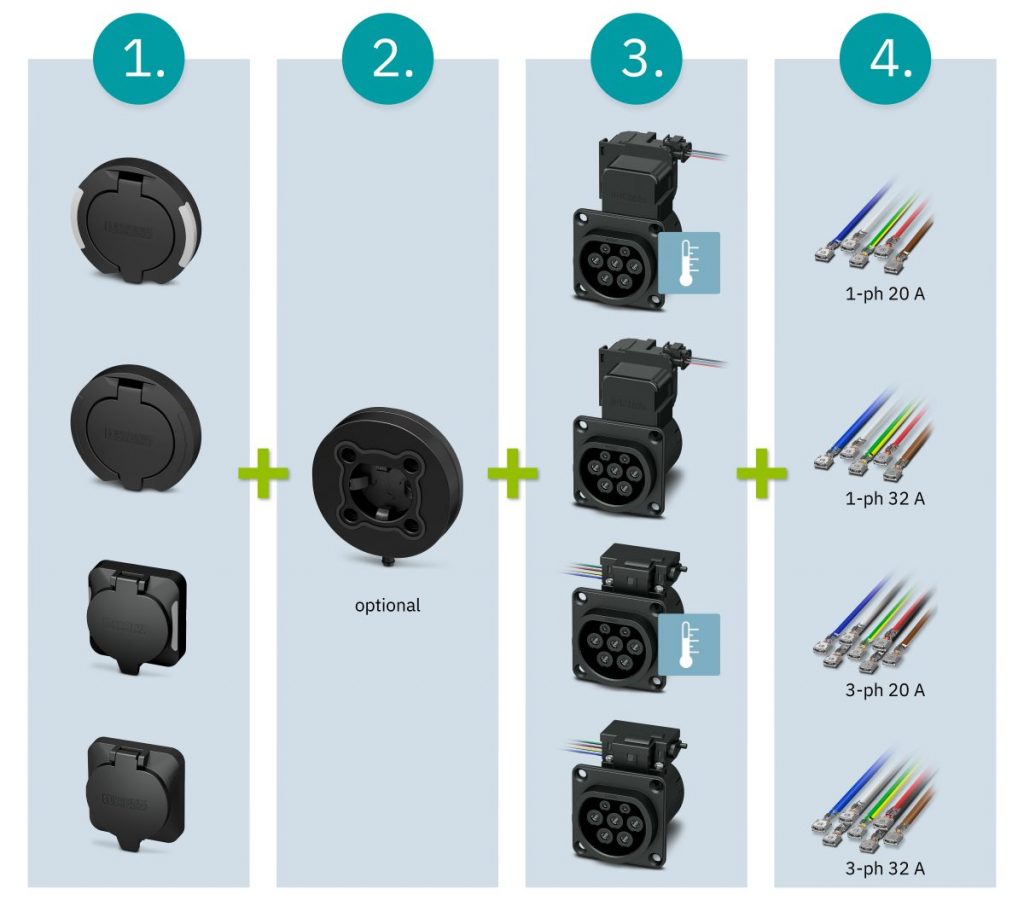
Charx Connect

The Charx connect modular charging socket offers several advantages. Firstly, flexibility, low-cost warehousing, and time savings for installation and maintenance. Secondly, its modular design with fully molded contacts enhances its durability and outdoor use. Additionally, the charging socket’s installation is simplified by direct contact on the protective cover with LED status indicator, and power is routed via screws.

Sophisticated design
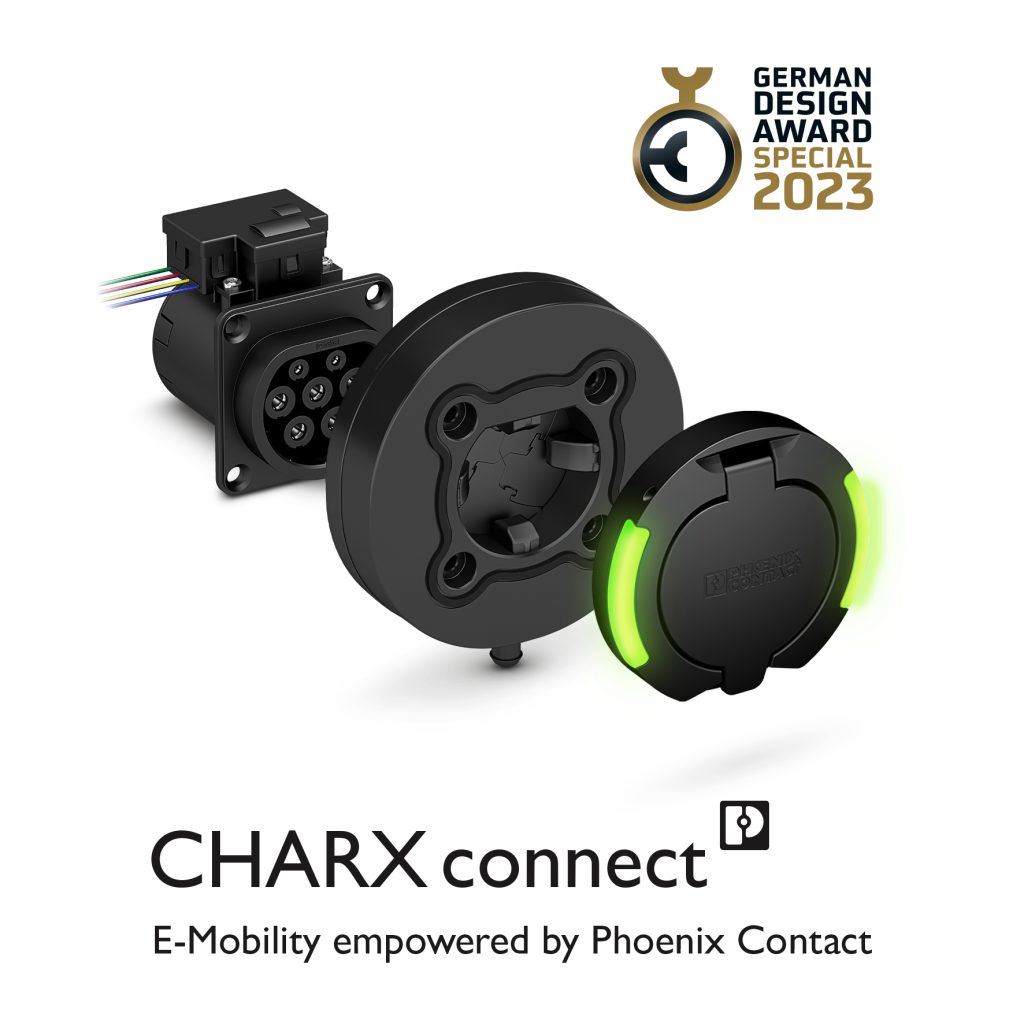
 Charx connect

Charx Connect modular, an AC charging socket, won the German Design Award 2023 in the “Special Mention” category for its modular principle, allowing manufacturers to design charging stations with flexibility in shape and design. The socket also features an optional LED status indicator that can be controlled in all RGB colors, allowing manufacturers to match individual color values to their corporate design.

Increased safety through smart features
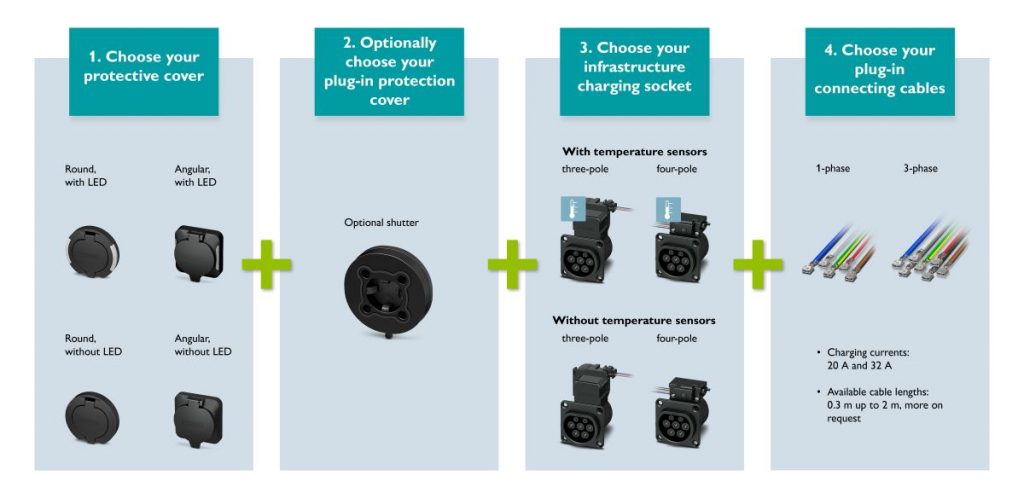
Charx Connect

Charx Connect modular is the world’s first charging socket with integrated temperature measurement, allowing controllers to interrupt charging if overheating occurs. It also features a mechanical touch protection system, a shutter, which complies with international standards, preventing direct contact and vandalism. The sockets are easy to operate with one hand, offering IPXXD protection. The modular concept also offers a choice of interlock options.

Increase in user comfort
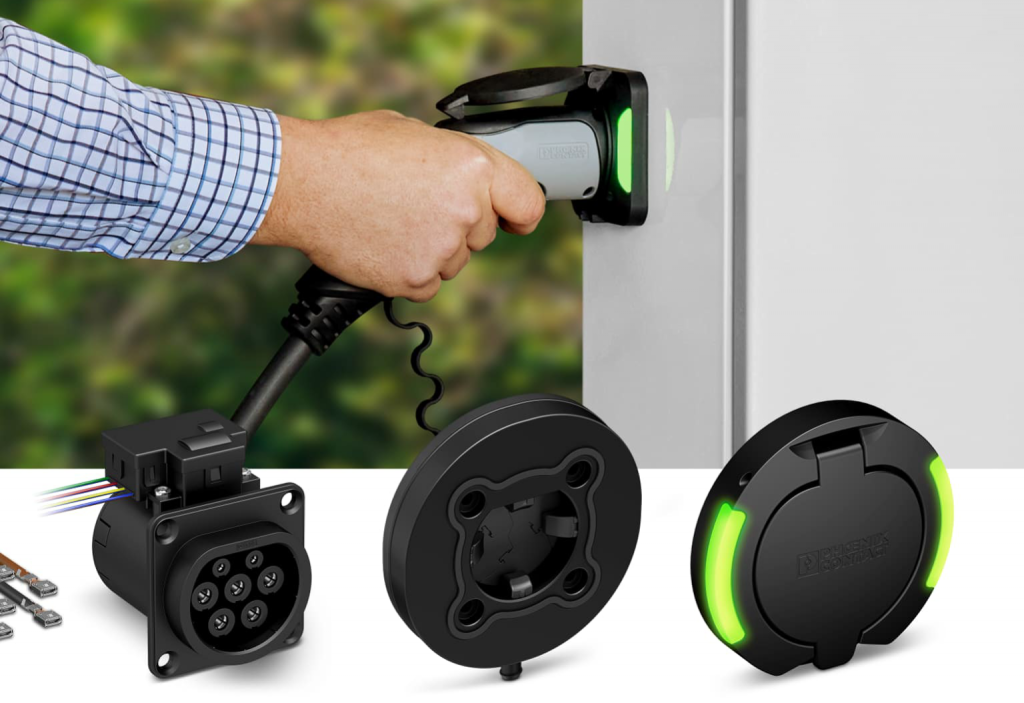
AC charging CHARX connect

The modular charging socket prioritizes user comfort and safety, featuring a colored LED display for quick charging status overview and one-handed operation, highlighting the product’s well-thought-out design.

Learn more about the new modular AC charging sockets.
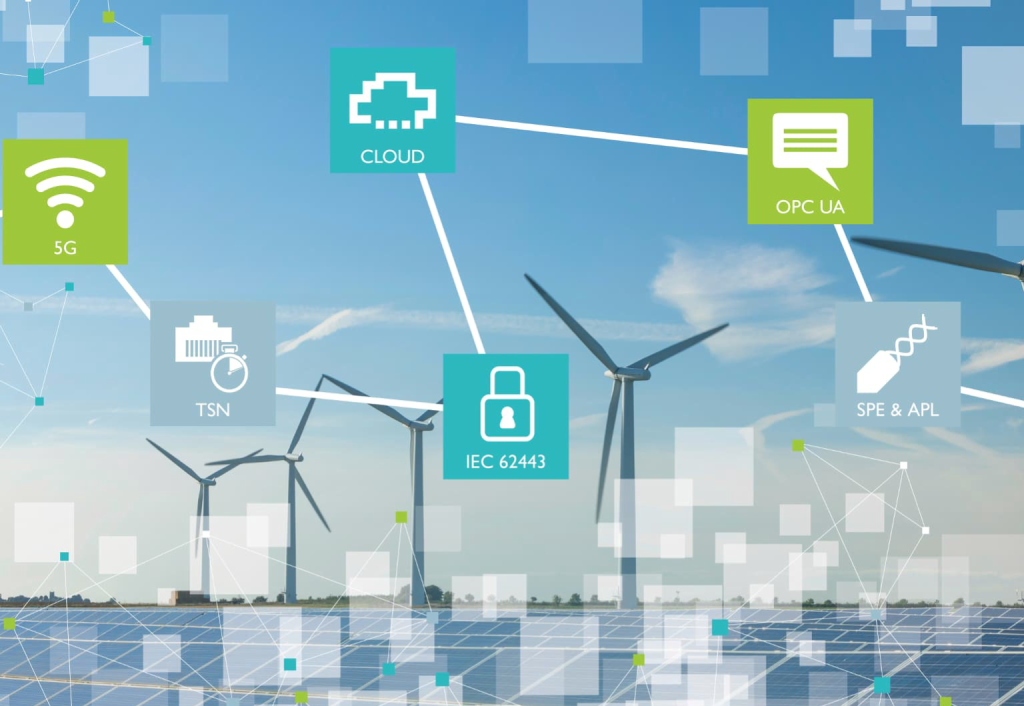
Dynamic certificate management with the OPC UA GDS in the Device and Update Management system

From |

Easier identification, management, and security for OPC UA devices and applications

Easier identification, management, and security for OPC UA devices and applications

OPC UA is a machine-to-machine communication protocol. This protocol can seamlessly connect machine networks and company networks by transmitting machine information and defining data. Furthermore, it enables an efficient process setup between controllers and higher-level software layers. In addition, the software update model can be employed for asset management, encompassing tasks such as software installation, firmware updates, and backup. Finally, OPC UA provides certificate-based communication, ensuring secure data exchange with assets. Read more.
Access point to the central certificate management

Access point to the central certificate management. GDS

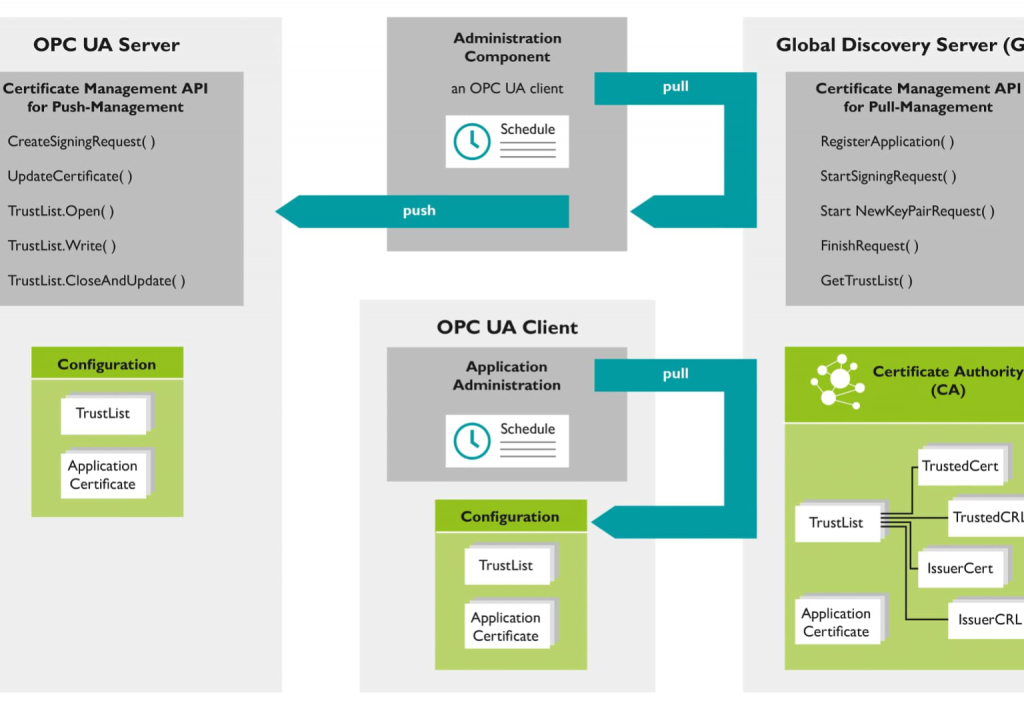
The Global Discovery Server (GDS) in OPC UA allows cross-subnet discovery services and interfaces for a central certificate management system. It manages CA-signed and self-signed certificates, trustworthy lists, and CRLs. The GDS plays a crucial role in managing CA-signed certificates, generating initial OPC UA application certificates, updating CRLs, trust lists, and renewing applications. It ensures the efficient operation of OPC UA systems.

Real-time client notification

Real-time client notification

The GDS Push Service is a feature of the OPC UA Global Discovery Server that provides real-time notifications to clients about new endpoints or changes in existing endpoints and applications. This service allows clients to subscribe to notifications about specific events, ensuring they are always updated on network adaptations. It can also work with the OPC UA Pub/Sub protocol for efficient event notifications. This feature enhances data transmission in industrial and IoT systems.

Identification of devices in a network

Identification of devices in a network. OPC UA GDS

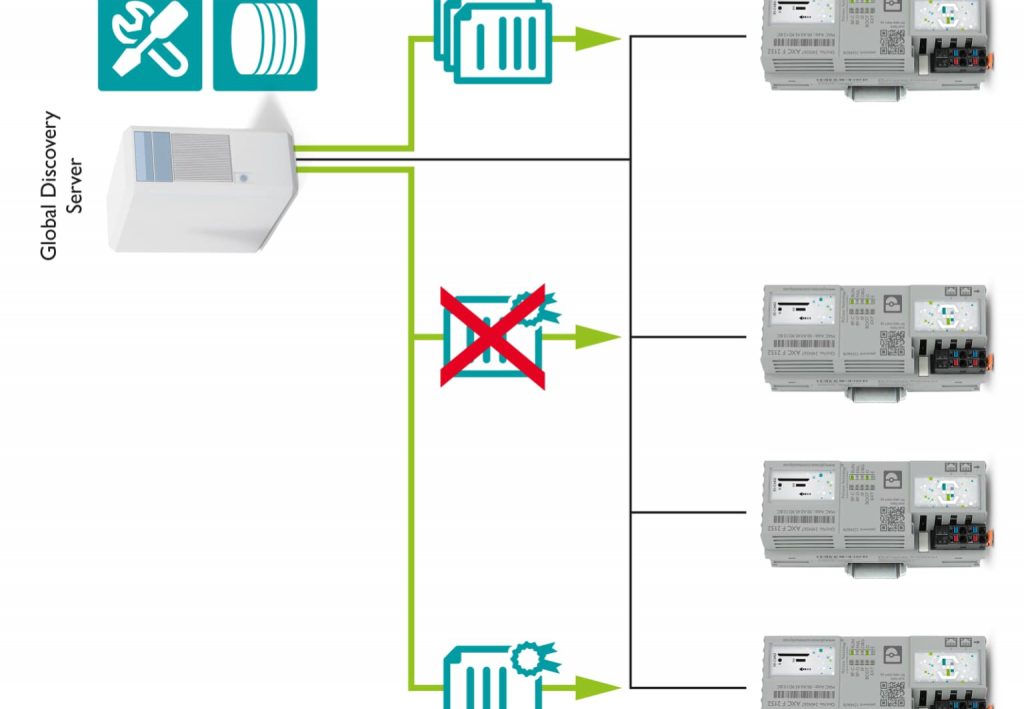
The OPC UA Global Discovery Server (GDS) is a valuable tool for device management tools, such as the Device and Update Management system from Phoenix Contact. It supports identifying and managing OPC UA-enabled devices and applications, providing a central location for endpoint administration. The GDS also manages security, including certificates and security directives, ensuring secure communication. It also provides real-time notifications about network changes, allowing the tool to automatically adjust configurations when needed.

Remote configuration

Remote configuration. OPC UA .

Automated commissioning of new or replacement devices is crucial in the All Electric Society, as it saves time and money. Zero-touch or one-touch provisioning allows for remote configuration of intelligent end devices, saving time and money. An intelligent device management tool, combined with an OPC UA Global Discovery Server, enables this process. The OPC UA standard allows corresponding scenarios to be implemented regardless of the device manufacturer.

Read more about PLCnext Technology.

Secure remote access solutions on fleets operating worldwide

From |

Cost-efficient, quick to respond, and reliable with the mGuard Secure Cloud

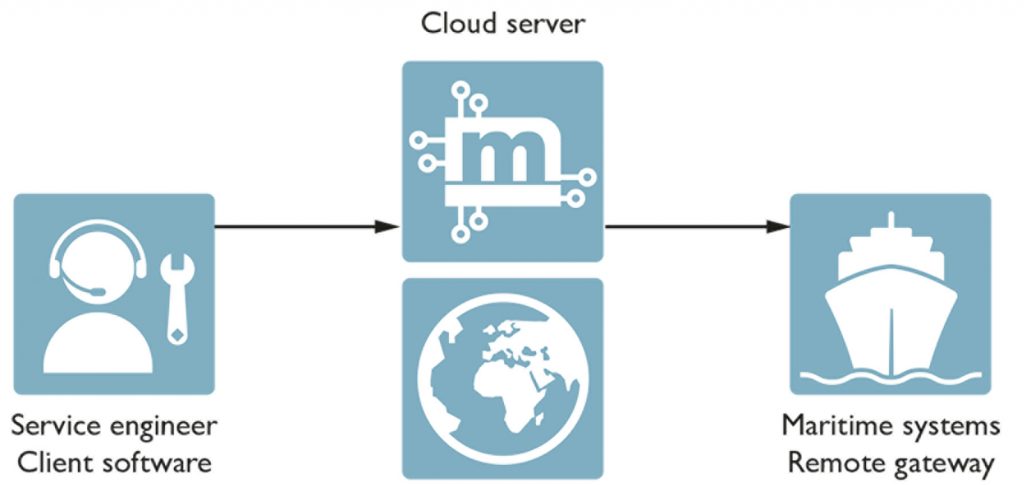
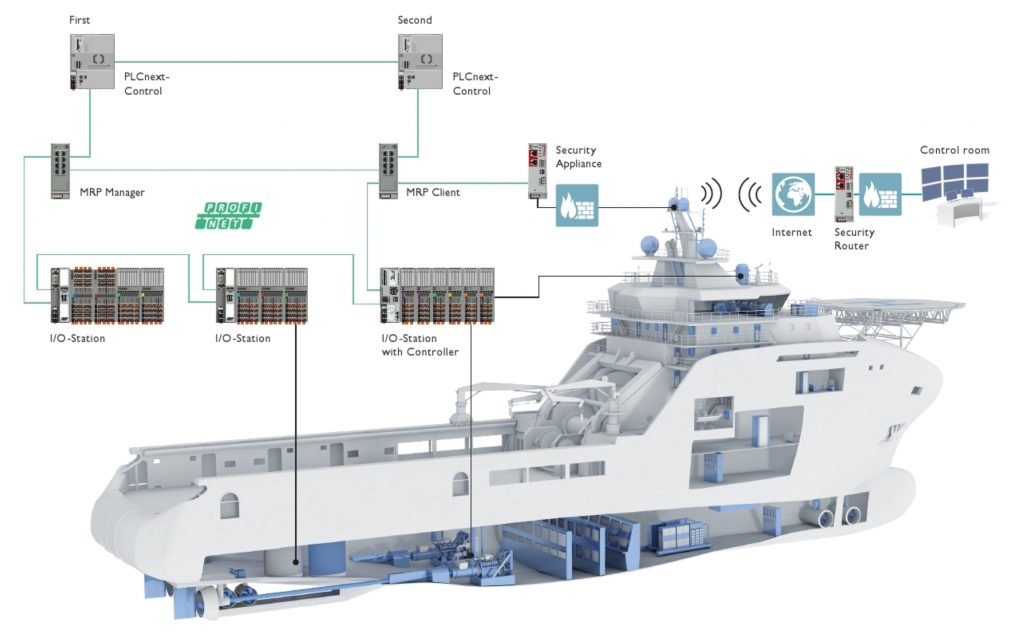
Phoenix Contact offers secure remote access solutions for ship maintenance, allowing efficient work from afar. In addition, automation is becoming more common in fleets, enabling automated processes. As a result, manufacturers optimize these systems to improve efficiency. However, malfunctions or system failures can occur, demanding fast action. To address this, Phoenix Contact’s remote maintenance solutions utilize the internet for worldwide communication. Consequently, this enables service personnel to connect securely and reliably with maritime systems without detailed IT knowledge.

Implementation either on premises or in the cloud

The mGuard Secure Remote Service

Phoenix Contact provides users with two solutions for maritime systems: on-premises variant and public cloud. On-premises uses a private remote access infrastructure, like FL mGuard Centerport, for setting up VPNs or secure VPN connections. This allows users to store data locally and meet compliance requirements without external providers. Public cloud, like Phoenix Contact’s mGuard Secure Cloud, provides a ready-to-use remote maintenance solution and is always up-to-date, meeting European data protection standards (DSGVO, Datenschutz-Grundverordnung). IT-savvy employees are required to manage configurations, updates, backups, and restoration processes.

Flat-rate service for reliable VPN connections to China

Flat-rate service for reliable VPN connections to China

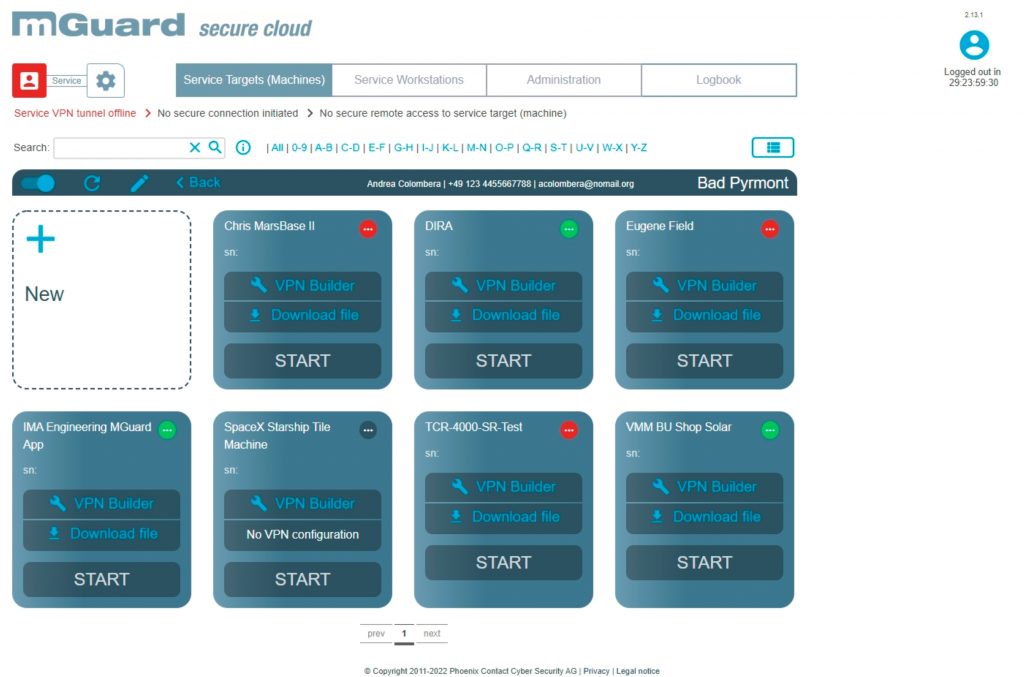
The mGuard Secure Cloud service addresses the need for secure VPN connections in China, enabling 99 percent availability without compromising access security. The China VPN+ flat-rate service allows end-to-end encryption in accordance with Chinese National Network Security, ensuring 99-percent availability without compromising access security. The robust security router of the new mGuard platform can transfer nearly 1,000 Mbps of data, allowing high-quality video transmissions. mGuard devices use trusted IPsec security protocol and advanced mechanisms, ensuring confidentiality, authenticity, and integrity of all communicated data. They can be easily integrated into existing systems using the graphic VPN Builder in the cloud.

Compatibility with PLCnext controllers

Compatibility with PLCnext controllers

The mGuard Secure Cloud is compatible with mGuard security routers, other VPN clients, and PLCnext controllers from Phoenix Contact. It allows users to establish a direct VPN connection to a PLCnext controller, which is certified by an independent accreditation organization in accordance with IEC 62443-4-1 and IEC 62443-4-2.

Control over all remote access

The mGuard Secure cloud

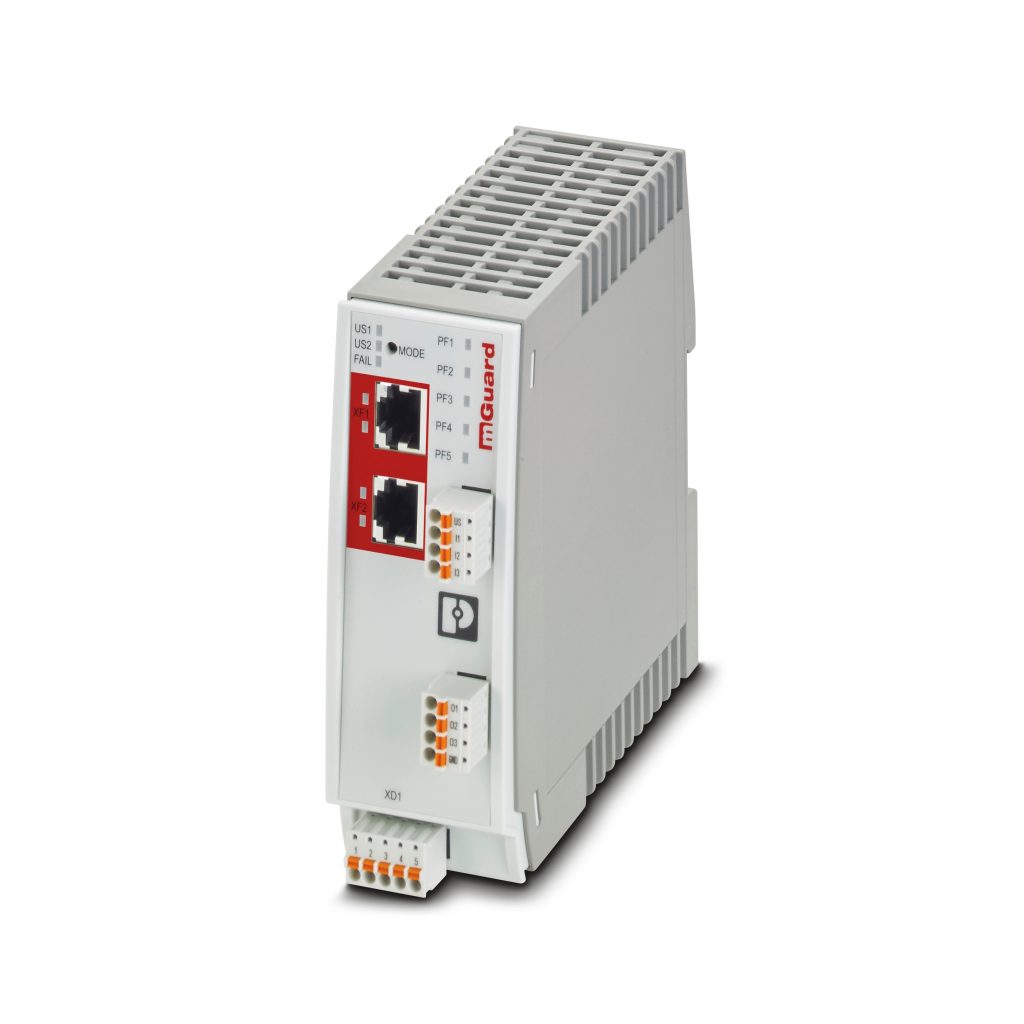
The mGuard Secure Cloud allows secure remote maintenance by requiring a security router or PLCnext controller. VPN connection configuration is done using VPN Builder wizards, requiring no in-depth knowledge. Service personnel need an end device with a certified VPN software client and a secure standard browser with internet access. Remote maintenance is performed on an intuitive web interface, saving costs compared to on-site visits. The premium license for the mGuard Secure Cloud includes China VPN+ costs around 3,600 euros per year, and every flight not taken is better for the environment.

Find out more on our website.

Learn more about the mGuard Secure Cloud.

Phoenix Contact automates a scalable hydrogen electrolyzer system

From |
hydrogen electrolyzer system.

Automation and electrification from a single source

Green hydrogen is set to replace fossil fuels in many industries, and Enapter AG has developed the AEM Multicore to make production cost-effective and flexible. Phoenix Contact experts assisted in engineering, programming, and outfitting the electrolyzer system with key components for automation and electrification. Green hydrogen’s intrinsic value stems from its ease of storage and on-demand transportation. Enapter specializes in AEM “anion exchange membrane” electrolyzers, which are more cost-effective than PEM electrolyzers while being just as flexible. The company plans to mass-produce these stacks in the medium term using a highly automated process.
Automation and electrification from a single source

Fully developed AEM stacks for series production

Enapter has introduced the AEM Multicore 450, a modular, preassembled container capable of producing up to 450 kilograms of hydrogen per day. The multicore consists of 420 AEM stack modules, each with a 2.5-kilowatt power, allowing for greater flexibility and greater process redundancy. The container also includes power supply, regulation of the electrolysis process, heat dissipation, and monitoring of process parameters, including hydrogen purity, through sensors. The fully developed stacks have already been sold in large quantities.
Close collaboration in the area of functional safety

Phoenix Contact supported Enapter, a company that developed a power supply and controller for a 1-megawatt system. The company’s services range from the development of the first small test system to the commissioning of the 1-megawatt system. Phoenix Contact’s project manager, Ayhan Birinci, highlighted the importance of functional safety in these projects. The team started working on a risk assessment before the design phase, which laid the foundation for essential design elements, including the controller. The software for the safety controller was compiled by Phoenix Contact engineers. Andreas Lautmann, Business Development Manager for power-to-X, emphasized the importance of a structured, well-documented process for design and engineering for the safety of the overall system. Furthermore, two Phoenix Contact programmers assisted the Enapter team in building a smaller test system with ten electrolysis stacks.

A challenging market situation, particularly regarding microchips

The team worked on planning control technology, which was revised seven times before the control cabinets were built. The departure of the original system planner in spring 2022 added extra work. The final changes were made during the design freeze in December 2022. Constructing the control cabinets was challenging due to supply chain issues, particularly with microchips. Phoenix Contact and Enapter worked together to keep the ambitious commissioning date, with the AEM Multicore 450 system inaugurated on May 24, 2023.

The safety portfolio includes SIL-certified components and control technology as well as comprehensive services

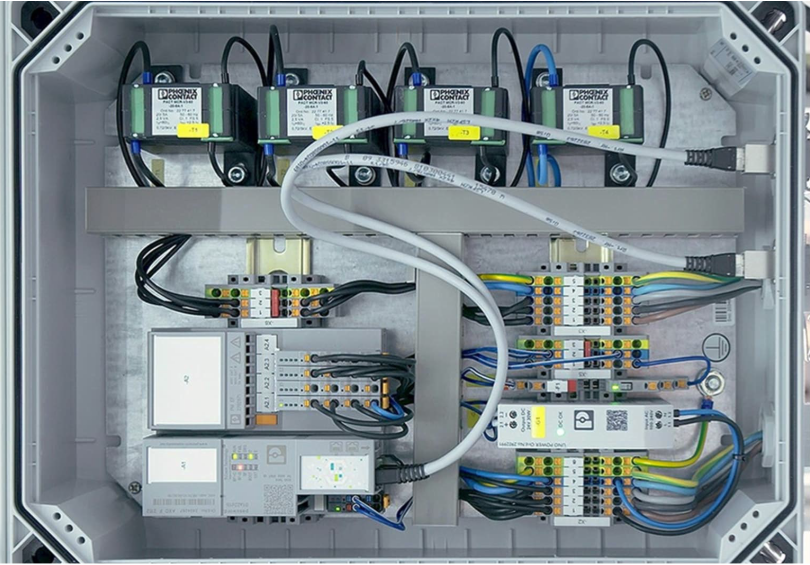
Control cabinets fully equipped with Phoenix Contact components

Phoenix Contact has installed components and systems in an electrolyzer, including connectors for sensors and controllers, and a PSU compartment for control. The control cabinets are equipped with Phoenix Contact components, including real-time and safety-oriented control technology up to SIL 3. The superordinate system controller is built with PLCnext products, fulfilling functions like ventilation, water pretreatment, emergency shutdown, fill level monitoring, and electrolyte solution supply. In-house 24 V DC power supplies, signal converters, and connection technology are also included.

The separate PSU compartment contains the electrical and electronic systems for the electrolysis process

Compact AC/DC converters

Phoenix Contact’s Charx power system converts 400-volt AC voltage into direct current for electrolysis. The original converters were not suitable for controlling electrolysis, leading to a replacement with a Charx series converter. The converter is more compact and efficient, ideal for installation in larger systems. Enapter ordered a complete set of AC/DC converters in mid-2022, enhancing efficiency and optimizing the PSU compartment’s cooling system.

Compact AC/DC converters.  phoenix-contact-automates-a-scalable-hydrogen-electrolyzer-system

Smooth modification of the first system

Enapter has received orders for seven more AEM Multicore systems since its first system was inaugurated in May 2023. Phoenix Contact is also able to play its part here by supplying a complete solution package of services. Enapter CEO Sebastian-Justus Schmidt stated that AEM technology will make hydrogen more economical than fossil fuels. Pre-series maturity for AEM Multicore is projected for 2024 due to strong demand. Andreas Lautmann expects IT security importance with IEC 62443 certification and integration into existing systems.

Find out more on our website.

Carbon neutrality through data-driven optimization

From |

A Digital Factory approach that conserves resources and is economical at the same time

Digital-Factory. Carbon neutrality.

Phoenix Contact focuses on sustainability and balancing its carbon footprint by developing automation solutions. The company aims to help other manufacturing companies achieve carbon neutrality by electrifying loads, creating energy transparency, and using renewable energies in daily operations. The All Electric Society concept describes a future where renewable energy is available worldwide in sufficient quantities and economically. Phoenix Contact’s holistic digitalization concept, “Digital Factory now,” integrates consumption data into distribution, visualization, and control of process data, aiming to control energy consumption and achieve carbon-neutral production.

Recording, evaluating, and managing loads

Carbon neutral production.

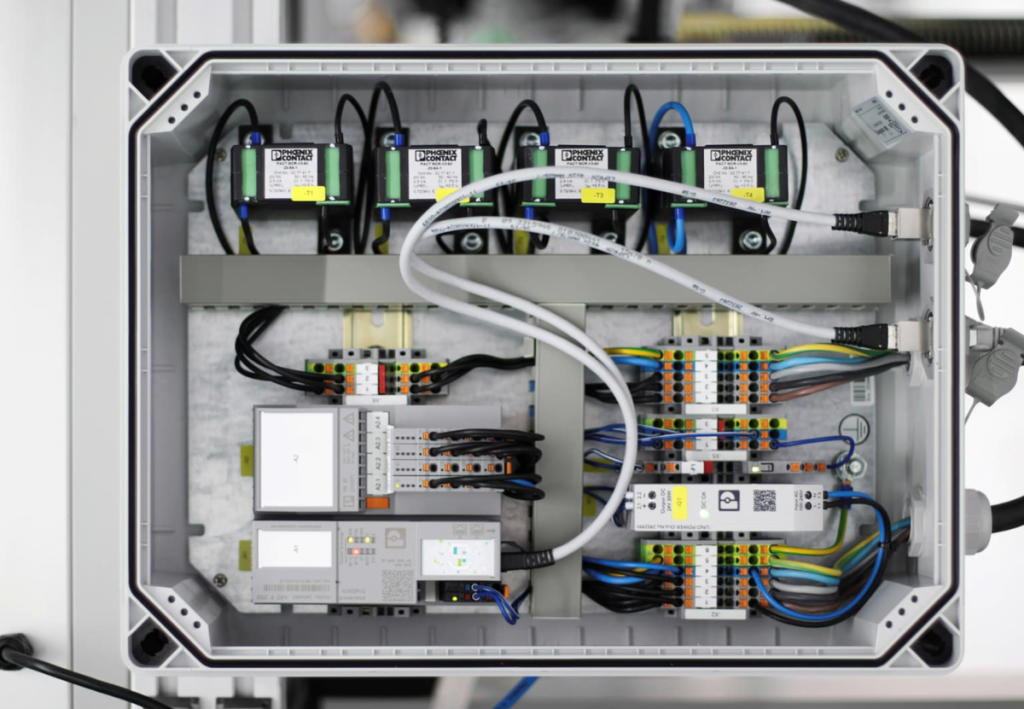
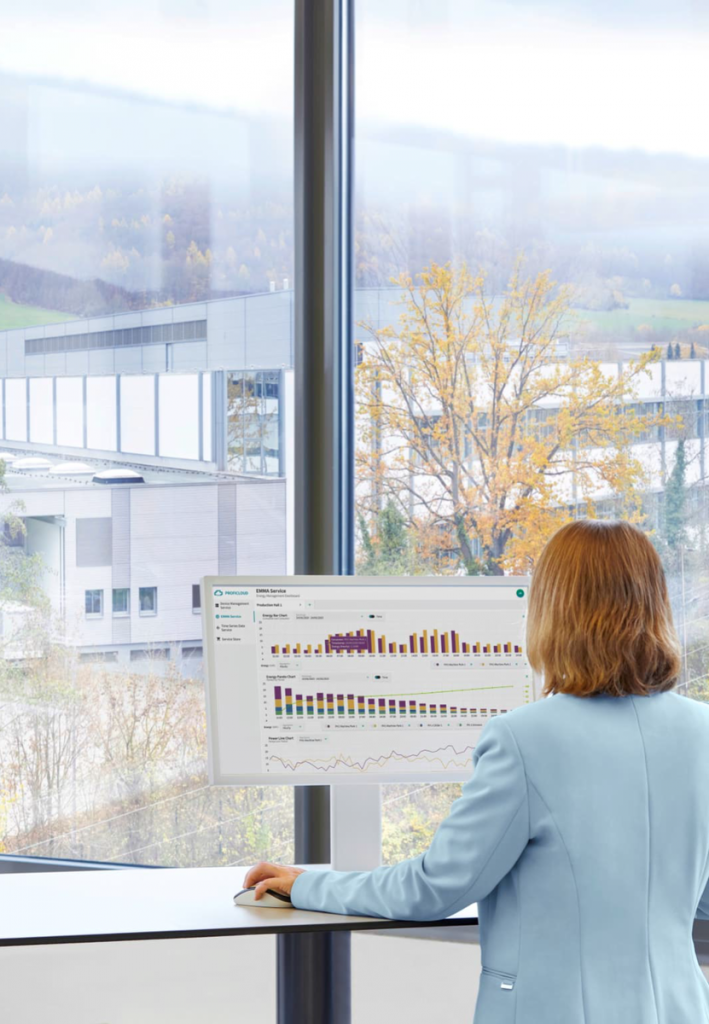
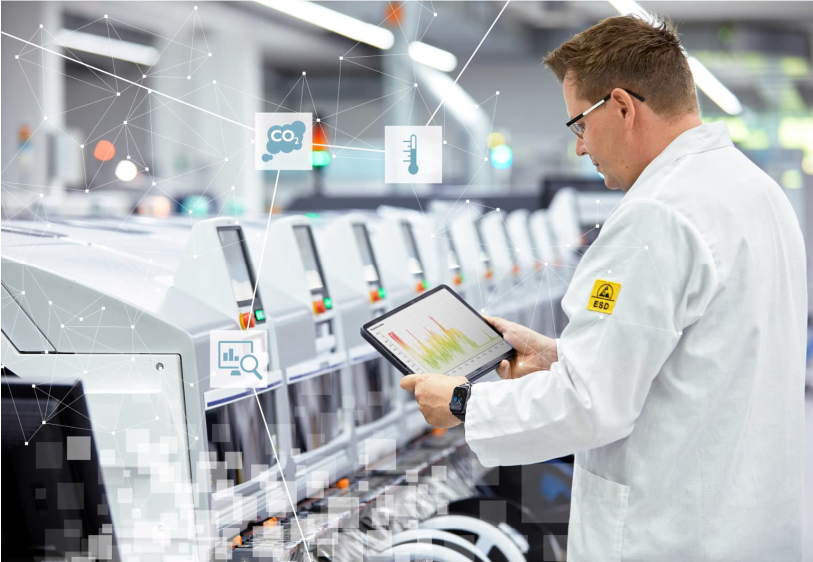
Phoenix Contact has developed an architecture called “More than Measure Energy” to integrate existing systems into modern IT systems. This architecture includes a Data Collection Box for secure integration of process and consumption data. Users can choose between a standardized Data Collection Box or a fully customized version. Phoenix Contact uses a programmable logic controller (PLC) from the PLCnext Control product family in its Digital Factory at the Bad Pyrmont location for secure communication with the OT world and IIoT devices. The company also provides solutions in the immediate production environment as well as its own EMMA cloud service for energy management.

Turning findings into optimization measures quickly

Turning findings into optimization measures quickly

A soldering system in the Digital Factory in Bad Pyrmont integrates energy-saving measures by analyzing energy data from a Data Collection Box. The system identifies standby energy consumption and allows for dynamic switch-off and switch-on times based on order data and energy data analysis. This allows for more efficient order planning in the long term. Phoenix Contact’s “MLnext” machine learning solutions can help predict field-level information, such as manual workstation utilization status, ensuring data availability. A holistic approach to optimization involves collecting and analyzing data throughout the entire production process using AI-based algorithms.

Energy data reflects the system behavior

Energy data reflects the system behavior .

Energy data can be used to evaluate machine performance, availability, and product quality using artificial intelligence (AI). Anomalies can be detected and quantities and operating states can be predicted. Collecting and storing data benefits users differently, accelerating the payback period and revealing potential. The Big Data approach applies, focusing on data-driven patterns and providing suggested solutions to domain experts. Collecting energy data leads to direct and indirect benefits, ensuring resource-efficient and competitive production.

Find out more about Digital Factory here.

Find out more about PLCnext.

Gigabit Ethernet extender with G.hn technology

From |

Cost-saving solution with lots of potential

Cost-saving solution with lots of potential. G.hn technology.

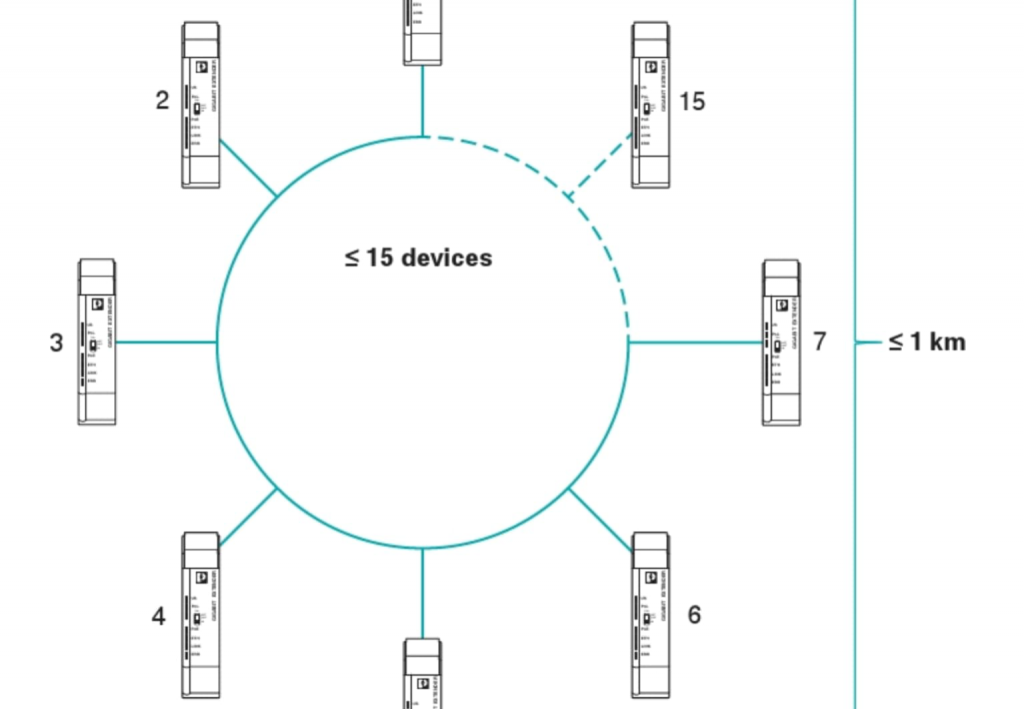
G.hn technology expands network range and speed by extending the physical limitations of Ethernet transmission. This enables distances of up to 1000 meters over simple 2-wire cables at a maximum data rate of 1 Gbps. This technology is beneficial for industrial applications, such as computers, automation controllers, surveillance cameras, traffic regulators, building automation, and household appliances. It provides longer communication paths and a more simplified cabling structure.

High data rate and good transmission quality

G.hn, or Gigabit Home Networks, is a carrier frequency method originally designed for home networks. It offers high data rates and good transmission quality on every line. It can adapt to existing line attenuation. Moreover, it can bridge cable lengths up to 1000 meters, This value exceeds the standard Ethernet range by a factor of 10. G.hn offers greater flexibility for retrofitting systems and simplifies network structure, allowing complex topologies to be implemented even with passive connections. Thanks to these benefits, the end result is a standard that will become more important in future industrial, infrastructure, and IoT applications.

Further use of the existing cabling

G.hn technology.

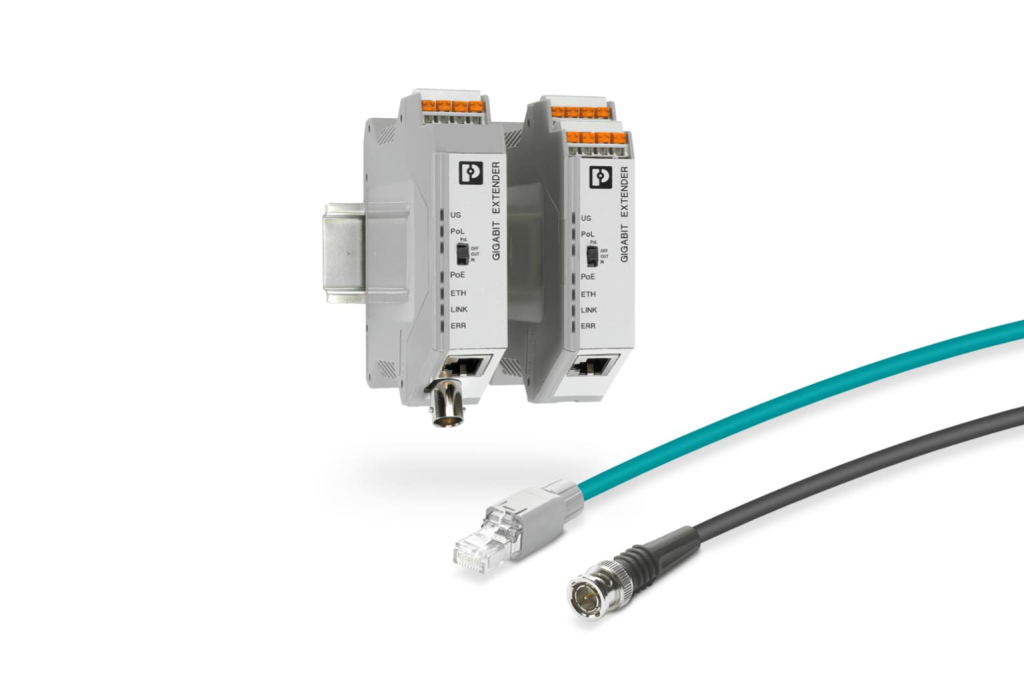
Phoenix Contact’s new Gigabit Ethernet extender product family allows users to convert Ethernet communication to G.hn communication. This reduces effort and costs. The technology allows for the use of various transmission media, such as twisted pairs, coaxial conductors, or unused power cables, making it a cost-saving alternative to fiber-optic cables for Ethernet connections exceeding 100 meters.

Especially suitable for video surveillance systems

Especially suitable for video surveillance systems.

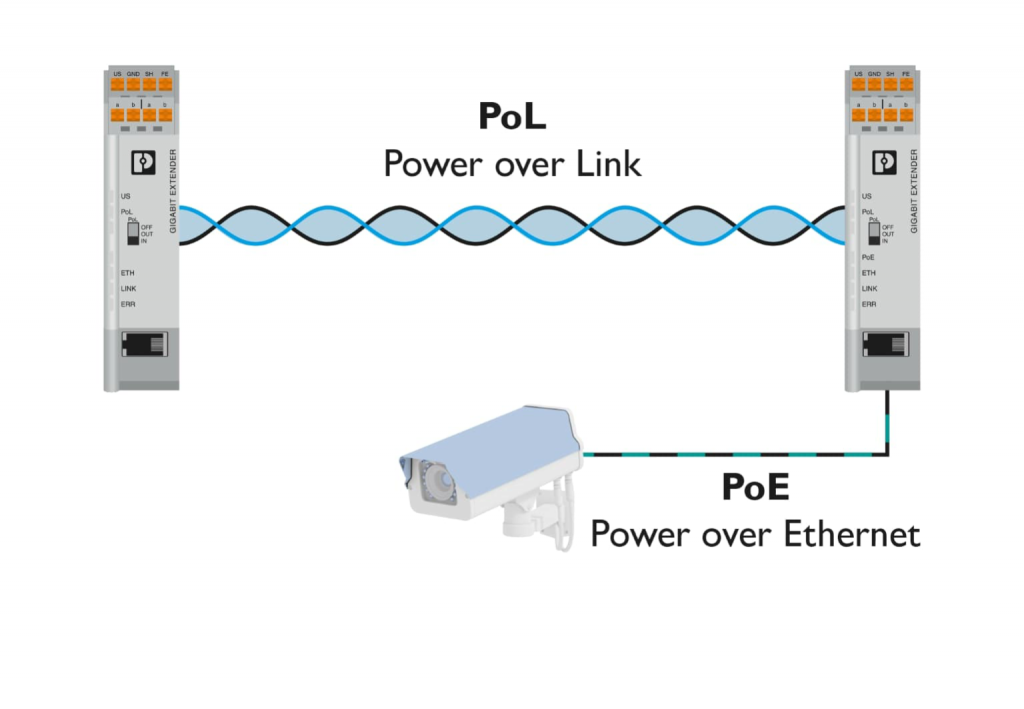
G.hn technology is ideal for applications with high data volumes, such as those found in video surveillance systems due to its bandwidth and transmission distance. It can integrate remote cameras with high bandwidth requirements into the network, reducing the distance between cameras and network components. This technology replaces analog cameras with IP cameras. Consequently, allowing existing cabling to be used and maintaining high video image resolution without sacrificing resolution.

Easy plug-and-play installation

Easy plug-and-play installation.

G.hn, a technology that distinguishes itself from other technologies like SHDSL, VDSL, and SPE, describes both the physical layer (first layer) and data layers (second layer) of a network. This way, G.hn opens up the option to build and manage more complex network topologies. Phoenix Contact’s Gigabit Ethernet extenders allow you to interconnect network devices in various topologies, including line, star, and tree structures. They can manage up to 15 devices, which do not require any settings to be made, However, users should note that the maximum data rate of 1 Gbps may decrease as the number of extenders increases.

Find out more about Gigabit Ethernet extenders.

Digital Factory now for a sustainable glass factory

From |

Less fossil-fuel energy and lower emissions

sustainable glass factory

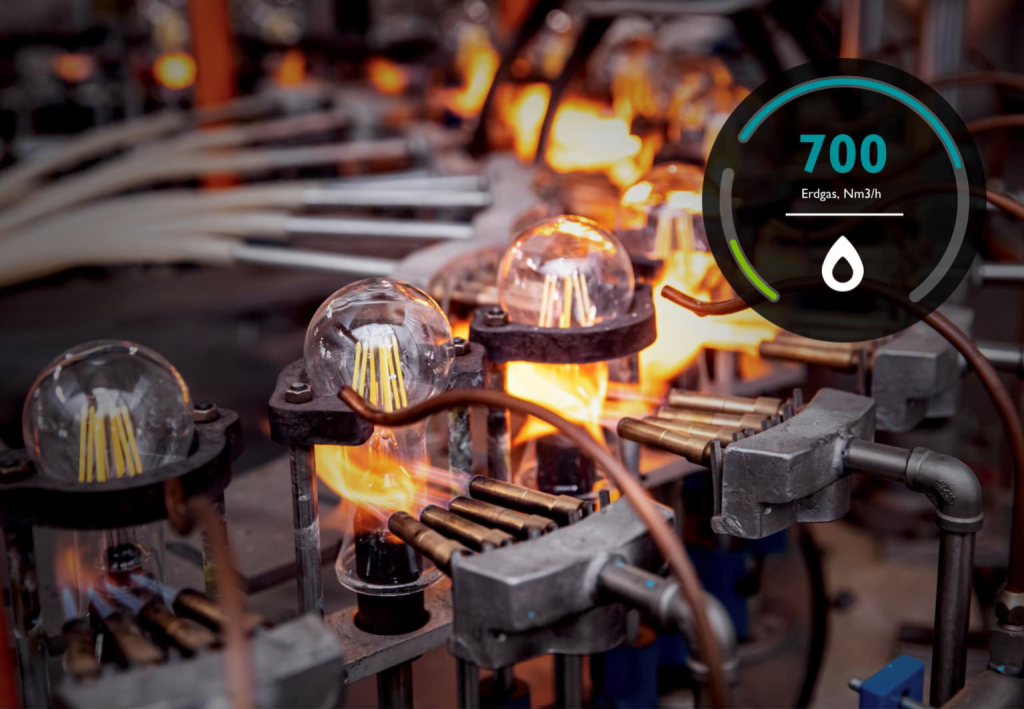
Phoenix Contact offers a solution for energy-intensive glass manufacturing to achieve Net Zero climate goals, using PLCnext Technology’s IIoT framework. An auxiliary heating system was integrated into a glass plant in Egypt in 2009 to enhance glass quality and reduce emissions. This decision now plays a crucial role in transforming the glass industry into sustainable factories amidst rapid changes driven by factors like climate change and digitalization.

Capturing all utilities efficiently, and intelligently, with minimal process interventions

sustainable glass factory

The “All Electric Society” envisions a world where renewable electrical energy is the main energy source, abundant, cost-effective, and environmentally friendly. Industries, like glass manufacturing, must adapt their processes across various areas, from raw materials to production, for sustainable climate strategies. Existing factories using different media face challenges, especially in optimizing fuel and water use efficiently and resourcefully. These improvements should be applied in both traditional and modern networked factory settings.

ML-supported process optimization with the PLCnext Technology

sustainability- glass industry

Early detection of anomalies in sensors and actuators along the glass manufacturing process brings several benefits. Firstly, it prevents disruptions, allowing for uninterrupted production. Secondly, it improves equipment efficiency, resulting in cost savings. Additionally, it optimizes fuel-air ratios and electrical heating, reducing energy consumption. Furthermore, it enables smart monitoring of various parameters for enhanced process control. To assist specialists in process optimization, Phoenix Contact offers MLnext, a machine learning system available on the PLCnext Store online marketplace. To ensure global accessibility, Phoenix Contact has introduced the Digital Factory Now initiative. This initiative provides open and standardized automation solutions based on PLCnext Technology. Consequently, it facilitates tailored solutions, from glass production to building-specific applications, in alignment with the goals of the All Electric Society.

International certification for safety and security

sustainability- glass industry

The OT Security certification of the PLCnext Control family by TÜV Süd, aligned with IEC 62443-4-2, along with existing safety certifications, establishes new industry standards. IEC 62443 is the primary global standard for OT security, while functional safety is defined by standards like IEC 61508, ISO 13849, and IEC 62061. Future automation solutions must bridge both perspectives. Due to the need for protection against tampering and remote access considerations, OT security is gaining prominence in the upcoming Machinery Directive. The certified PLCnext Control family already complies with the Machinery Directive requirements.

Field-side signal connection using smart signal conditioners

Users want to optimize fuel-to-air ratios securely using a parallel sensor system or their DCS. They aim to incorporate AI and implement a segmented network per IEC 62443. This is achievable by connecting signals through PLCnext Edge Devices or utility metering control cabinets, enabling real-time data exchange with IT/cloud, ERP/MES, or DCS systems. The glass industry can now advance sustainability and secure networking with these solutions.

Find out more about Digital Factory.

Mini Analog Pro product family extended further

From |

Narrow Ex i signal conditioners with functional safety for all signal directions and types

Mini Analog Pro

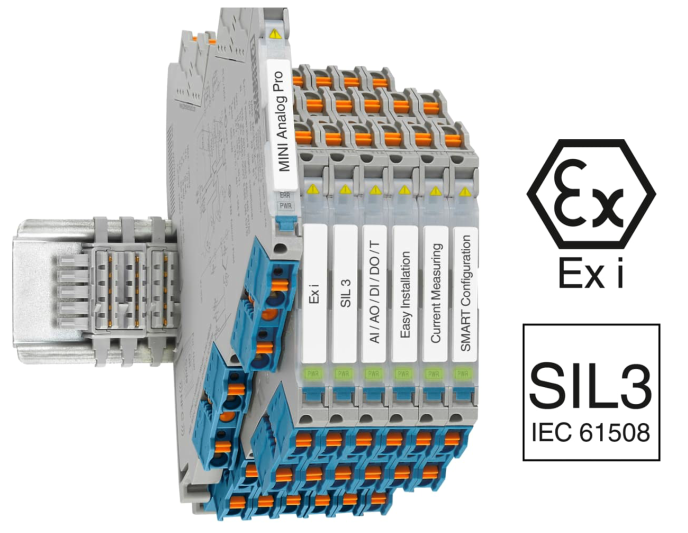
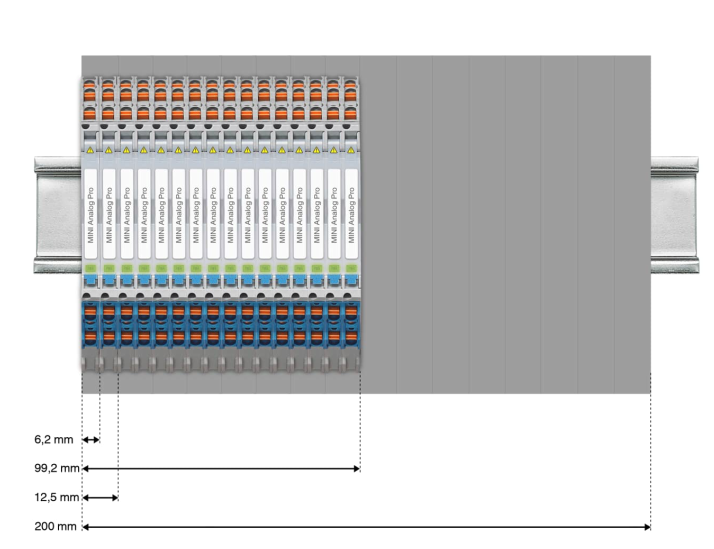
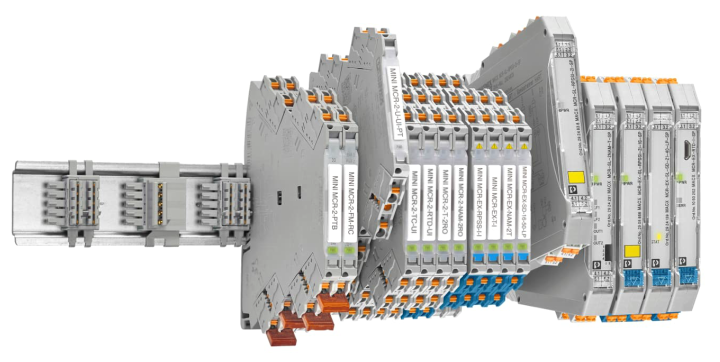
Phoenix Contact has introduced the Mini Analog Pro series to address issues related to intrinsically safe explosion protection and functional safety in process plants and power-to-X systems. Furthermore, these devices offer slim designs, user-friendly operation, and support various signal types, including analog, digital, control, and measuring signals. Moreover, they provide intrinsically safe explosion protection and SIL 3 functional safety for all signal directions and types in a compact 6.2-millimeter width. As a result, this eliminates the need for redundant SIL 2 components in SIL 3 applications. Additionally, these products hold international Ex approvals, making them suitable for global use.

Space savings of at least 50 percent

Mini Analog Pro

The Mini Analog Pro series offers slim signal conditioners and measuring transducers for space-efficient signal processing in process technology. They reduce cabinet space needs by at least 50% and feature front-facing terminal points, coded connection blocks for easy replacement, and an integrated disconnect function for servicing, all while maintaining stability in demanding applications.

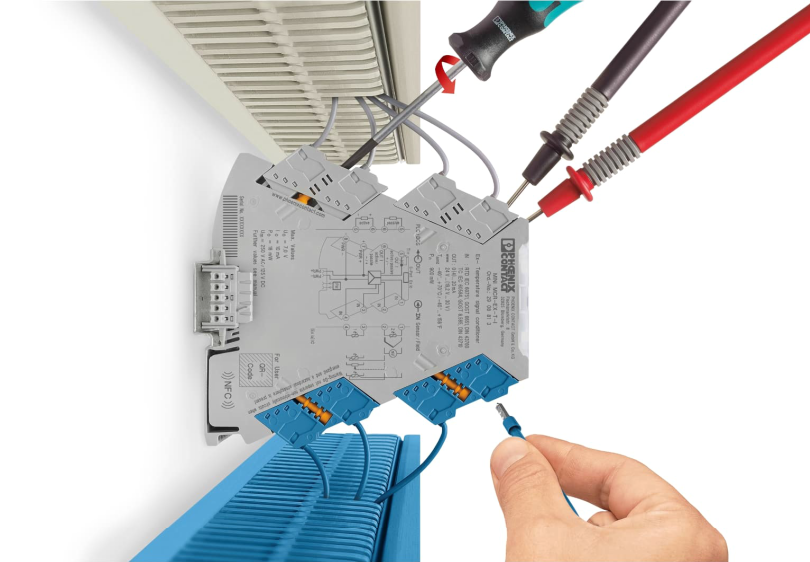
Current measurement without disconnecting the current loop

Mini Analog Pro

The Mini Analog Pro series terminal blocks simplify current measurement without the need to disconnect the current loop, ensuring uninterrupted operation. These devices have integrated current measuring points in their connection terminal blocks, allowing safe current measurement. They are designed for safety-related applications according to IEC 61508, achieving SIL 3 safety integrity levels in single-channel (1oo1) configurations.

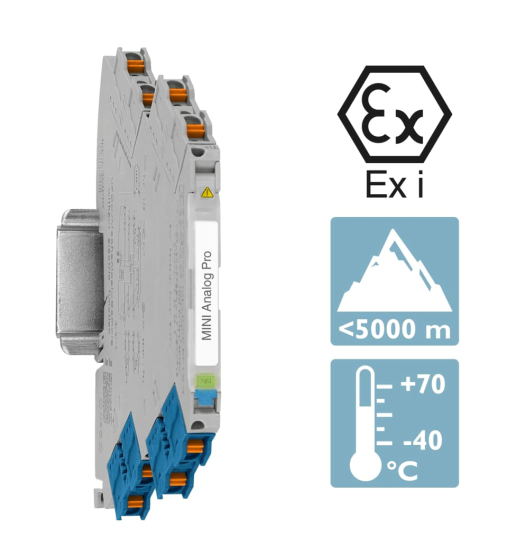
Wide temperature range and extended altitude range

Mini Analog Pro

The new circuit technology in Mini Analog Pro devices allows them to operate from -40°C to 70°C, covering all signal types, unlike most wider devices on the market. These products also simplify use at high altitudes by documenting suitable Ex i values up to 5,000 meters, reducing user calculations.

Wide range of configuration options

Mini Analog Pro

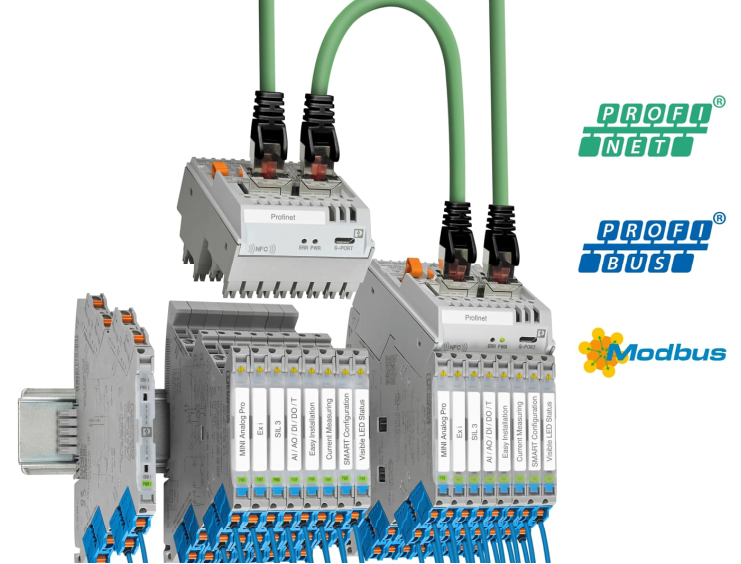
The Mini Analog Pro series offers versatile configuration options for its devices. Users can connect them to a PC for setup using an isolating programming adapter, while the ClipX Engineer Device Parameterization software simplifies configuration with step-by-step wizards. Additionally, a free classic FDT/DTM solution supports manufacturer-independent configuration. These devices also support configuration via DIP switches and a built-in NFC chip, and a new Signal Conditioner app with extended features is available for iOS and Android.

Easy integration into existing systems

Mini Analog Pro

The Mini Analog Pro series is compatible with the MACX Analog product family, offering versatile options for signal conditioning and measuring. These devices are intrinsically safe and functionally safe (SIL 3 1oo1), suitable for safety-related applications in extreme conditions. They integrate easily into existing systems, providing comprehensive solutions for functional safety and explosion protection.

Find out more about Mini Analog Pro here.

Find out more on our website.

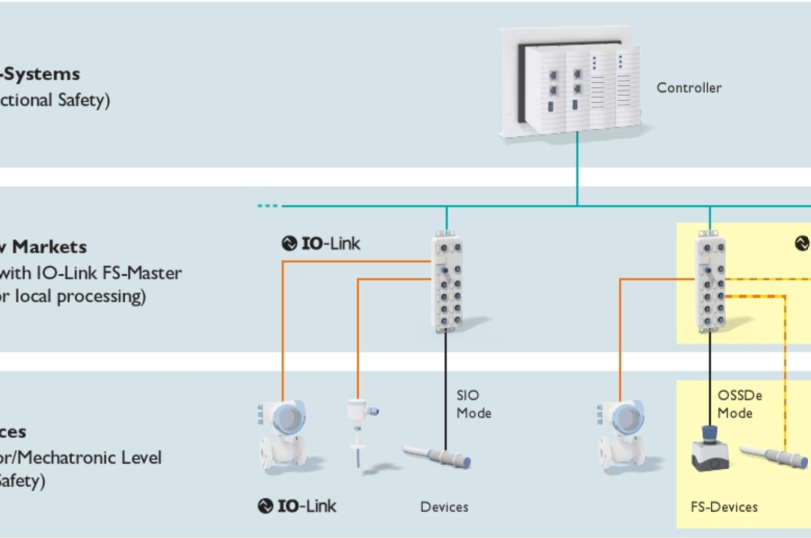
A uniform IO-Link Safety communication concept

From |

End-to-end safety from the sensor/actuator to the controller

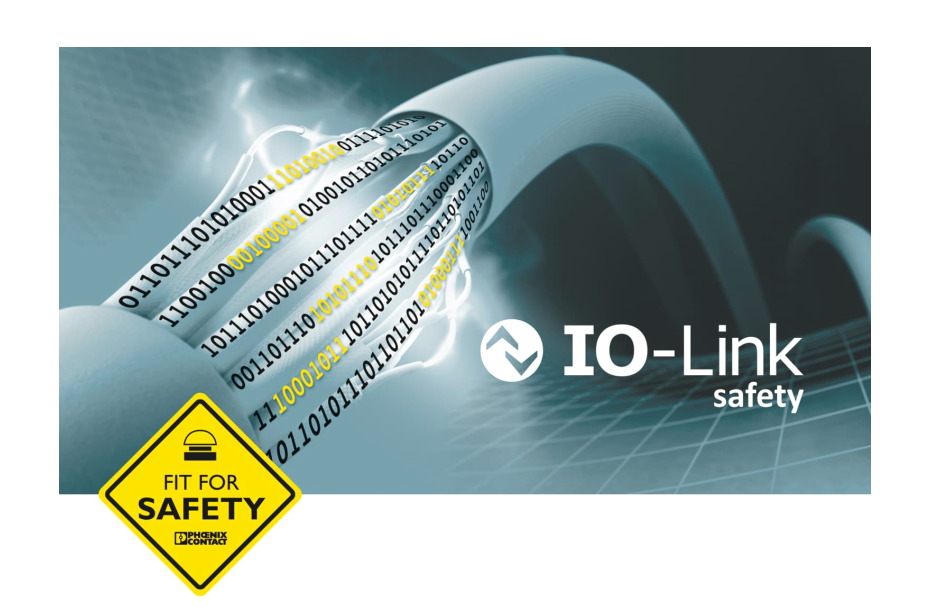
IO-Link technology has become crucial in machine and system integration due to its ability to enhance data collection from sensors and actuators. In 2021, over 6.3 million IO-Link devices were installed, totaling more than 27 million to date. However, while IO-Link offers benefits, it previously lacked a safety solution for integrating safe sensors and actuators. The release of IO-Link Safety expansion V1.1.3 in March 2022 addresses this by allowing the use of IO-Link Safety masters and devices for a standardized and integrated solution in automation systems.

End-to-end safety from the sensor/actuator to the controller

Manufacturer-independent use of IO-Link Safety devices

Since 2016, automation has witnessed safety-over-IO-Link solutions dominated by manufacturers, which deviate from IO-Link’s core principles. For instance, PROFIsafe-over-IO-Link devices are limited to matching masters and the PROFIsafe system. In contrast, IO-Link Safety offers benefits like network independence, standardized connections, configuration via IODD, and interchangeable devices. It’s versatile, as IO-Link Safety devices, following specifications, can be used with any manufacturer’s IO-Link Safety master, giving users flexibility in device selection.

Flexible use of the IO-Link Safety master even for the standard IO-Link

IO-Link Safety solutions provide flexibility with the master functioning in classic IO-Link mode. Future developments may enable mixed operation for additional information transmission, especially useful in complex control units. This emerging standard envisions a single device combining IO-Link and IO-Link Safety, simplifying functions and data transmission through the IO-Link Safety master. This concept is expected to expand to devices like light grids, laser scanners, and IO-Link Safety hubs, offering similar advantages.

Flexible use of the IO-Link Safety master even for the standard IO-Link

Various configuration options for the IO-Link Safety ports

The IO-Link Safety system expansion offers extensive configuration options for each IO-link safety port through “Feature Levels.” These ports can handle safe and non-safe digital signals with modes like IO-Link, IO-Link Safety, and a mixed mode, enhancing flexibility. For instance, users can configure a Class A port to support IO-Link, IO-Link Safety, or both, Digital output (DO), and Two-channel safe digital input (FS-DI). The system expansion also includes Class B ports that will supply higher current to IO-Link devices in the future. This standard enables a smooth migration of existing safety solutions in the field and ensures a future-proof approach for implementing their digitalization strategies.

Various configuration options for the IO-Link Safety ports

Easy parameterization with IODD

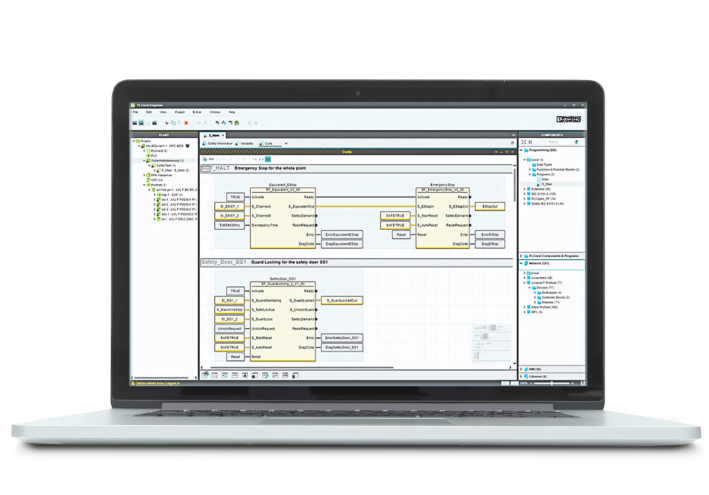
Introducing the new IO-Link Safety standard has integrated functional safety into the benefits associated with IO-Link technology. Users can easily configure parameters using IODD, and they can align device replacement with IO-Link’s core advantages. IO-Link Safety is emerging as a crucial element in connecting sensors and actuators to the control level in machine building. Multiple suppliers are expected to introduce IO-Link Safety masters and devices in 2023. Ultimately, this standard offers a manufacturer-independent pathway for users in the realm of machine and plant digitalization.

Find out more about IO-Link here.

Find out more on our website.

Optimizing production with the MLnext

From |

Data-driven analysis options for the factory

Data-driven analysis options for the factory. Digital Factory now.

Data-driven analysis of production systems enables predictive insights for machine condition, energy use, and performance. Furthermore, As a part of the “Digital Factory now” concept, Phoenix Contact offers modular hardware and software solutions for independent data acquisition. Control cabinets like Data Collection Box and Secure Edge Box integrate with existing infrastructure, with adaptable source code. Moreover, open-source tools like Grafana, Node-RED, and InfluxDB enhance flexibility.

Creating, training, and executing machine-learning models with MLnext

Creating, training, and executing machine-learning models. MLnext software

Once the data has been stored in a database, the user can use the MLnext software portfolio from Phoenix Contact to create, train, and execute machine-learning models. With the MLnext Framework, developers can evaluate time series data, while the MLnext Creation app offers ready-made templates for model creation and testing. The MLnext Execution app allows model creation without programming, supporting the entire application cycle for uncovering potentials and issues.

Planning needs-based maintenance measures

Planning needs-based maintenance measures.

The condition-based maintenance system uses energy and process data to plan maintenance based on the condition of the system, creating a digital system representation. Furthermore, data is collected by the Data Collection Box, standardized, and sent to the Secure Edge Box. A time series database archives the data, which can be visualized via a web app. Users can then use MLnext Creation to build a machine-learning model for comparing normal behavior during production.

Visualization of the actual health, process, and consumption data

The created machine-learning model is stored and used for predictions. MLnext Execution on the Secure Edge Box evaluates system data in real time. If the model detects an anomaly, alarms are triggered via email or message. This proactive approach helps prevent downtime and enhances maintenance planning, ultimately increasing production availability.

Reducing or preventing system downtimes

At Phoenix Contact PLCnext Factory, a condition-based maintenance system monitors energy usage in production, tracing anomalies and reducing downtime. MLnext also analyzes critical supply units to prevent wear-related downtimes. The “Digital Factory now” concept predicts product quality and reduces rejects during restarts.

Find out more about Digital Factory with MORYX here.

Find out more on our website.