
Author Archives: Rehab Saleh

Unique combination of floating and high speed

From |

Floating connectors with considerable tolerance compensation and high-speed data transmission

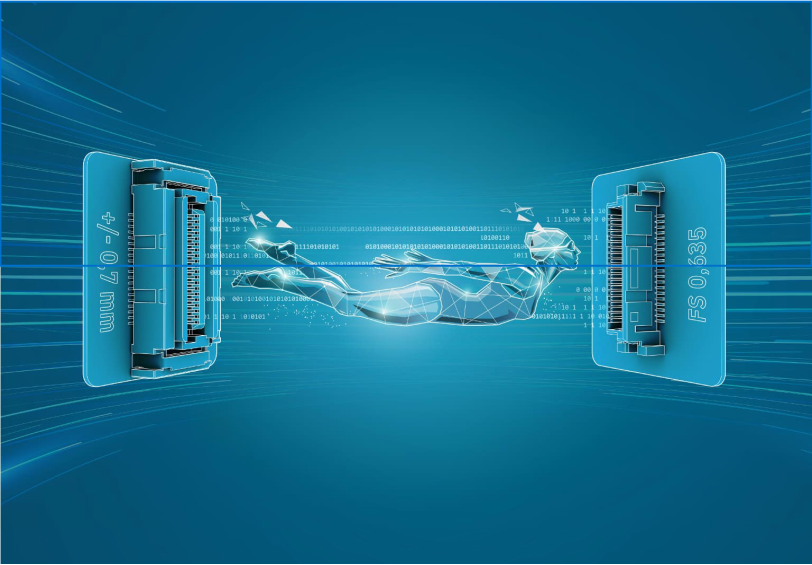
When it comes to board-to-board connectors, there are numerous versions: small and large pitches, low and tall designs, robust and simple connectors. The Finepitch FS 0,635 series connectors with floating properties are a new addition to the Phoenix Contact portfolio. What makes floating board-to-board connectors so special? Where are they used? And are high-speed data transmission and floating a contradiction in terms?
board-to-board connectors

Features of a floating connector

Board-to-board connectors consist of the contacts that establish an electrical connection and a housing that protects and fixes the contacts. While floating connectors have two housing parts connected by contact metals. The inner housing contains the pin connector pattern, while the outer housing protects soldering surfaces and contacts. The floating contacts are long and curved, allowing the inner housing part to move within the limits set by the outer housing. This allows the pin connector pattern to be moved within a large tolerance range while the soldering area remains fixed. The FS 0,635 series allows a tolerance of 0.6 mm in the plug-in direction, known as wiping. The FS 0,635 floating female connector strip can be combined with three male connector strips to create different stack heights.

Features of a floating connector
Continue reading

Storing energy in an All Electric Society

From |

Climate change and population growth are posing a global challenge. How to stop global warming and increase energy consumption while protecting the climate? The All Electric Society vision aims for a sustainable, affordable energy system where renewable sources, such as sun, wind, and water, are used. Researchers at Oregon State University predict that photovoltaics could cover all energy requirements globally, using less than 1% of the earth’s surface. However, achieving this energy revolution requires extensive renewable energy expansion of renewable energy and the technological approach of sector coupling.

Battery storage systems

Sector coupling

Sector coupling involves the comprehensive electrification, networking, and automation of all relevant areas of our lives and economies. Including industry, energy, mobility, infrastructure, and buildings. In the All Electric Society, these sectors are networked to create a self-controlling system that optimizes energy efficiency and energy savings by balancing loads, producers, and storage systems. This ensures stability and availability of power supply without excess capacity. Making energy storage systems a core element of sector coupling.

The role of energy storage systems in an All Electric Society

To ensure a stable power supply based on renewable sources like sun, wind, and water, reliable storage systems are necessary. There are various technologies for temporarily storing electrical energy, with the main difference being their physical principles. Mechanical storage converts electrical energy into mechanical energy. While purely electrical storage uses capacitors or inductors. Electrochemical storage uses electrochemical potentials and electrolytes to store electrical energy in batteries. Thermal storage generates heat and drives electrical generators.

The role of energy storage systems in an All Electric Society
Continue reading

Functional safety for analog signals

From |

Simple implementation with the PSRmodular and AXL F series

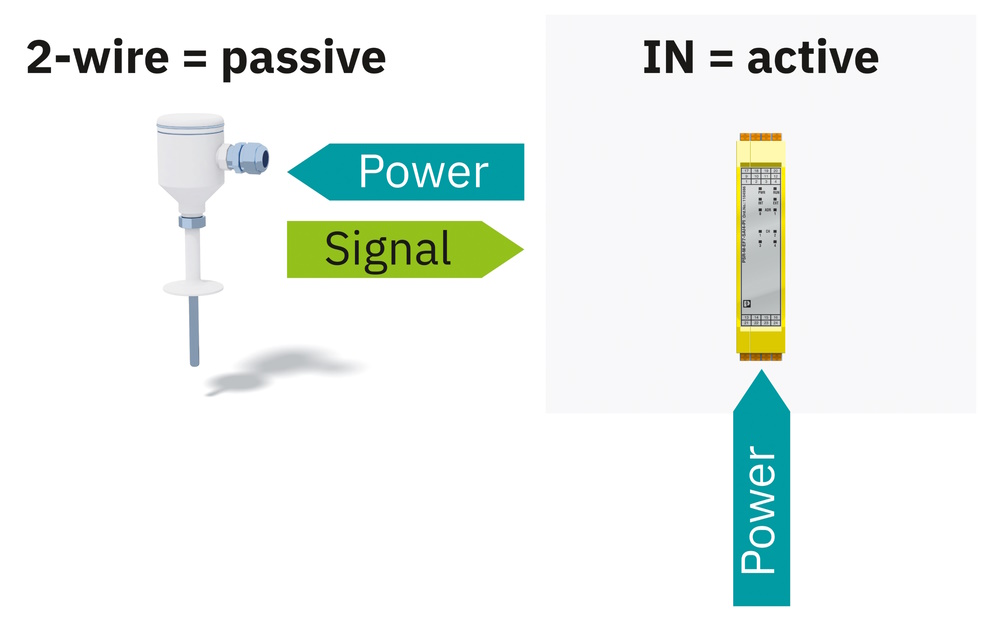
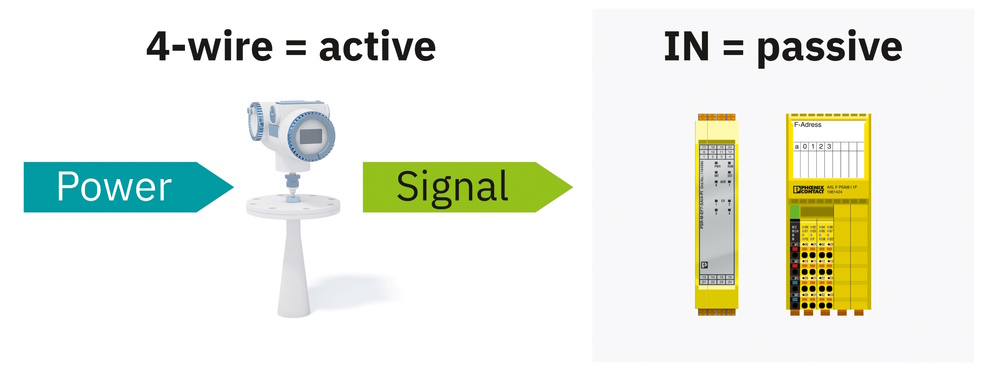
Phoenix Contact offers two series of analog signals for monitoring physical variables in process engineering systems. These signals are standardized as either a (0)/4 … 20 mA or a 0 … 10 V signal, with current signals being more robust against electromagnetic interference and having high measuring accuracy over longer cable lengths. Furthermore, the concept considers whether the sensor is powered by the evaluation module or supplied by an external source.

Functional safety for analog signals

Consideration of load and measurement information

The analog evaluation module distinguishes between active and passive inputs, requiring external supply for passive inputs. Load consideration is crucial when engineering analog signals, and signal conditioners are recommended if it exceeds active inputs. Moreover, NAMUR recommendation NE43 defines signal levels for failure information of digital measuring transducers with analog output signals, with current values outside these limits considered invalid or failure information. The evaluation unit must provide corresponding information or respond to deviations.

Design of functional safety

Single-channel analog signal generators can be used for safety-related circuits up to SIL 2/PL d. While two-channel signal generators can be used up to SIL 3/PL e. MTTFD values can be determined based on sensor manufacturer failure rates. Furthermore, Diagnostic coverage (DC) is required for safety-related analog signals, but plausibility comparison is difficult due to measurement inaccuracies and ambient conditions. Two-channel architectures should allow short-term deviations outside the tolerance range, without impacting functional safety.

Continue reading

Greater sustainability in automotive production with direct current

From |

DC technology: Test facility shows potential savings

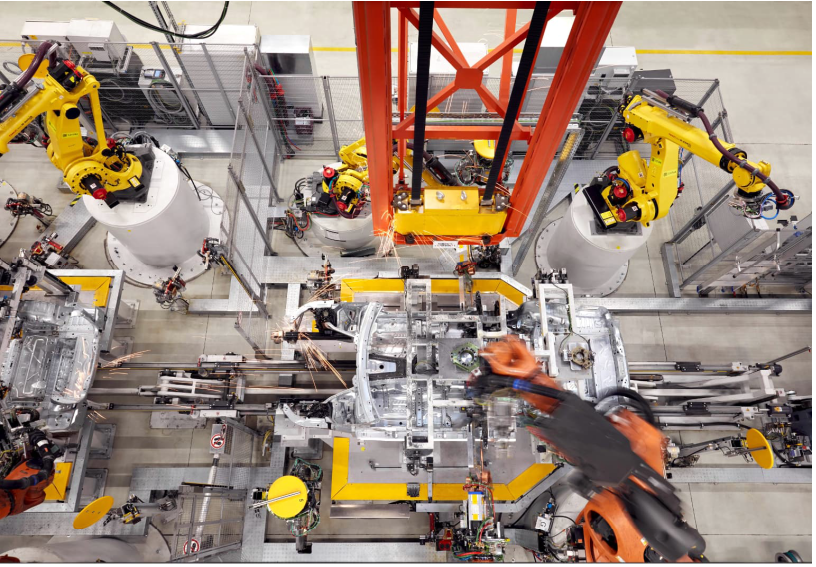
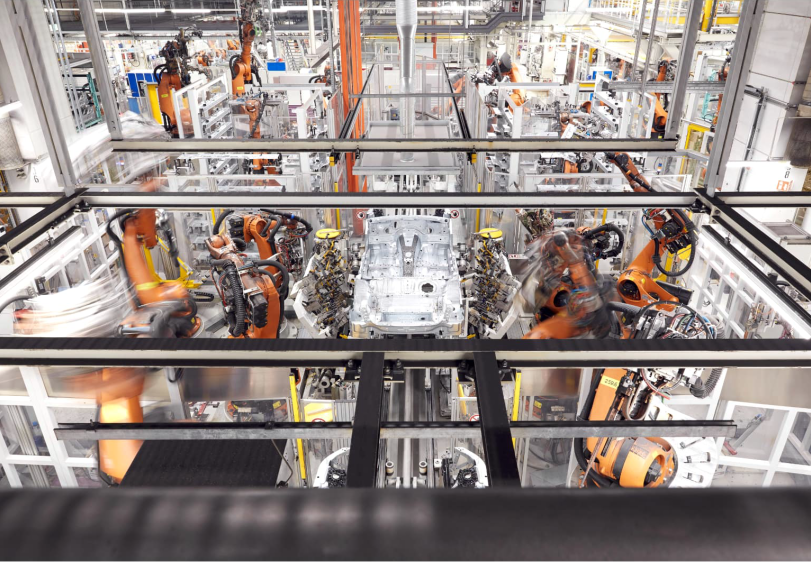
DC grids in the automotive industry are a key step towards climate neutrality. A production plant in Dingolfing, Bavaria, uses Phoenix Contact components to supply a unique DC grid system for robotic arms and automotive parts.

Greater sustainability in automotive production with direct current

It was AC power supply in the beginning

In the late 19th century, Thomas Edison (DC) and George Westinghouse (AC) fought over large-scale power grid supply. Ultimately, choosing alternating voltage is due to AC voltage’s ability to be transformed up and down.

 AC power supply

The advantages of direct current

DC technology offers efficient direct current usable at a low cost. Making it suitable for electronic devices, electric cars, and renewable energy. Furthermore, DC grids can eliminate lossy AC/DC conversion and integrate renewable energy systems efficiently. Moreover, Phoenix Contact provides solutions for intelligent control of power flow and networking, ensuring high availability and supply security.

automotive production with direct current

Direct current as a key technology

Phoenix Contact, a family-owned company, has been supporting BMW in their research into using Direct Current (DC) technology in a production cell at their Dingolfing plant. The company, a member of the Open Direct Current Alliance, has been able to provide rapid support and optimize the existing DC product portfolio through practical applications. This move aims to use renewable energy efficiently and conserve energy and material resources in an All Electric Society.

Direct current as a key technology

From theory to practice

Phoenix Contact’s High Power Systems range converts public AC grids into DC grids with 19-inch devices connecting DC subnetworks. Moreover, the wide output voltage range allows gradual ramping up the grid. Furthermore, the performance parameters can be parameterized via the PLCnext platform. Phoenix Contact’s Contactron ELR HDC DC circuit breaker and ArcZero connector ensure safe plugging and unplugging under load.

DC grids

Read more about DC grids in industry and Solutions for automotive manufacturing.

Indian vaccine manufacturer relies on scalable, safe, and secure digitalization

From |

Digitalization for more sustainability and productivity

Phoenix Contact has developed a solution for the energy-intensive pharmaceutical production industry to achieve the Net Zero Factory climate target. The solution uses the open IIoT framework from PLCnext Technology to digitalize all machines, systems, and processes. The Digital Factory from Phoenix Contact covers all stages of the value chain, addressing digitalization requirements in all stages. Rapid climate change, demographic development, deglobalization, and global political changes present opportunities for sustainable digital processes, new business models, and agile working methods.

Indian vaccine manufacturer relies on scalable, safe, and secure digitalization.

Minimally invasive digitalization approaches

The All Electric Society envisions a world where renewable energy is the primary source of electricity, available abundantly, inexpensively, and carbon-neutral. Industry plays a crucial role in developing solutions for electrifying sectors like energy, infrastructure, buildings, and mobility. Addressing all factory areas, including raw material warehouses, production, power supply, packaging, and buildings, is essential for reducing greenhouse gases and complying with environmental and materiality analysis directives.

PLC-INTERFACE
Continue reading

SHL AG uses NearFi technology to automate rotary tables

From |

Less maintenance effort thanks to contactless data and power transmission

SHL AG has been developing systems for automated grinding, polishing, and deburring since 1989. The company uses NearFi contactless power and real-time Ethernet solutions from Phoenix Contact for wear-free and maintenance-free communication. SHL’s systems include flexible robot cells, grinding, polishing, and deburring cells, as well as complete production cells. The company supplies users from various industries, including faucets, automotive crankshafts, and titanium and ceramic for medical applications. With 95 percent vertical integration, SHL reduces production costs through better cycle times. However, shorter cycle times and movements can lead to more wear, resulting in downtime.

NearFi

Data exchange via slip ring was previously prone to interference and wear

Surface processing requires workpieces to swivel 360 degrees, and rotary tables with swivel units are used. The system consists of three areas for the various processing steps: insertion onto the carrier, ithe initial processing of the workpiece by sanding robots with coarse grit, and finally processing by sanding robots with fine grit. The rotary table rotates the workpiece to the next processing station. Bernhard Mattes, Senior Director of Engineering at the Böttingen plant, introduced contactless NearFi technology for wireless data exchange, which is mounted on each rotary axis for the three endlessly rotating swivel units.

Data exchange via slip ring was previously prone to interference and wear

Simple startup without configuration effort

NearFi enables contactless data and power transmission using base and remote couplers that can be flexibly positioned without precise alignment. It reduces maintenance costs, enhances system availability, and simplifies startup with quick, configuration-free connection via 24V and Profinet cables, communicating Ethernet protocols at 100 Mbps full duplex.

NearFi technology
Continue reading

More efficient wire processing

From |

Optimized processes and coordinated system solutions for greater efficiency in wire processing

efficient

Control cabinet builders face international competition, skilled worker shortages, and increasing labor and material costs. In-house production and cost structure are increasingly under spotlight. The process chain in control cabinet building offers potential for efficiency gains in engineering and production through the use of optimally coordinated systems.

Identifying time-consuming process steps

control cabinet building

The continuity of the control cabinet building process chain is vital for efficiency and competitiveness. Untapped potential in wire preparation, identification, and wiring can be exploited through the use of optimally coordinated hand tools and automatic tools, as well as manual and automated marking systems.

Automating and bundling core processes

Automatic cutting devices, such as the Cutfox 10, can cut wires precisely and with repeat accuracy at high speed, saving time and allowing for easier stripping and crimping processes. These devices also offer flexibility in production by allowing for interchangeable dies for different types of contact. Bundling individual stripping and crimping capabilities can result in time and cost savings of up to 70%. Phoenix Contact offers a wide variety of marking solutions for wire identification, including thermal transfer printing, UV LED printing, and direct laser marking. The Thermomark E Series marking system from Phoenix Contact automates and combines the printing and applying of various marking materials in a single process step, resulting in time savings of around 60% in industrial identification. This system consists of three applicators for wire and cable identification, connected to a standard thermal transfer roll printer, eliminating the need for an additional device.

Efficiency and ergonomics

 Clipx Wire Assist system

Phoenix Contact’s Clipx Wire Assist system offers a scalable, efficient, and ergonomic worker assistance system for semi-automated wire production. The system guides users through the process, controls automatic tools and printers, and displays necessary information on a monitor. The system is built around a height-adjustable workbench, allowing workers to switch between sitting and standing while working. Mounted on four industrial-grade castors, it is mobile, reducing unnecessary legwork. The modular workbench design allows users to arrange their workstation as desired, with guides attached for additional accessories.

Nothing works without data and software

 CAE programs

Furthermore, the Wire Assist worker assistance system enhances productivity by controlling devices and guiding users through wire preparation, reducing manual effort and errors. Its intuitive graphical user interface features touch capability and a clear design. The system saves time and money by exporting necessary wiring information from CAE programs and importing it into Wire Assist. Filter and sort functions ensure efficient wire processing, eliminating unnecessary material changes.

Read more about control cabinet building.

Digitalization of process engineering systems

From |

How migration works

process automation

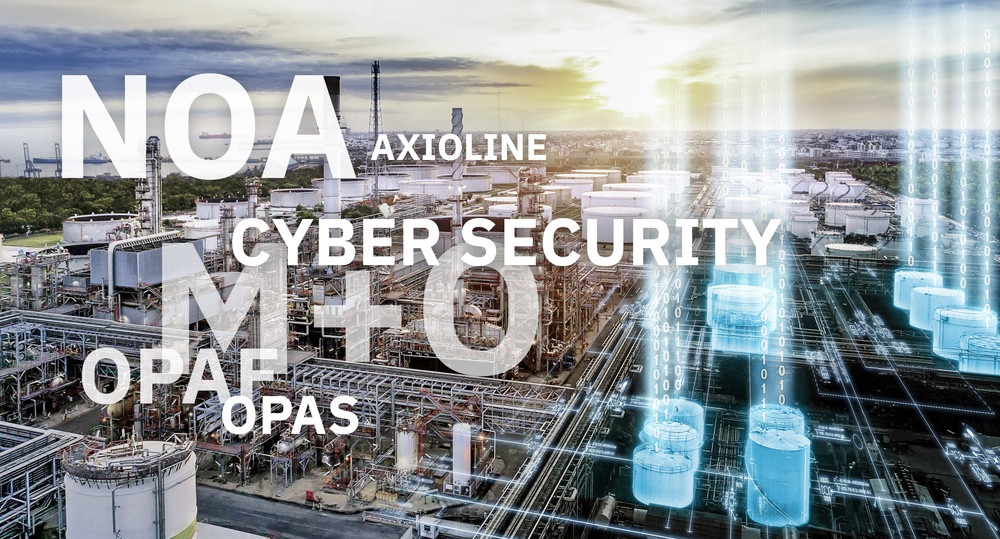
Process engineering systems, often based on automation technology from the late 1990s or early 2000s, need an innovation boost to remain competitive. Digitalization offers opportunities for more efficient working, better insight into processes, and additional functionalities. Furthermore, the migration towards Ethernet-based communication promises greater openness and higher transmission speed. Consumers are increasingly thinking online. However, process automation still requires systematic thinking and a pragmatic approach. The NAMUR Open Architecture (NOA) allows for the installation of additional sensor technology and monitoring elements, such as machine learning, artificial intelligence, and cloud services, without disrupting ongoing system operation.

Cooperation between OPAF and NAMUR

Open Process Automation

Open Process Automation (OPAF) is based on the idea of a modular IT world with process-oriented systems and long-term availability. Moreover, it has developed into an internationally active consortium of renowned system operators, technology manufacturers, standardization organizations, and software companies, collaborating with NAMUR for pilot projects and industry expertise.

Axioline F I/O system for implementing the NOA side channel…

NOA

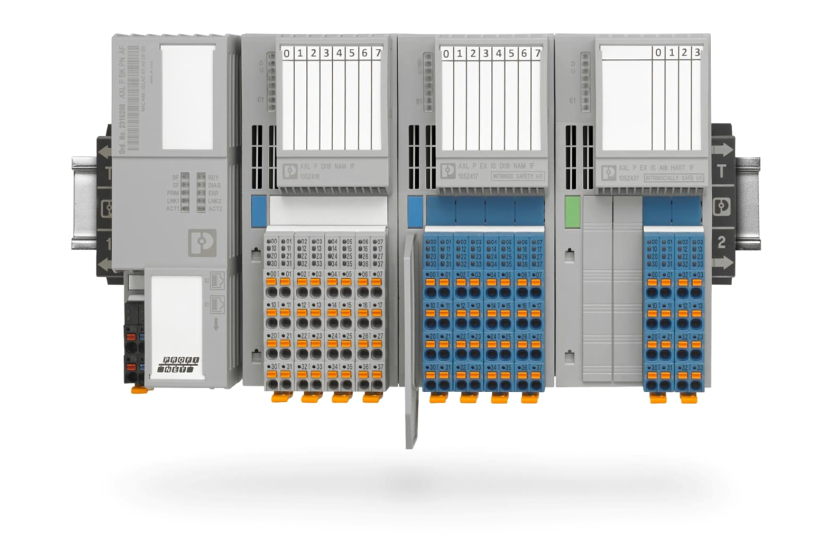
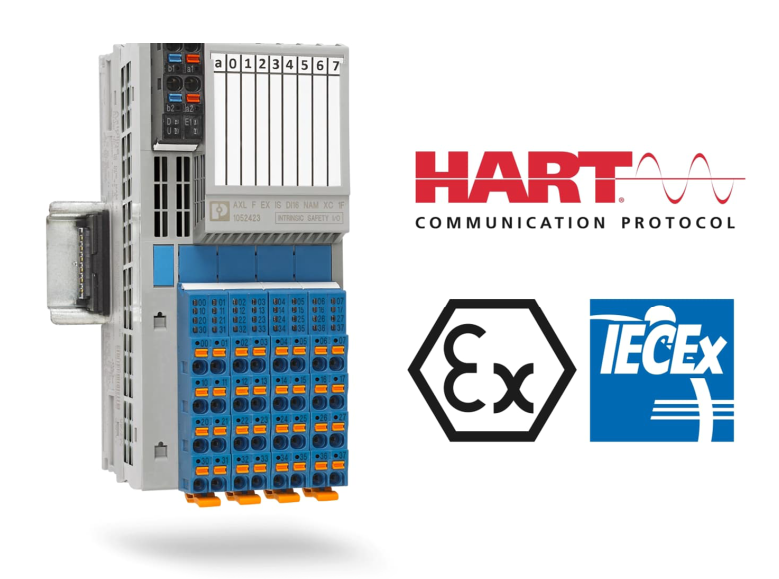
In addition, the Axioline F I/O product family and PLCnext Technology controllers are used in pilot projects. This modular system, originally designed for factory automation, can implement NOA side channels or data diodes. Since 2020, the portfolio has also included intrinsically safe I/O modules for NAMUR sensor technology, HART communication, and valve controllers.

…and Axioline P with proxy functionality

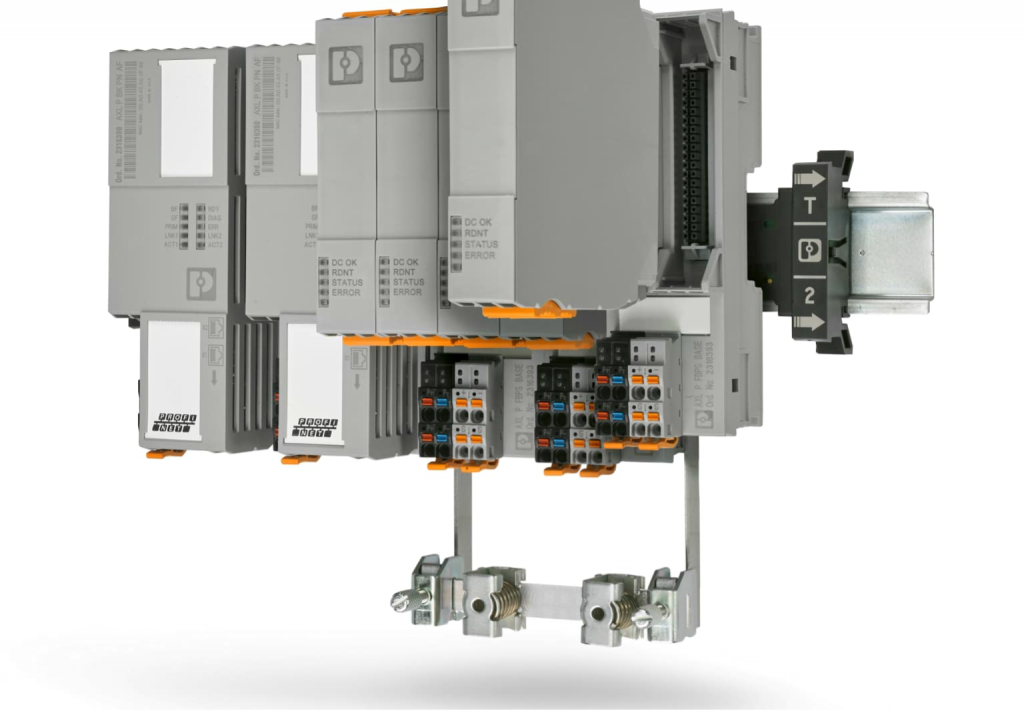
Phoenix Contact introduced the Axioline P, a high-availability I/O system for process automation, at Achema 2018. The system offers both conventional I/O modules and Profibus PA proxy functionality, allowing hot-swap and dynamic reconfiguration. Furthermore, it can integrate up to eight Profibus PA segments in one Profinet I/O station, supporting 10/100 Mbps Ethernet transmission. The Axioline P proxies also provide redundancy, shielding, and 14 watts of power per segment. The Phoenix Contact portfolio includes I/O modules with and without intrinsic safety for every applications.

Integration of the intrinsically safe power supply into the modules

Phoenix Contact has introduced intrinsically safe Axioline F and Axioline P modules in the XC Ex series, which eliminate the need for intrinsically safe power supply modules. The Axioline F system is used in NAMUR automation and PLCnext Technology controllers. The Axioline P module supports Profinet S2 redundancy and is used in zone 2 installations to connect field devices that are mounted in zone 2 or 1. The modules have a black power supply connector and partition plates. A Modbus/TCP version version of the Axioline P family will be launched in 2024, opening up new possibilities in open process applications.

Connection of up to eight Profibus PA segments

For migration, the Axioline P platform enables the connection of up to eight Profibus PA segments with high-power trunks and universal I/O connections into the field. It offers advantages in size and cost-effectiveness compared to previous designs. The intrinsically safe I/O modules provide greater flexibility. The first NOA and OPA pilot solutions were presented at the NAMUR Conference, and APL technology is predicted to be of great importance.

Learn more about process automation.

Comprehensively certified signal conditioners and measuring transducers

From |

Customized solutions for classic point-to-point applications

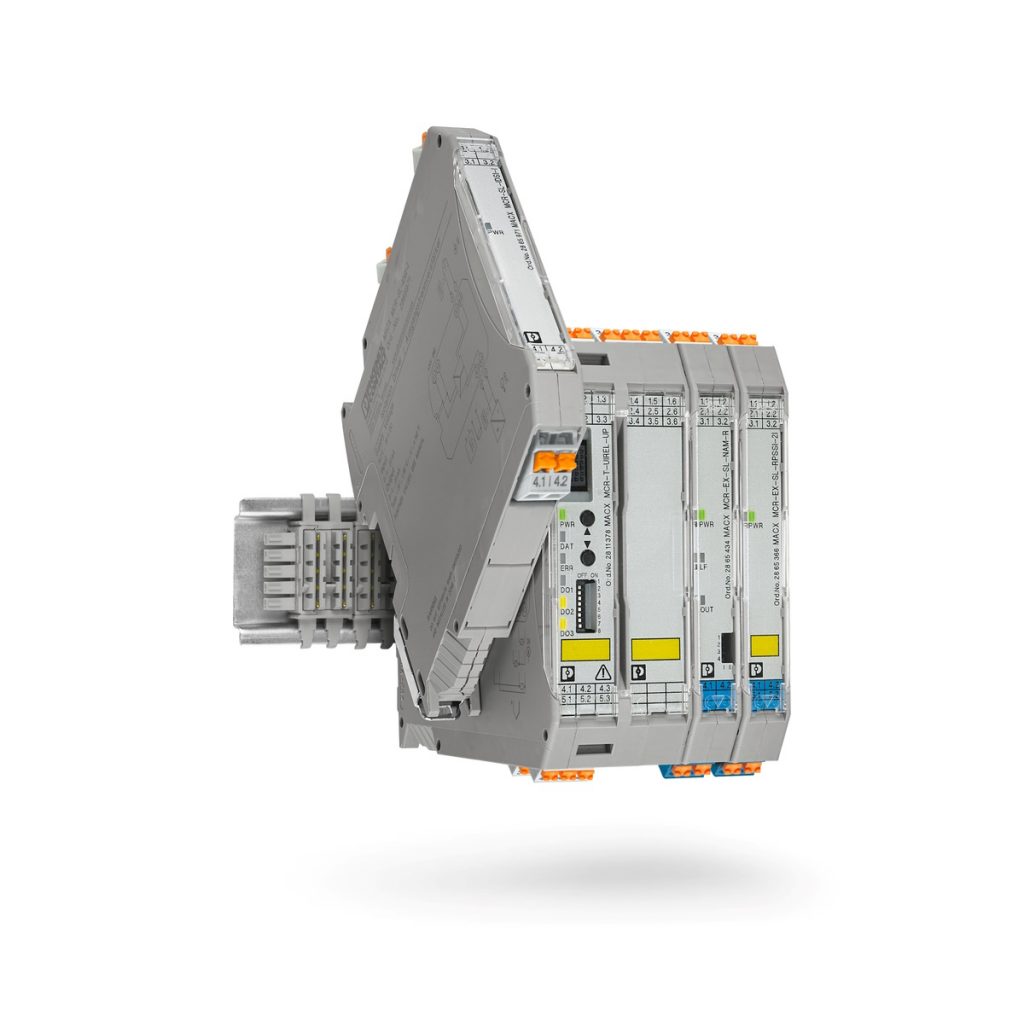
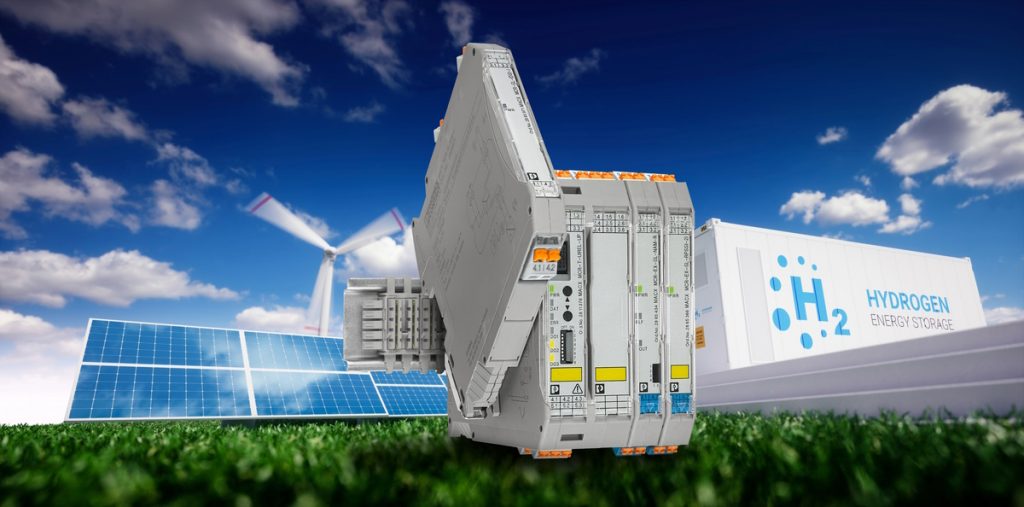
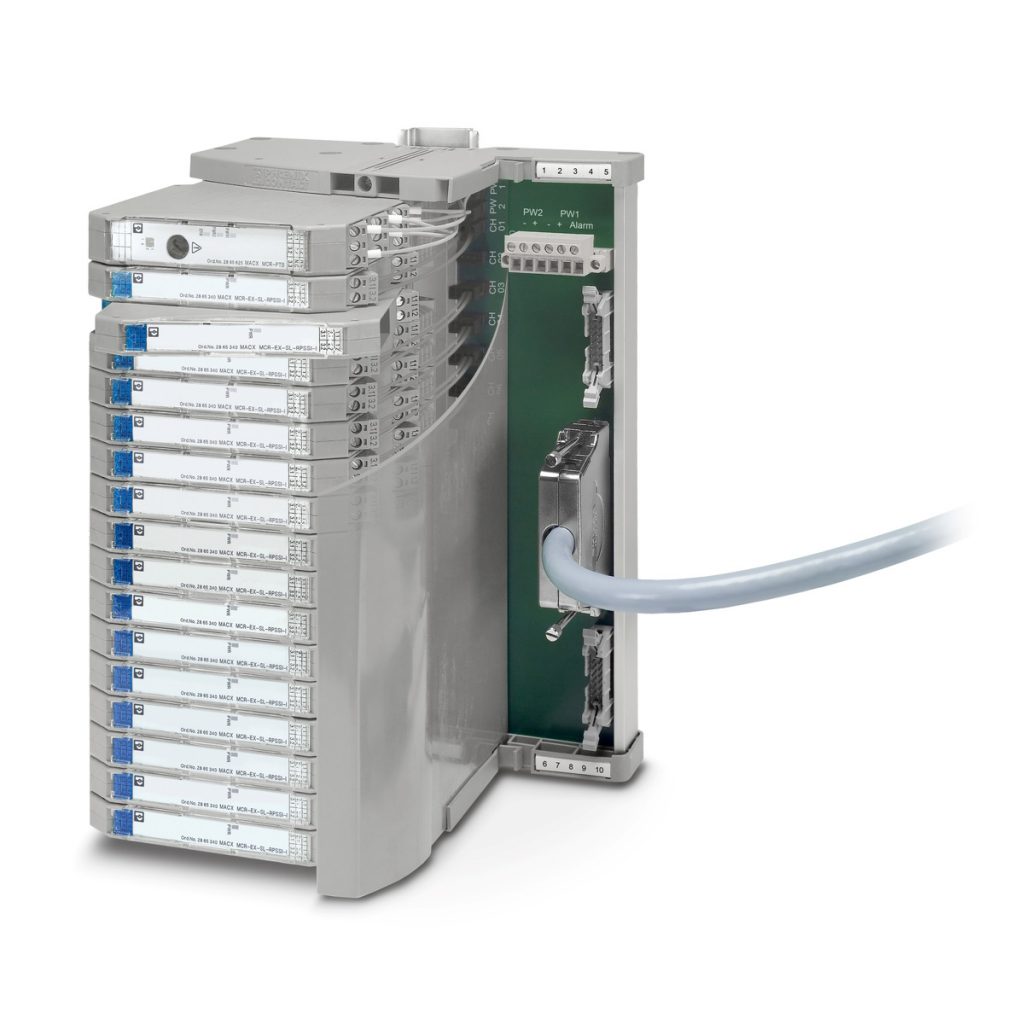
Phoenix Contact offers a range of signal conditioners and measuring transducers for point-to-point wiring in industrial environments. These devices are used to safely isolate, filter, amplify, and convert electrical signals from field devices. The Mini Analog Pro series features intrinsic safety and functional safety, while the revised MACX Analog Ex device family and VIP I/O marshalling provide a comprehensive range of signal conditioners and measuring transducers. In addition, point-to-point wiring offers advantages such as easy installation, high flexibility, easy troubleshooting, and less interference. However, the wiring can be disadvantageous as each device must be connected to the controller. The Termination Carrier from Phoenix Contact eliminates this issue.

The main spectrum of tasks

Moreover, signal conditioners and measuring transducers are essential for safely isolating, filtering, amplifying, and converting electrical signals.

Signal amplification

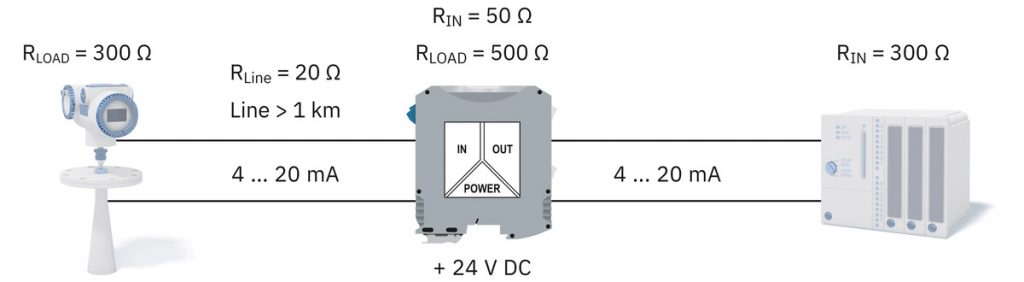
Moreover, signal amplification is necessary when a weak signal and can therefore only be acquired in distorted or attenuated form. For example, adding an amplifier reduces the load connected to the measuring sensor to 70 ohms, preventing distortion and ensuring the measurement signal remains accurate.

Conversion to a standard signal

Conversion to a standard signal

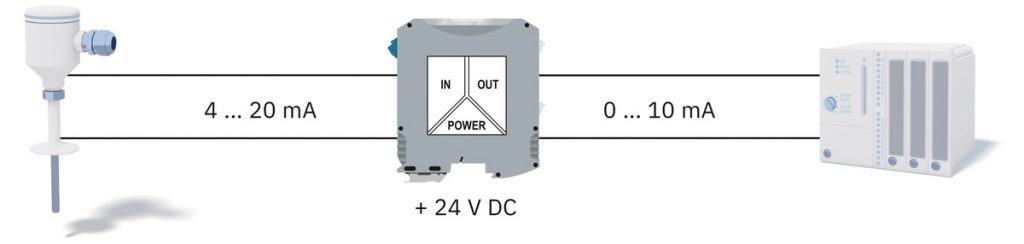
Depending on the measuring task, analog sensor signals can be converted into standard signals in an interface block. The conversion result should be proportional to recorded input values, to avoid distortion. Moreover, the standard signal converter adjusts the required signal between the transmitter and the evaluation unit.

Filtering

signal conditioners

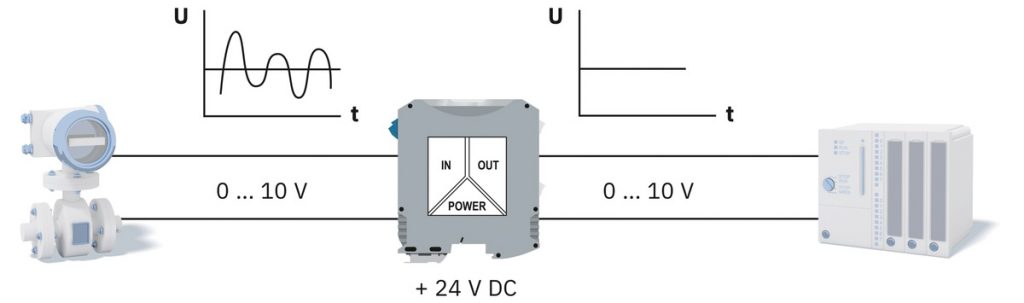
Furthermore, interference voltages in cables for measured value transmission can occur due to electromagnetic induction or high-frequency signals. Signal conditioners with filter functions detect and suppress these voltages, while twisted or shielded cables reduce induced voltage. To avoid interference, convert voltage signals into current signals.

Electrical isolation

Electrical isolation

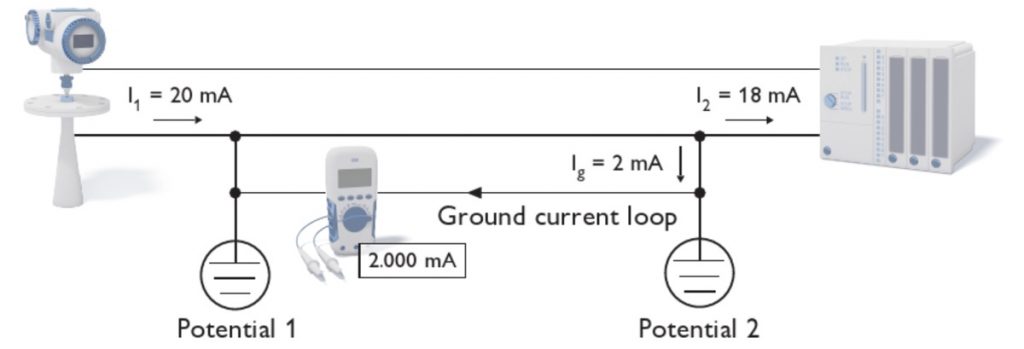
An electrically isolated signal connection, referred to as a floating connection, is essential in the plant and process industry. It eliminates compensating currents between potential differences, ensuring the recording of identical signals. This is achieved by integrating a galvanic signal isolator into the connecting cables.

Line monitoring

Line monitoring

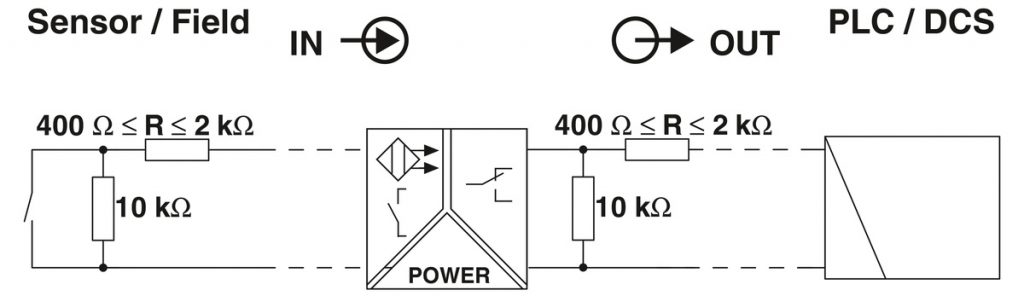
Line monitoring is a crucial function in interface blocks, ensuring line interruptions and short circuits. It is detailed in NE 21 NAMUR recommendations. The figure illustrates line monitoring on the entire signal transmission path, with resistances ranging from 400 to 10 kΩ, ensuring maximum current and zero current in line breaks.

The diverse areas of application

The diverse areas of application. Signal conditioners.

Furthermore, the tasks described are required in various industries, including chemicals, oil and gas, infrastructure, cement, machine building, and renewable energies like wind and solar power.

Industrial process control

Industrial process control

Signal conditioners and measuring transducers are commonly used in industrial applications to isolate, convert, and amplify analog signals from sensors or measuring devices for precise and reliable monitoring and control of the process.

Energy monitoring

Furthermore, devices are utilized for energy monitoring, accurately measuring and controlling energy consumption in buildings and industrial plants by isolating and amplifying electrical signals from current and voltage sensors.

Monitoring of process variables

Lastly, Phoenix Contact provides signal conditioners and measuring transducers for monitoring sensor signals, conforming to explosion protection standards, international approvals, functional safety certifications, and maritime applications.

Discover more about Signal conditioners and measuring transducers.

Fiber-optic connection technologies in the field

From |

A reliable connection

Fiber-optic cables

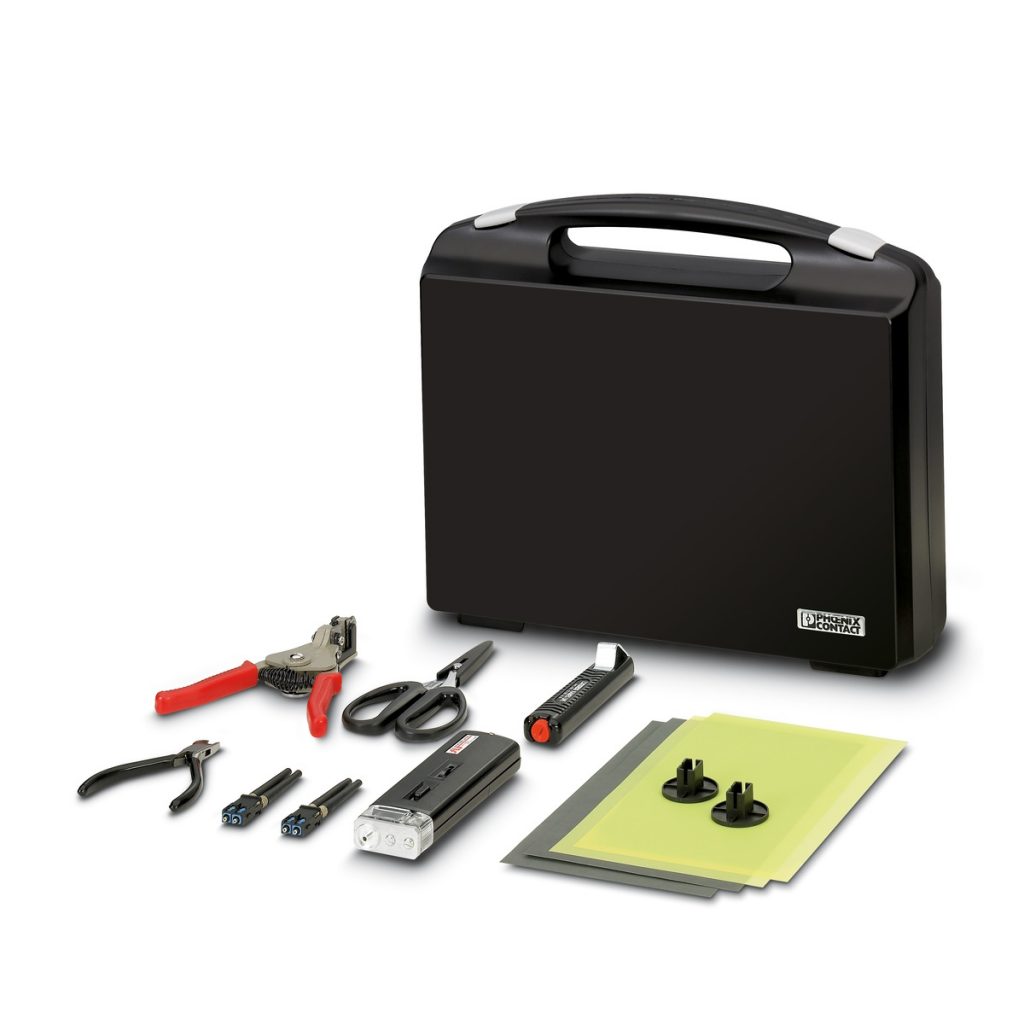
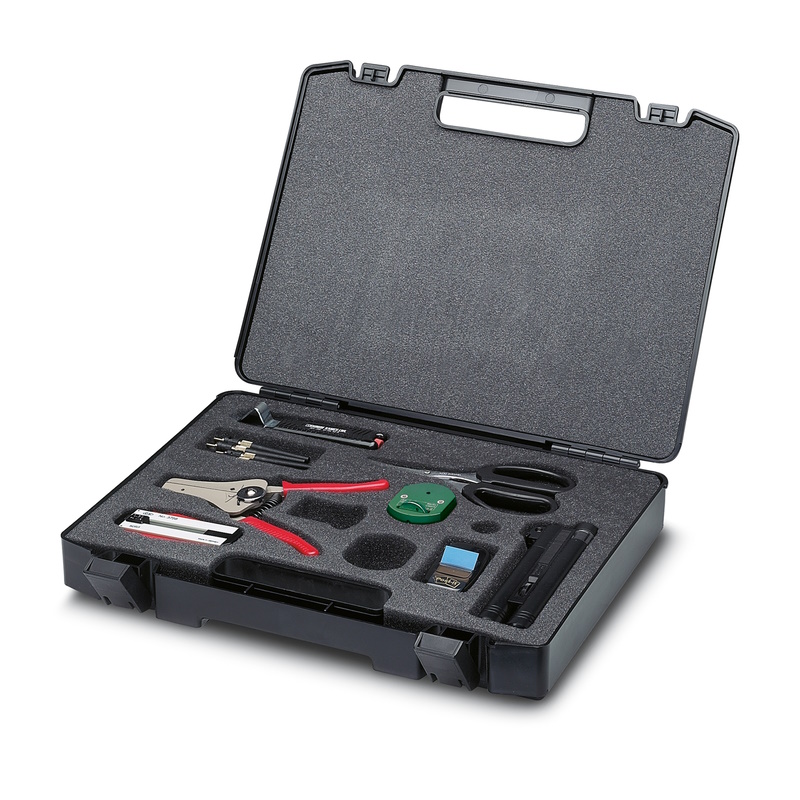
Fiber-optic cables, often supplied by meters, the different types of fiber-optic cables require different connection technologies for field use. Additionally, they are commonly used for cabling data technology systems, with different fiber types like POF, PCF, and quartz glass. Moreover, suitable tool sets, connectors, distributor boxes, and cables are required for proper cabling and connection, with the fiber type planned for use serves as the starting point.

Use and connection of POF

POF

Polymer optical fiber (POF) cables are often used in industrial environments with low data rate and range requirements. These cables have a plastic core and cladding, protected by a 2.2 mm diameter coating. They are typically used in breakout cables, which have two POF cores, filler material, and strain relief elements. Phoenix Contact offers a wide range of breakout cables with POF cores for different applications. In addition, specially adapted tool sets are the solution. They are used to connect connectors, making the assembly of POF fibers easy and safe.

Use and connection of PCF

Fiber Optics

Polymer-clad fiber (PCF) cables are used in industrial environments due to their robust design and high-quality workmanship. These cables have a 200 µm core and 230 µm cladding, enclosed in a plastic sheath with strain relief elements. 2-core breakout types are commonly used in harsh conditions. Moreover, different connector types are available for field assembly, with tool sets for each type. The cleaver, matched to the respective connector type, ensures a precise and optimally prepared fiber face. Additionally, Phoenix Contact offers PCF cables for various applications.

Use and connection of GOF

Fiber-optics

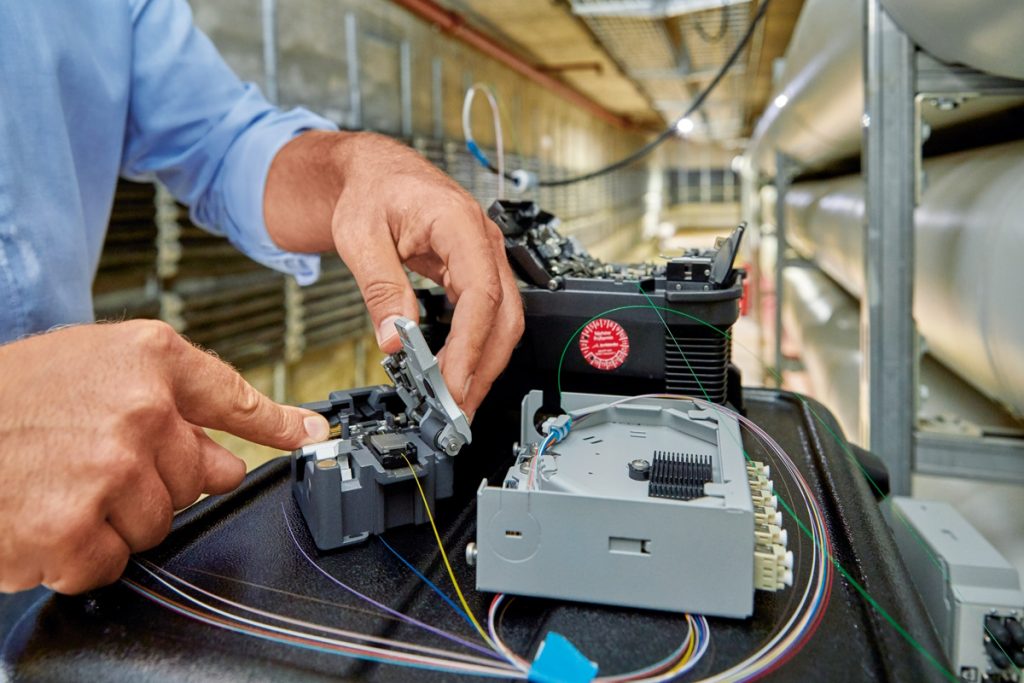
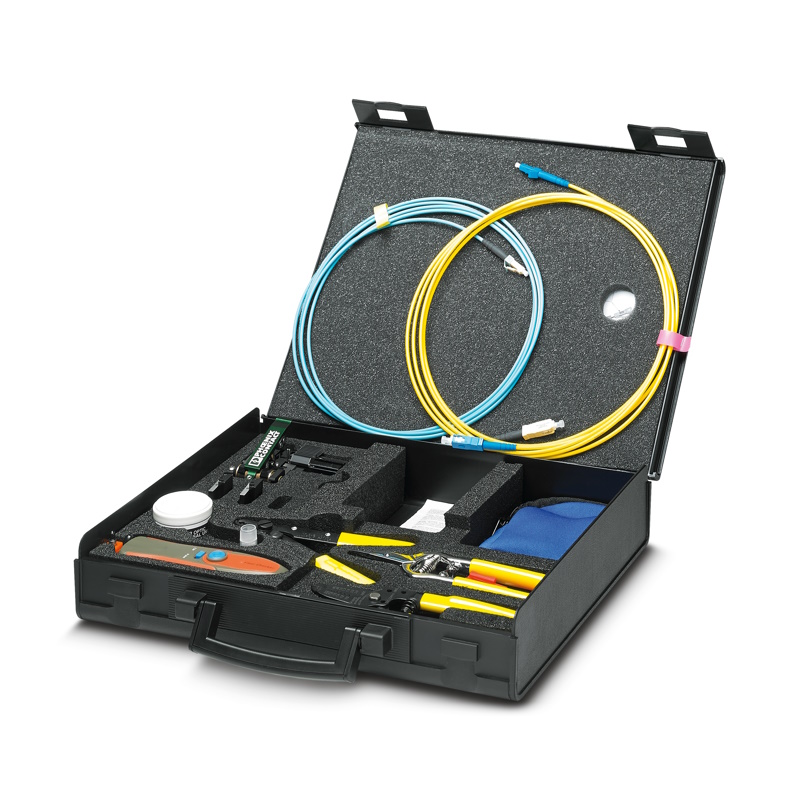
Pure quartz glass fiber (GOF) is increasingly used in industrial networks for fiber-optic cabling due to its high data rates, attractive cost, and easy management. Many specialist companies have established themselves in fiber-optic connection technology field, specializing in fusion splicing and large-volume connector assembly. Phoenix Contact offers the necessary cabling and connection technology products, including fiber-optic cables and fiber-optic splice boxes. However, if you prefer to perform GOF connector assembly in-field, a specially adapted tool set allows SC and LC connector assembly on site. Furthermore, The connectors contain factory-prepared fibers. All that remains to be done is to strip the cables and prepare the fibers. This results in a reliable, long-term stable connection with low attenuation values.

Learn more about Fiber-optic cables.