

Battery storage systems are key to the global energy transition and the All Electric Society. They support grid stability and enable renewable integration. Bidirectional power conversion ensures their efficient use across diverse applications.
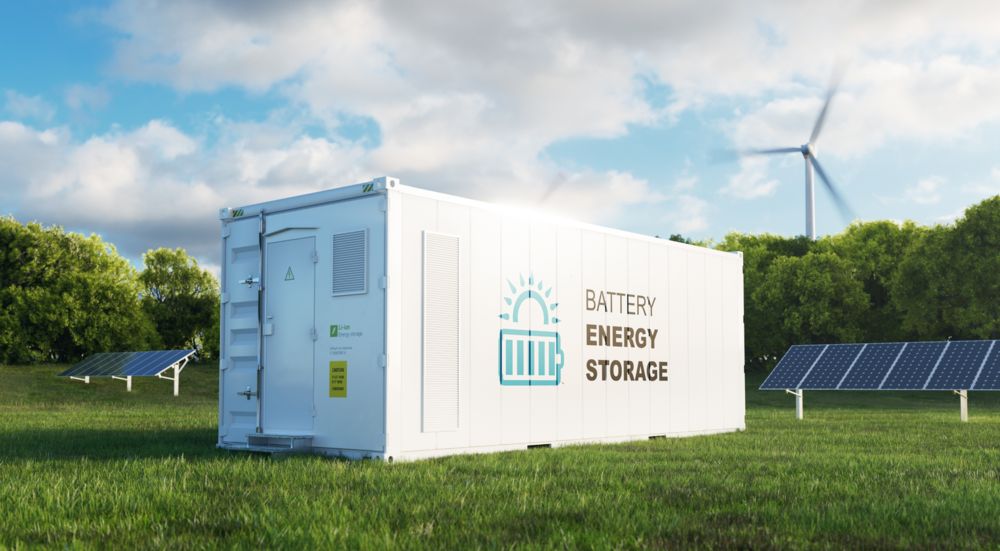
Battery storage system applications
Battery storage systems are vital to sector coupling and the All-Electric Society. They support grid stability through peak shaving, store excess energy, and serve as buffers for industrial, residential, and EV charging applications, reducing grid dependency and enabling high charging power. Mobile battery systems also replace diesel generators at remote sites like construction areas.
Power conversion in battery storage systems
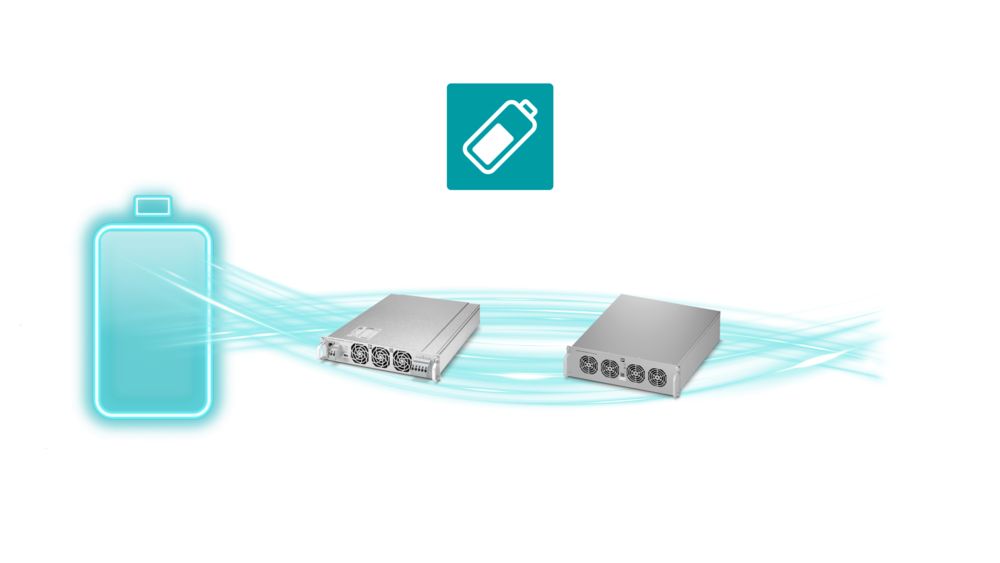
Before battery storage systems can be used, they must be connected to the application. This is enabled by power modules, which handle the necessary power conversion.
Bidirectional power conversion is key to efficient battery charging and discharging. Power electronics must adapt battery voltage to loads and sources, convert DC to AC for grid feed-in, and also draw energy from the grid to recharge. They must handle wide voltage ranges and, in mobile systems, create standalone island grids. Given the varied capacities and power needs of applications, modular and scalable power electronics are ideal. Easy installation and low power loss are also critical for efficient operation.
The solution: a bidirectional power module
Phoenix Contact has developed a new bidirectional AC/DC power module for battery storage systems. As part of the Trio Power family, it delivers 20 kW per unit and scales up to 960 kW via parallel connection. Consequently, it supports all key applications—drawing from or feeding into the grid, and creating island grids for direct AC load supply.
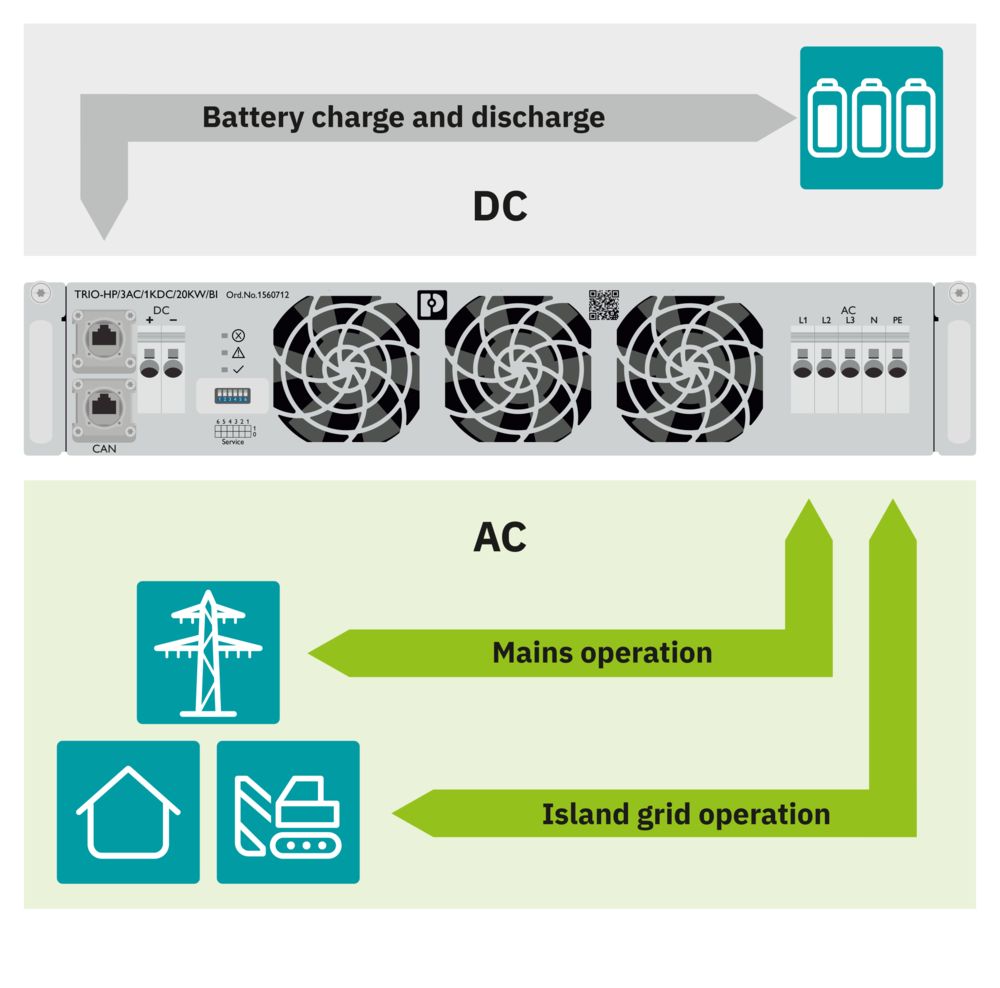
With a 3-phase AC range of 380–480 V, the device suits global markets like Europe and the USA, backed by grid feed-in certifications. Its wide DC range (50–1,000 V) supports various battery sizes, enabling millisecond-level charging and discharging for fast response to surplus energy and peak loads.
Integrated electrical isolation enhances flexibility and safety in battery storage setups, often eliminating the need for an extra isolating transformer, reducing system costs. Thanks to advanced silicon carbide technology, the system still achieves up to 97% efficiency despite isolation.
The Trio Power module’s 19-inch standard design with front connection simplifies installation and maintenance—no special cabinet needed. Moreover, being fully front-wired, it’s ideal for battery containers with limited rear access. In addition, Phoenix Contact’s Push-in technology enables fast, tool-free wiring without a custom back panel.
The All Electric Society
The All Electric Society (AES) concept describes a future in which electrical energy generated from renewable sources is available worldwide as the primary type of energy in sufficient quantities and in an entirely economical way. This is based on the comprehensive electrification, networking, and automation of all sectors of the economy and infrastructure. With its products, solutions, and services, Phoenix Contact is empowering industry and society to actively shape this transition toward a sustainable world.
Read more about battery storage systems.
