As telecommunications connections speed up and the active technology (e.g., router) is now moving into meter cabinets, protecting these devices from surge voltage is crucial for stable operation even during thunderstorms. The surge protection should be easy to install and not impair transmission.
Green electricity from wind and solar power can be abundant or scarce. Power-to-X technologies store this energy as electrochemically produced hydrogen, which is converted back into electricity in fuel cells. A modular solution with AC/DC converters supports various topologies for supplying electrolysis cells with direct current, simplifying maintenance and enhancing the availability and service life of electrolysis stacks.
Single Pair Ethernet: Lean communication through to the field level of automation
Single Pair Ethernet (SPE) enables smarter, more sustainable connections, making it ideal for long-distance communication. Sensor manufacturer Jumo trusts SPE for its measurement technology, using connection solutions from Phoenix Contact, developed through close project collaboration.
“Single Pair Ethernet (SPE) enhances the use of intelligent sensors by transmitting more data, enabling profitable insights,” says Manfred Walter, product manager at Jumo. He highlights the seamless distribution of sensor information across system levels and the consistency it brings. SPE also saves cables by routing data and power via Power over Data Line (PoDL), allowing end-to-end communication from ERP to field level without media disruptions.
Safe and reliable operation with lower energy costs
A reliable power supply from renewable sources requires storing surpluses for times of low sunlight or wind. At the All Electric Society Park in Blomberg, Phoenix Contact demonstrates sector coupling for the electrification of society.
Climate change and geopolitical crises are accelerating the integration of wind and solar power into electrical power systems. However, these sources are intermittent. Battery energy storage systems (BESS) can store generated energy and supply it when needed. In Blomberg, a 1.2 MWh BESS ensures reliable operation and energy cost savings. Phoenix Contact uses its own electronic components to control the BESS, emphasizing quality, reliability, and safety. In addition, the company continues to expand its BESS portfolio, prioritizing these high standards.
Explosion protection and functional safety included
Power-to-X technologies are becoming increasingly important for the All Electric Society. Compact Ex i signal conditioners with SIL 3 are vital for their safe use.
Technically, the All Electric Society offers a solution to the climate crisis and sustainable development. This vision involves using renewable electrical energy as the main, inexpensive, and abundant energy source. Achieving this requires comprehensive electrification, networking, and automation across all sectors—industry, mobility, infrastructure, buildings, and energy. Sector coupling integrates power generation, distribution, storage, and consumption into a holistic system, allowing energy exchange and optimal control through data evaluation.
Cost-effective and comprehensive inspection based on machine learning
Automating quality control with AI-based image processing requires a suitable network and automation concept. Phoenix Contact supports system evaluation and component selection, as shown in this example from an international automobile manufacturer.
The automobile manufacturer maintains high quality standards by inspecting and optimizing all car components. Automated quality inspection is crucial for cost-effective control, using sensors (like ultrasonic sensors or cameras) to detect defects, which are then evaluated and corrected by robots. In the body shop, weld quality is a major focus, as proper welding ensures vehicle stability and durability. Additionally, removing weld spatter is essential to prevent damage to cables laid later.
Fewer emissions with a higher overall equipment effectiveness
More countries are committing to net-zero emissions, aiming to limit global temperature rise to 1.5 °C. With the PLCnext Technology ecosystem and MLnext software solution, Phoenix Contact is helping tp reduce emissions.
The EU aims for net-zero greenhouse gas emissions by 2025, as part of the European Green Deal and the 2015 Paris Agreement. This transition to a climate-neutral society is both a challenge and an opportunity, involving all societal and economic sectors, from energy and industry to buildings, agriculture, and forestry.
Edge computing is closely tied to cloud computing, with the latter gaining importance in Industry 4.0 projects. Though relatively new, edge computing’s potential is exemplified by the EPC 1502 edge device.
A user needs an Internet connection to link systems to a cloud for data evaluation and storage. However, for applications requiring quick data processing, public cloud solutions are unsuitable due to Internet latency. Users are increasingly using Edge computing for these smart applications. Phoenix Contact’s edge devices, based on the PLCnext Technology ecosystem, combine robust industrial PCs with an open automation platform. This approach enables intelligent IoT edge concepts and optimizes the entire value chain by processing and analyzing large data volumes locally.
Easy to integrate box for collecting local data
Edge devices have broad applications, where data needs to be analyzed or is already being analyzed in the cloud. When developing edge applications, users often ask how to centrally accumulate data. Creating autonomous vehicles, traffic light systems, or intelligent thermostats that benefit from edge computing can be complex. The edge device must be flexible and able to collect large amounts of data from various sensors and manufacturers. Additionally, field devices use different industry protocols, and much of the data is analog, making accumulation challenging.
The tailor-made Edge Collection Box from Phoenix Contact is ideal for collecting local data. It gathers digital, analog, and temperature signals via connected sensors and integrates easily into existing production environments. Furthermore, Data collection takes place in parallel, preserving the CE marking of machines. The main component, the EPC 1502 PLCnext Control with an IIoT framework, facilitates easy collection of energy and process data using industry-standard communication protocols.
Secure Data Box as a secure interface to higher-level IT systems
Once data is collected and analyzed locally via the edge device, it often serves as an intermediate layer to the cloud. Transferring summarized data, evaluated alarms, and analyses securely to the cloud can be challenging. Moreover, Phoenix Contact’s Secure Data Box, used with the Data Collection Box, provides a secure interface between the production network and higher-level IT networks, external service providers, and cloud systems. The integrated FL mGuard security router’s firewall blocks unauthorized access, allowing only necessary data traffic. Via the mGuard Secure Cloud app, one can access the EPC 1502 edge device for remote maintenance information.
Reliable operation of automated guided vehicle systems
Additionally, using an edge device in an automated guided vehicle system (AGVS) bridges the gap between classic control functions and AGVS navigation. It offers a plug-and-play interface for the Robot Operating System (ROS) and supports high-level language programming, the ROS interface, and Docker software, allowing users to implement their own approaches. The PLCnext Technology online store provides apps for sending firmware and application updates to all controllers.
Furthermore, the edge device provides a secure entry point for remote maintenance and displays collected data via dashboards. AI algorithms analyze data to detect anomalies, enabling predictive maintenance and minimizing downtime. With atypical interfaces, data can be forwarded via WLAN, saving on cables. The large internal storage allows for long-term local data storage. Edge devices are essential for the reliable operation, efficiency, and flexibility of automated guided vehicle systems.
Wide range of possible uses in large and small applications
There are various applications for Edge computing. Ready-to-install edge boxes simplify implementing large systems that collect data using different protocols. Moreover, existing systems can be easily converted to edge computing with integration-capable solutions installed outside machines, retaining their CE marking. In smaller systems, edge devices must support many protocols and apps to provide added value with simple installation.
Before making an electrical connection, conductors need to be stripped a process that varies depending on the type and characteristics of the conductor. Stripping conductors is challenging due to the variety of types and their unique characteristics, with high demands on reliability and efficiency. Stripping involves removing the insulation to a certain length, as determined by the geometry of the terminal or connector. In addition, it can include removing the outer sheath of multi-core cables. Ensuring a safe electrical connection means avoiding damage to the litz wires, single-core wires, or braided shields. The process must conform to DIN IEC 60352-2 standards, which specify the requirements for a perfect stripping result. Depending on which tool is used, clamping the conductor can lead to pressure points and thus to discoloration of the insulation.
To avoid damage to litz wires, the stripping process involves two steps: “cutting into” and “pulling off” the insulation. First, the insulation is cut to a clearance of about 0.1 mm to 0.3 mm from the wires. Then, the uncut area of the insulation is pulled off to complete the removal.
Non-adjustable hand tools
Stripping can be performed using hand or automatic tools. Hand tools are categorized into non-adjustable, adjustable, and automatically adjustable types. Non-adjustable tools, like the Wirefox-MP VDE multifunctional tool, are the simplest and can handle a wide range of conductor sizes (0.2 to 10 mm²), allowing quick processing of different conductors. However, these tools require practice for perfect results and are not suitable when high level of process reliability is needed due to their lack of adjustability.
Adjustable hand tools
Adjustable tools enhance process reliability and require minimal practice. Tools with a rotating blade, like the Wirefox-D 40, are suitable for sheath removal and stripping in cross-sections over 10 mm², ensuring a uniform incision depth. For smaller cross-sections, non-rotating cutting edges are used, increasing the pull-off proportion.
While tools like the Wirefox-D 40 have broad applications, specific tools like the Wirefox D-CX series are designed for multi-stage stripping of coaxial cables. These tools are selected based on the connector type to achieve the required stripping lengths. However, they are not ideal for frequent material changes due to the time needed to set them up.
Automatically adjustable hand tools
Automatically adjustable hand tools offer the combined benefits of non-adjustable and adjustable tools, providing fast material changes and high process reliability. They use different blade geometries for various applications: flat blades for PVC cables up to 10 mm², half-round blades for cross-sections up to 16 mm² to minimize force required, and V-blades for hard insulation materials like PTFE and soft rubber. Stripping lengths can be set with an adjustable stop, and blades can be easily replaced without tools, ensuring long service life.
Automatically adjustable hand tools are also available for special applications, such as stripping SAC cables, AS-Interface flat cables, and flat-ribbon cables. These tools are recommended wherever applicable due to their versatility and efficiency.
Manually adjustable automatic tools
In series production, where quantities and quality demands are high, hand tools are reaching their limits. No matter how ergonomic the hand tools are, fatigue is inevitable. This is where automatic tools, like the entry-level electric WF 1000 stripping device, become essential. Once parameters such as cross-section, stripping length, and pull-off length are set, this device can quickly process many conductors without causing fatigue. However, each material change still requires some time to adjust the stripping parameters. This machine is especially suitable for processing identical materials efficiently.
Automatically adjustable automatic tools
The new E.Fox S 10 automatic stripping device is optimal for production processes that require frequent material or parameter changes. Its electrical adjustment of stripping parameters allows for swift material changes. The device is user-friendly, featuring an intuitive touch display interface. Users can save and recall favorite stripping parameters using a barcode scanner, significantly boosting efficiency.
The E.Fox S 10 automatic stripping device reduces the potential for human error compared to manual settings. It can function as a stand-alone device or be integrated with the Clipx Wire assist worker assistance software via an Ethernet interface. This allows for consistent use of production data and reliable processing of large, multi-version orders. When combined with other automatic tools and printing systems controlled by the same software, an efficient and customized worker assistance system for wire preparation can be created.
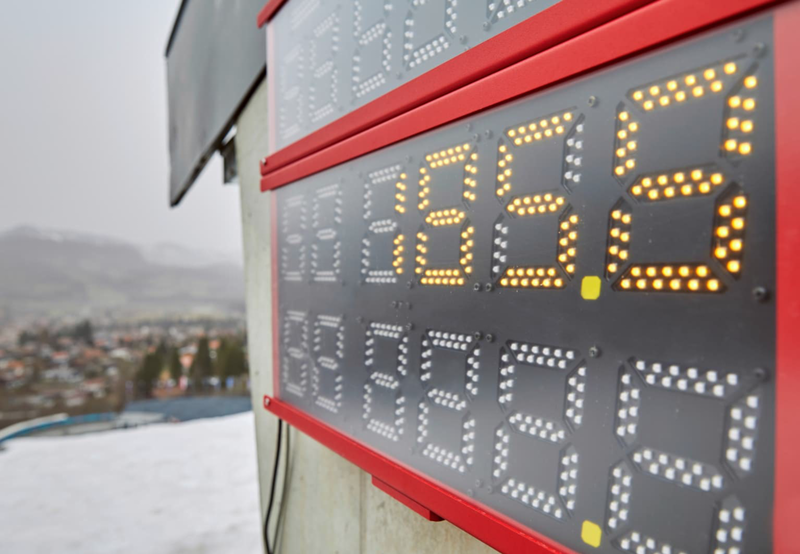
A team from ccc software gmbh and the Institute for Applied Training Science in Leipzig has developed a complex analysis system for coaches, athletes, and sports scientists. The system includes a camera or video system and speed measurement. Furthermore, ensuring that recorded data is immediately available for analysis. Ski jumping, a sport with major international events. It is known for its spectacular jumps, with participants reaching speeds of up to 108 kilometers per hour. Moreover, The Audi Arena Oberstdorf in Oberstdorf, Germany, has one of the largest ski jump ramps in the world, with a ramp size of 235 meters and a record of 242.5 meters. The jumping tower is 72 meters high, and the run-up length for jumpers is 118 meters with a run-up inclination of 38.7 degrees.
A variety of challenges
The length of a jump is measured from the edge of the jump-off platform to the point of landing. The athlete’s body and ski posture significantly influence the aerodynamics. To optimize jumping performance, ccc software gmbh and the Institute for Applied Training Sciences have developed a sophisticated solution for training optimization and competition management. The camera must be mounted parallel to the jumper and at flight-path height. However, the jumper is only parallel with the camera for a fraction of a second. The IAT, founded in 1992, supports around 1,000 athletes and their coaches from 19 summer and six winter sports. Aiming to identify and tap into Germany’s top athletes’ performance potential.