

Comprehensively protected
Cyberattacks are increasing in severity, frequency, and sophistication, making holistic IT‑OT security solutions essential. Strong cyber protection is crucial for secure automation, particularly in mobile and decentralized environments. A strong example of this approach can be found in northern Germany.

The HY.City.Bremerhaven hydrogen project includes hydrogen production and a refueling station, founded by GP Joule and Greenfuels. Phoenix Contact provides a 360‑degree security solution that protects the facility from cybercrime. Bremerhaven uses hydrogen-based mobility for climate protection, with system integrator GP Joule implementing a regenerative solution for the operator. Since 2009, GP Joule in Reußenköge has integrated renewable energy into regional systems across the entire value chain, from generation and conversion to distribution and use—with hydrogen playing a central role in this approach.
Hydrogen for public transport
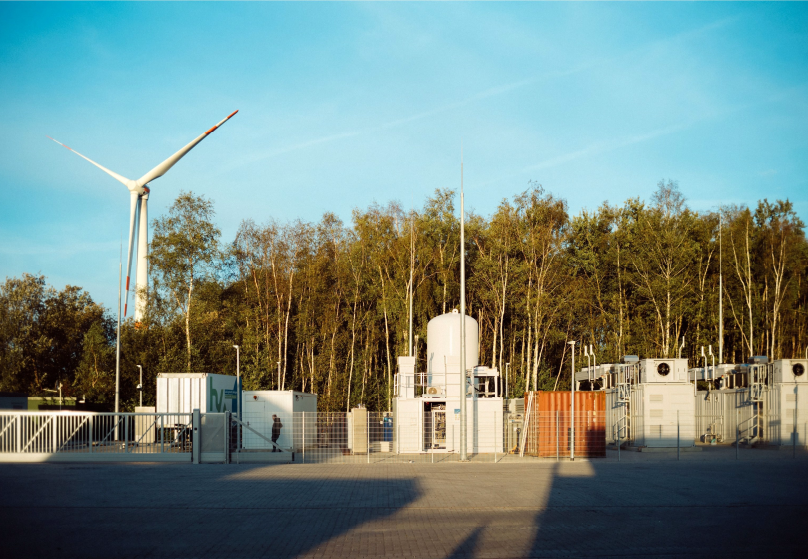
In Bremerhaven, electrolysis containers use electricity from renewable sources to produce hydrogen for refueling. One major user is BremerhavenBus, the regional public transport provider, whose fuel‑cell buses achieve a longer range than battery-powered vehicles. This enables them to cover long rural routes without disruptive charging stops.
This successful example of the energy and mobility transition relies on advanced technical solutions, particularly for cybersecurity. The Bremerhaven project must be protected against hacker attacks both on-site and in the cloud. Phoenix Contact designed and implemented this protection as part of its 360‑degree security approach.
Access protection as an all-round approach
Protecting system parts or entire production sites from cyberattacks requires more than technical measures.

Effective OT and IT security begins with management and employees, and a 360‑degree approach often leads to organizational changes. “For sustainable cybersecurity, a process needs to be established in which IT and OT work together. The aim of this approach is to secure the overall value chain without overlooking the special features of both areas,” explains Hauke Kästing, security expert at Phoenix Contact.
IT and OT are increasingly converging, as demonstrated at the GP Joule facility. While on‑site automation falls under OT and cloud services under IT, both work closely together in Bremerhaven—one of the key strengths of GP Joule’s solution. Central control and coordination run through the cloud, which directly influences on‑site automation. Beyond data evaluation and dashboards, the cloud also aggregates electricity market data to maximize the economic operation of the system, such as deciding when to sell renewable electricity or restart electrolysis. It receives system‑level data for analysis and manages the entire GP Joule network. “We therefore have bidirectional data flow with specific command sequences,” notes Marian Hieke, Head of Engineering GP Joule Hydrogen. This setup highlights the critical need for secure communication within an OT/IT network.
Protection against attacks from within

The 360‑degree security concept from Phoenix Contact goes beyond securing data transmission between the site and the cloud; it also ensures robust protection for decentralized locations. “If IT is successfully attacked, OT is quickly affected,” notes Hauke Kästing. Strong OT‑level security is also essential to guard against internal threats. For this purpose, a tailored network concept was developed, and FL Mguard security routers are deployed at the Bremerhaven site to protect the various process sectors.
Effective security is essential for approvals
A look inside the control cabinet of GP Joule’s hydrogen trailer shows how the mobile setup operates. Known as HY.Runner, it serves as the logistical link between the electrolysis site and end users. It manages signal flow to production and maintains communication with the cloud-based control room. Its data exchange coordinates subprocesses and supports cost‑efficient operation, including customer billing. Secure transmission is ensured via the FL Mguard remote maintenance router.
Phoenix Contact’s hardware is supported by growing consulting and engineering services, particularly in cybersecurity. The company has combined its products and expertise into a 360‑degree security program to provide comprehensive project support. This approach is essential, as “facilities like ours would otherwise have no chance of obtaining approval,” notes Marian Hieke, who also expects cybersecurity requirements to continue rising.
This point is especially important because comprehensive protection also includes functional safety in the “HY.Runner.” A SIL 2 safety controller with the key “Safe stop” function is installed and monitors pressure limits during refueling. As Marian Hieke notes, if hackers were able to alter control limits, the safety system would “essentially be blind and assume all systems are in the green zone.” Given hydrogen’s high reactivity, the consequences would be severe. The tanker also operates on public roads, further underscoring the need for robust safety measures.
Learn more about solutions for power-to-X.
