Category Archives: Machine Building

Quality you can rely on

From |

Written by Scott Mulholland, Product Manager- Industrial Components

With regard to our terminal range, it’s quite a common occurrence that I get asked to prove conformity to a certain standard or the adherence to specific test parameters. Thankfully, we have a wealth of information readily to hand.

It may be the case that your end customer needs assurances that the terminal components are up to the job, especially when the application is situated in harsh/extreme environments. We can help with those assurances. In addition to the standard tests in accordance with the Low Voltage directive, IEC 60947‑7‑1/‑2/‑3, we also undertake a comprehensive range of tests that ensure our terminal products are as good as they possibly can be.

If your customer has din rail terminal questions relating to any subject listed below, we will have the information to give them confidence.

Continue reading

The QUINT power supply is 25 years old

From |

Happy Birthday to you, happy birthday to you, happy birthday dear QUIIII-INT, happy birthday to you! 

This year marks 25 years since the first QUINT power supply was released. That’s back in 1996 when just 5 power supplies were released to the market. Fast forward to today and there are more than 100 QUINT products available with the QUINT4 being the most recent iteration.  

So how have we seen the QUINT develop over this time?  

Obviously, they have become smaller and more efficient, for example our second-gen QUINT 40A (only just discontinued) was the size of a small breeze block at a width of 240mm. Compare this to the QUINT4 version which is exactly half the width at 120mm.  

The QUINT now packs many more technical features and benefits that make it the #1 choice for markets and applications where reliability and power resilience is key.  

Some features that have been added and are now the norm are such things as: 

  • Boost Power, both dynamic (short term) or static (permanent)  
  • SFB – selective fuse breaking, a high current boost enabling fast tripping of breakers or even fuses.  
  • Better monitoring & diagnostics with configurable digital outputs and an analogue output 
  • High reliability and long lifetime, typically 15 years. 

QUINT is not just a power supply range (available from 1A to 40 A), the range includes DC/DC converters, redundancy modules, uninterruptible power supplies and energy storage devices including various battery technologies, buffer and Cap modules.   

The complete QUINT solution for maximum plant availability can be seen via the following link. Here you will find info on all the products under the QUINT banner including a live demo showing our intelligent communicative QUINT4 UPS.  

The near future will see more development in the area of communication, including IO Link and easier integration with complementary Phoenix Contact systems such as electronic circuit breakers. I would not be surprised if a fifth generation QUINT is not already under development.  

The QUINT power system is part of the COMPLETE line system. 

For more info contact Mark on 07717 335477 or email  mlloyd@phoenixcontact.com 

It’s the right time to try PTV

From |

Written by Scott Mulholland, Product Manager- Industrial Components

In these uncertain times, now might be an opportunity to look at a different way of doing things.

As the world wakes up and global demand accelerates, many manufacturers are experiencing significant challenges in being able to meet customer’s expectations. It feels like the problems are coming from all angles, global supply chain disruption, raw material shortages, extreme weather disruption. The list goes on.  Phoenix Contact is no different to our peers in seeing the step change in demand. Where we do differ, however, certainly in our din rail terminal offer, is that even if we cannot offer your first choice terminal (e.g a 2,5 grey screw terminal), we very often can offer a near solution that will do the same job with no loss of effectiveness or reliability. We could, in place of the 2,5 grey screw terminal, offer, say, a 2,5 spring, push in or IDC (insulation displacement connection).

Continue reading

Heavycon coding options

From |

Written by Scott Mulholland, Product Manager- Industrial Components

I’ve had a number of queries recently regarding coding for our Heavycon range of heavy duty connectors. Coding can become a good idea when your application has a number of similar, or identical, connectors in close proximity like the ones on the side of this panel in this image:

Continue reading

Capacitor based storage systems – an alternative to batteries?

From |

Written by Mark Lloyd, Senior Product Manager- Power Supplies & Surge Protection

I have been involved with UPS systems for more years than I care to think of, and I can say that if a customer ever has a problem with a UPS more often than not it is the battery that is the issue.

At the end of the day a battery is essentially a box full of chemicals and they have to be treated with a certain amount of care. If a battery is left on a shelf in storage for too long without first being charged, the battery will self-discharge. It depends on the size of the battery (AH) but, typically, the larger the battery capacity, the longer the time you have before the battery needs to be recharged. Once it is charged you have a similar amount of time before it needs to be charged again if it is not put to use right away.

Continue reading

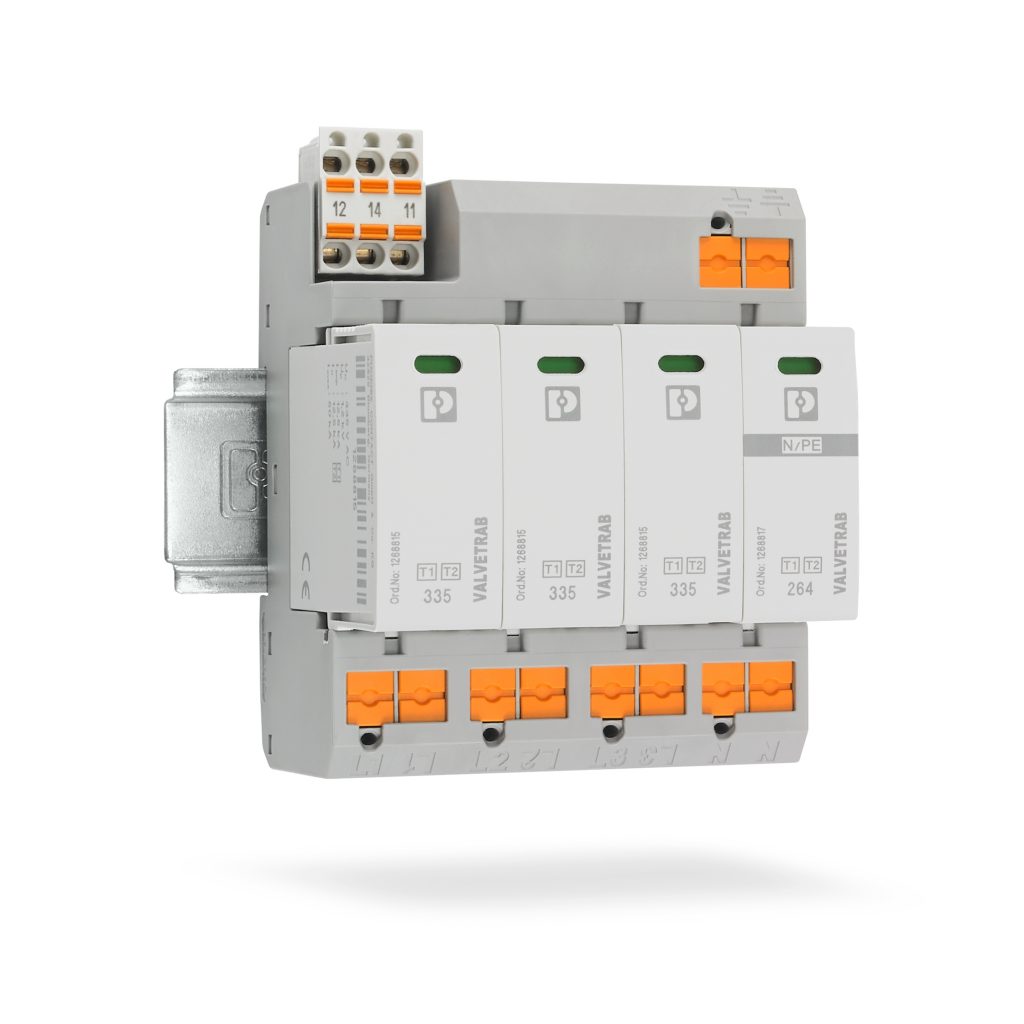
The first Type 2 SPD with Push-in connection

From |

Written by Mark Lloyd, Senior Product Manager- Power Supplies & Surge Protection

When we recently updated our Plugtrab SEC range of Type 3 surge protection devices we took the re-design as an opportunity to add push-in technology as an option. This is in addition to the more traditional screw connection. Push-in has proved equally as popular as screw connection, if not more so.

Up until that time push-in was only really an option on SPDs designed to protect signal lines. With Phoenix Contact being the industry’s foremost proponent of push-in technology, it was only a matter of time before this was expanded within our power surge protection range to include Type 2 SPDs.

Continue reading

Introducing Axioline Smart Elements

From |

Written by Tony Deane, Technical Manager

These days everyone wants more for less and as we all know, if the market demands something you must respond accordingly to stay ahead of the curve. Phoenix Contact have listened to the marketplace and launched an innovative, revolutionary and competitive I/O system to complement and enhance our AXIOLINE I/O range for the automation industry!

Introducing the AXIOLINE Smart Elements I/O range

With panel space, easy start-up and component costs being some of the major requirements of systems builders, the marketplace demands suppliers to react in order to help businesses maximise production and profits and minimise costs. Together with the system fieldbus options offered by the Axioline I/O system, Smart Elements is a definite game changer.

Continue reading

Introducing EMpro Smart Energy Management Services: EMMA

From |

Written by Fraser Cowie, Product Manager- Interface

In a lot of small to medium businesses (SMEs) it is usually down to the plant or electrical manager (energy manager if they have one) to make sure that the company complies with the latest energy management standards – currently ISO 50001.

This can be on top of their day to day job and may mean lots of time spent producing energy data reports by manipulating excel spreadsheets.

To make this process fast and simple Phoenix Contact have launched a range of Smart Energy Management Services, called EMMA, that are accessed using the cloud, connectable EMpro energy meters.

Continue reading

A new approach to configurable Sensor Actuator Cabling

From |

Written by Scott Mulholland, Product Manager- Industrial Connections.

Much more flexible MOQs (minimum order quantities) and scalable pricing (sometimes also referred to as ‘column’ pricing) has now been applied to SAC configurable cables. They are generally configurable by specifying cable type/colour (e.g. Black PUR cable) and cable length other than our standard cable lengths (e.g. you could specify 2m for instance). These changes have been introduced to help our customers needing lower quantities of a cable for prototyping development, for instance.

The reason for the changes is to offer the customer more flexibility with regard to the amount of configurable cables that they have to order. Prior to these changes, it was the norm for an MOQ of 25 pieces to be stated to the customer. The MOQ of 25 reflected the extra work incurred by our production in stopping the machines to run off a small batch of customer specified cables.

Continue reading

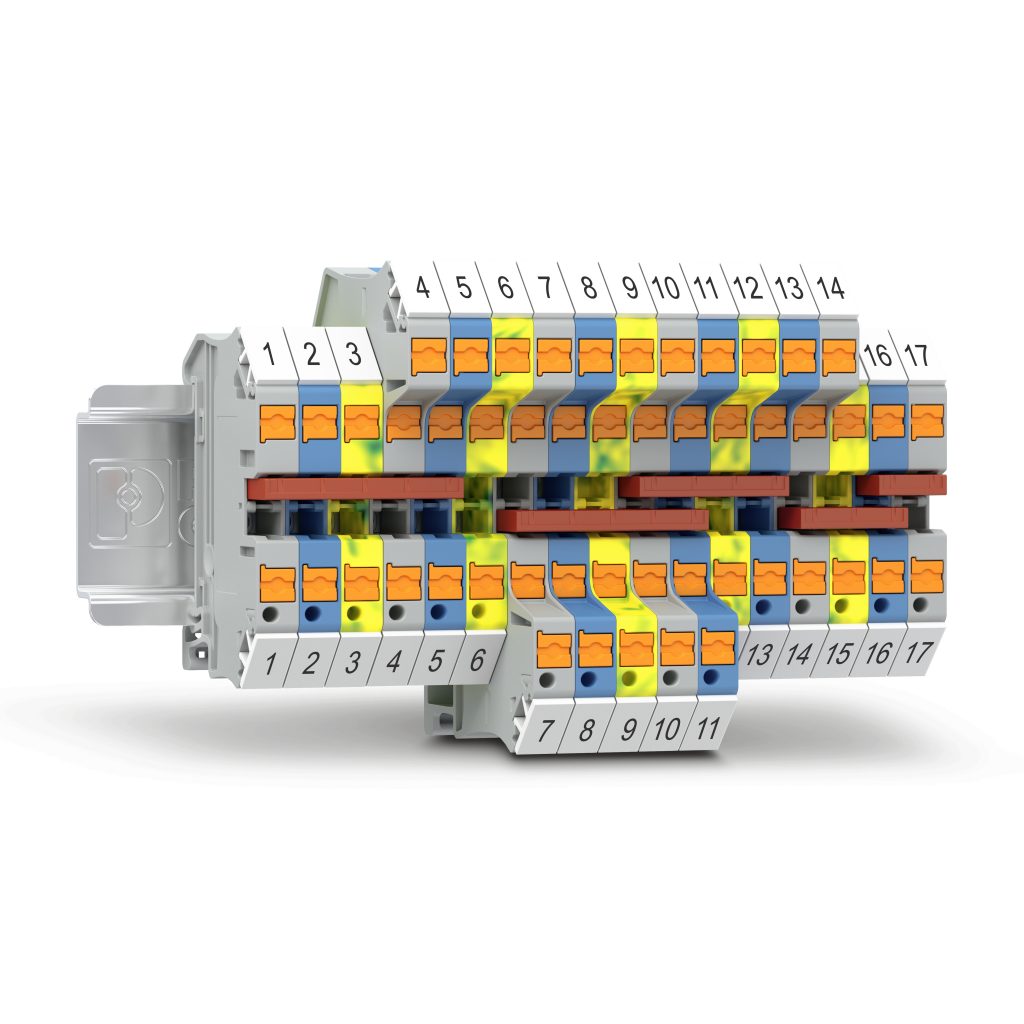
PTV Terminals- for when visibility is key

From |

Written by Scott Mulholland, Product Manager-Industrial Components

Space is always at a premium in the modern cabinet or machine. As designers and engineers extract every bit of usable space on the din rail and from the cabinet space in general, this can potentially have a downside. The busier the cabinet gets, the requirement to quickly and safely identify terminals and/or conductors becomes even more important to be able to work both efficiently and safely. Higher densities of terminals and conductors will potentially lead to the markers on those terminals and conductors being harder to read (with conductors sometimes having to ‘loop’ over the markers, obscuring them from vision). Also, using multi level terminals, increase the number of conductors in a small space, and this can exacerbate the problem. 

Continue reading