

Written by Scott Mulholland, Product Manager-Industrial Components
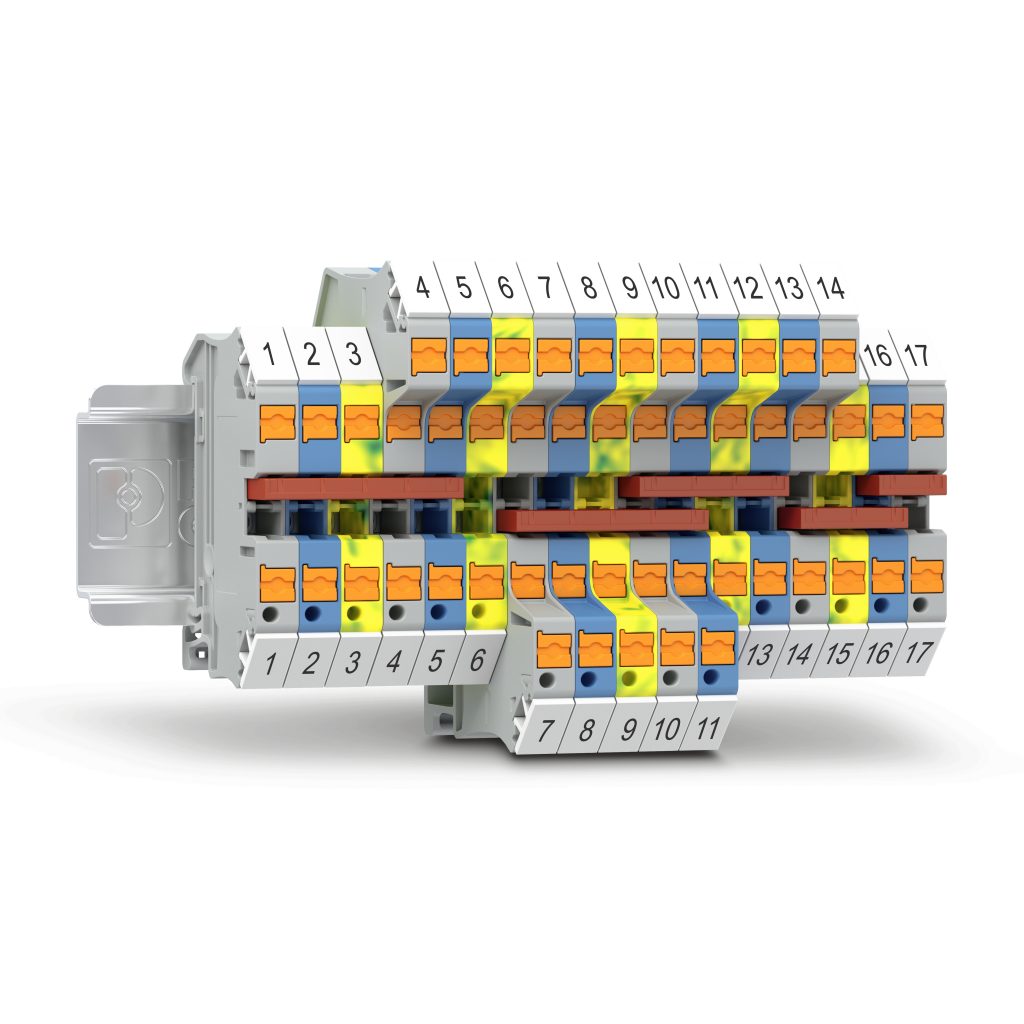
Space is always at a premium in the modern cabinet or machine. As designers and engineers extract every bit of usable space on the din rail and from the cabinet space in general, this can potentially have a downside. The busier the cabinet gets, the requirement to quickly and safely identify terminals and/or conductors becomes even more important to be able to work both efficiently and safely. Higher densities of terminals and conductors will potentially lead to the markers on those terminals and conductors being harder to read (with conductors sometimes having to ‘loop’ over the markers, obscuring them from vision). Also, using multi level terminals, increase the number of conductors in a small space, and this can exacerbate the problem.
Continue reading In today’s automated world our machines and systems are becoming more and more complex. As a result of this, the required wiring effort of individual components in these systems is comprehensive and expensive.