

Tag Archives: surge protection

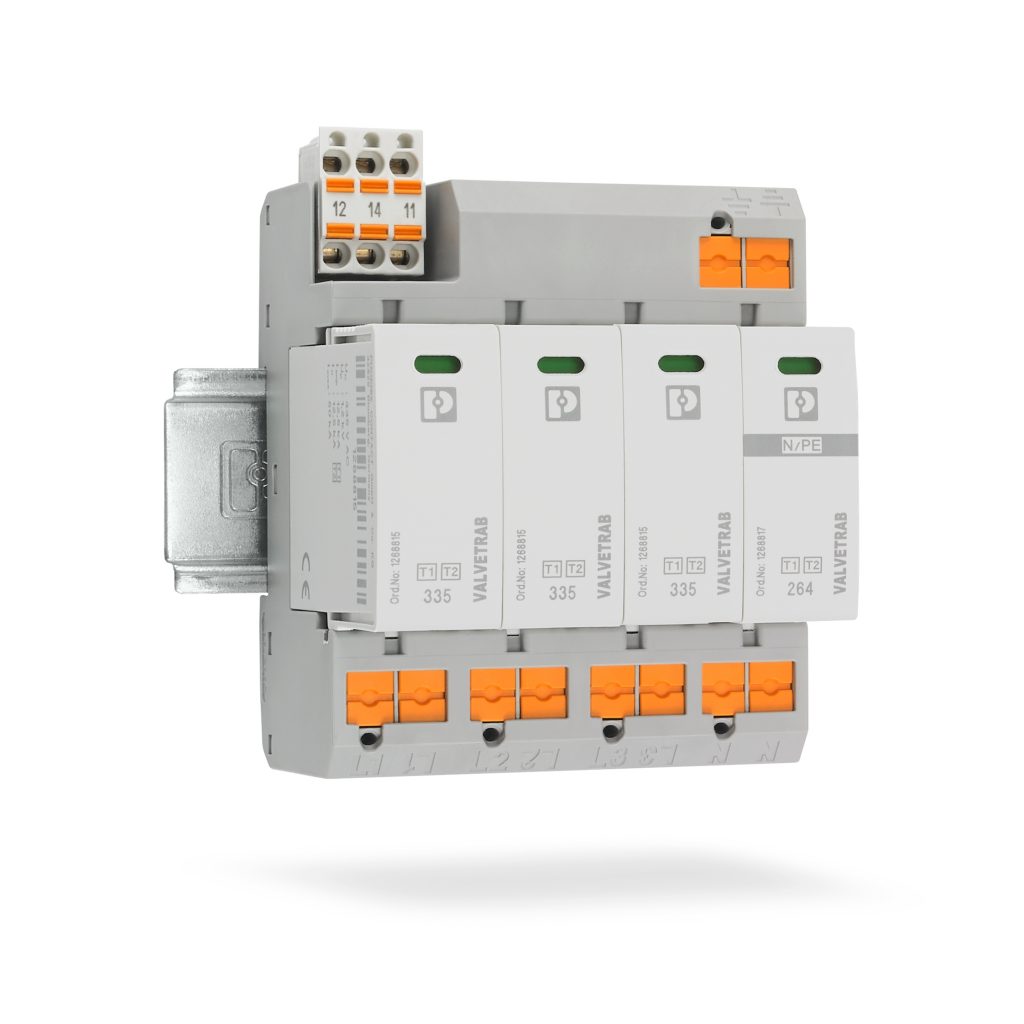
BS7671 18th edition Amendment 2 – now encompasses safety services

From |

Written by Mark Lloyd, Senior Product Manager- Power Supplies & Surge Protection

The current 18th edition version of BS7671, more commonly known as the wiring regs has been in force since January 2019, so a little over 3 years. I wrote a blog around the time predicting that the issue of surge protection would become much more of a hot topic and thankfully that has proved to be the case.

The list of instances where surge protection needs to be used was fairly clear and has resulted in surge protection being installed more routinely in domestic, commercial and industrial applications.

As a reminder the current 18th edition states: 

Protection against transient over-voltages shall be provided where the consequence caused by over voltage could:

i. Result in serious injury to, or loss of, human life
ii. Result in interruption of public services and/or damage cultural heritage
iii. Result in interruption of commercial or industrial activity
iv. Affect a large number of co-located individuals”
Continue reading

The first Type 2 SPD with Push-in connection

From |

Written by Mark Lloyd, Senior Product Manager- Power Supplies & Surge Protection

When we recently updated our Plugtrab SEC range of Type 3 surge protection devices we took the re-design as an opportunity to add push-in technology as an option. This is in addition to the more traditional screw connection. Push-in has proved equally as popular as screw connection, if not more so.

Up until that time push-in was only really an option on SPDs designed to protect signal lines. With Phoenix Contact being the industry’s foremost proponent of push-in technology, it was only a matter of time before this was expanded within our power surge protection range to include Type 2 SPDs.

Continue reading

The green light for Clixtrab surge protection

From |

Written by Mark Lloyd, Senior Product Manager- Power Supplies & Surge Protection

Safety-related systems, such as signalling systems found on our railway networks, require reliable lightning and surge protection. You could imagine the outcry if a lightning strike was to take out a trackside signalling system and stop trains in their tracks (no pun intended)!

Our new family, CLIXTRAB, is specifically designed for use in the kind of safety-related systems you find in the railway industry but is also suitable for many other industry sectors.

Continue reading

Monitor and test your surge protection

From |

Written by Mark Lloyd, Senior Product Manager- Power Supplies & Surge Protection

In the relatively short amount of time I have been involved with the “Dark Arts” that is surge protection, one of the main misconceptions is that a SPD is a kind of fuse that acts once and then needs to be replaced. This is not true. The SPD acts more like a valve that only conducts when a transient overvoltage rises to a certain level, at which point it conducts to earth and limits the voltage the load sees, therefore protecting it. So a SPD is good for multiple transient events- however, the semiconductor components within SPDs will eventually wear out and unless there are regular visual checks or there is feedback to the system in the form of a remote contact, then potentially the SPD will not be doing its job.

Continue reading

Protect your most sensitive equipment

From |

Written by Mark Lloyd, Senior Product Manager- Power Supplies & Surge Protection

If you were to ask any electrician or plant maintenance engineer what the main reasons are for electrical equipment failure, some of the answers would be insulation degradation, poor grounding, bad connections but I would put money on voltage spikes as being one of the top answers…..

Voltage spikes can be harmful to electrical and electronic devices and increasing the voltage above a devices nominal operating voltage can cause internal arcing and heat generation that can cause damage to circuits, and with devices becoming smaller and more sophisticated this increases the likelihood of this kind of damage. Often if damage occurs within the devices usually warranty period, the cause may not even be identified. 

Continue reading

Are you NFPA 79 ready?

From |

Written by Mark Lloyd, Product Manager- Poser Supplies & Surge Protection

Surge protection is now mandatory in accordance with NFPA 79 (2018 edition).
It should be obvious that Machine builders who export their products to North America are subject to the laws and regulations applicable there, and one of the most important technical standards relating to machines is the 2018 revision of the NFPA 79 standard.

What is NFPA 79?
The Electrical Standard for Industrial Machinery (NFPA 79) is a safety standard developed and published by the US-American organization National Fire Protection Association (NFPA). It contains requirements concerning electrical safety of industrial machinery. Every industrial machine which is produced in or imported into the USA, has to fulfil the requirements of the NFPA 79. If not, it is not allowed to be connected to the power supply network.

Continue reading

Intelligent surge protection monitoring

From |

Written by Mark Lloyd, Product Manager- Power Supplies & Surge Protection

What use is the best type of surge protection if you don‘t know how long it will remain active?

When I took on the role of the UK Product Management for Surge & Lightning Protection devices, I thought I had successfully avoided any complicated Industry 4.0 or Industrial Internet of Things involvement. I thought you couldn’t possibly be able to monitor surge currents and transient over-voltages in real time over a network. Boy, was I wrong.

This month we have unveiled ImpulseCheck which is the world’s first intelligent assistance system for surge protection in the field of mains protection.

Continue reading

Is your power supply ready for the Industrial Internet of Things? The QUINT4 DC UPS sure is.

From |

Written by Mark Lloyd

monday_blog_img1

In 2004, we released our first DC UPS, the first generation QUINT-UPS, which is still in use and purchased today.

Then in 2011, we released the QUINT UPS-IQ, which for the first time allowed some monitoring of the connected battery to see such things as battery status, battery lifetime, and remaining runtime. With this generation of UPS it is possible to pass this info up to higher level controls but requires additional hardware.

Continue reading